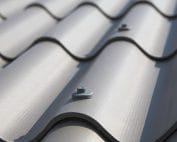
Fibre cement coverings
Tightening corrugated roof fixings without damaging the sheets
In brief
A tight fastening is not achieved by driving the screw in with maximum force. Corrugated fibre cement sheets require system-compliant pressure without crushing the material or restricting its movement. Asbestos-free fibre cement can crack at the fastener if the connection is made too rigidly. The seal, the hole and the support should work together. The screw holds the sheet on the support, and the washer with seal limits water access to the hole. The connection is not there to pull a warped sheet onto an uneven structure. If incorrect positioning is visible before tightening, its cause must first be established. Stress forced by the fastening may remain invisible on the day of installation. Later temperature changes or loads may reveal the problem.
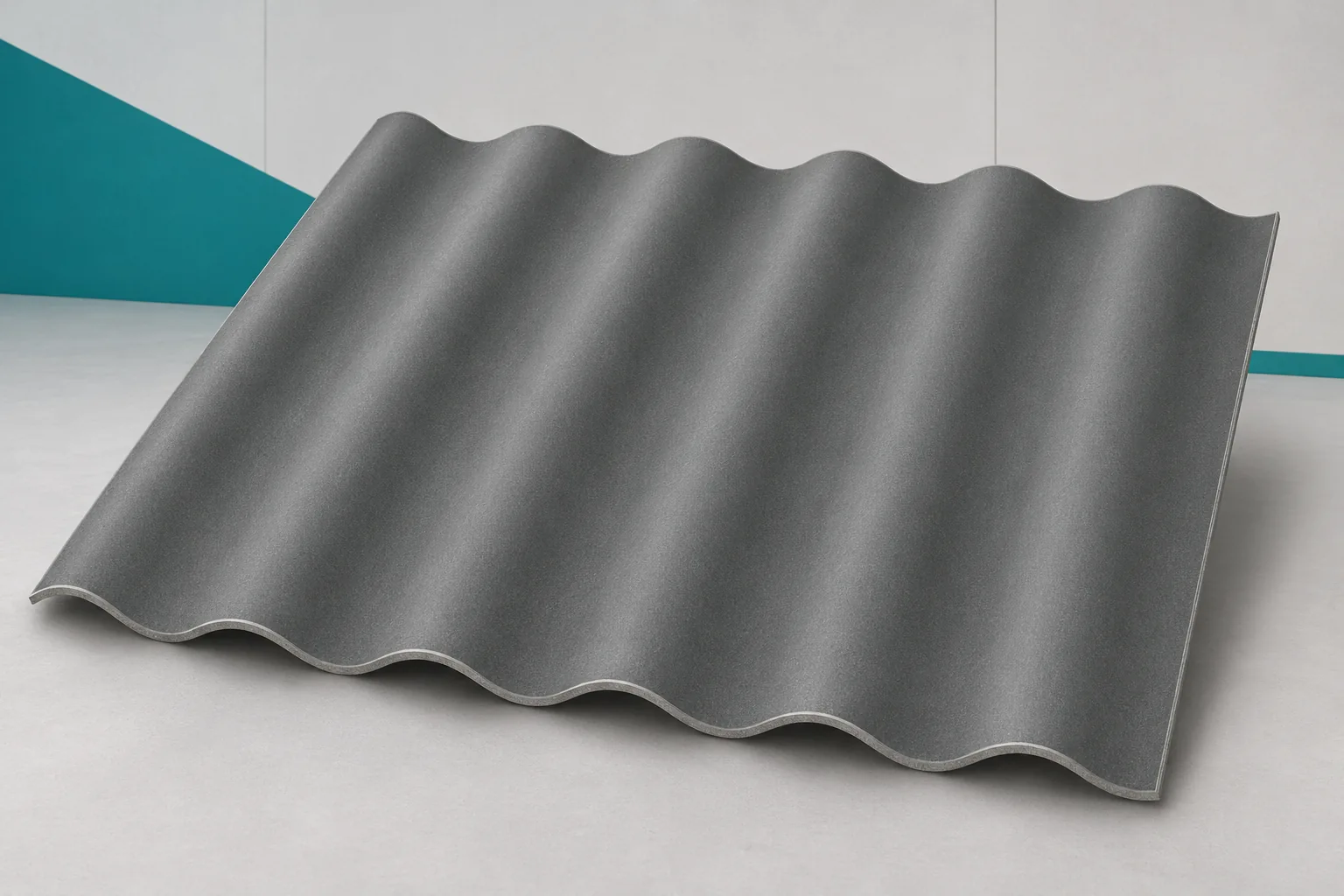
The pressure should seal, not straighten the sheet
That is why assessment of the connection begins before the tool is used. Proper support and geometry are as important as the condition of the fastener itself.
The fastening set is selected as a whole
Corrugated fibre cement sheets require fasteners intended for the given substrate and system. A wood screw has a different task from a fixing into a steel purlin. The type of washer, the seal and the corrosion protection also matter. A chance combination of parts can change the way the pressure is applied.
Do not assume that a larger washer will always improve the connection. It must work with the geometry of the corrugation and the required clearance. Likewise, a thicker seal is not a universal repair method. The set should have a confirmed purpose, and installation should follow its instructions.
Hole clearance limits stress
The sheet and the structure react to environmental conditions. A hole of the specified diameter allows the required freedom to be maintained at the fastener location. Asbestos-free fibre cement should not be fixed through an accidentally pierced hole that grips the shank tightly. This can increase the risk of cracking.
Corrugated fibre cement sheets have different requirements depending on the profile and the type of fixing. The diameter must be read from the relevant instructions. In a solution with a reaming fastener, the way it works is different from a hole made in advance. Neither variant means the tool can be chosen at random.
Tool setting depends on the connection
The installer should use the tightening method specified for the fastener. This may include depth control or another solution provided by the system. There is no single torque value suitable for all sheets, seals and supports. A value given for a different assembly is not a safe substitute.
A worn tool or unsuitable bit can make control difficult. Straight alignment of the fastener also matters. A tilted washer can press unevenly on the surface. Increasing force should not be used to compensate for incorrect screw position.
Assess the seal and the surface around it
After fixing, corrugated fibre cement sheets should remain free from new cracks and spalling. The seal should sit as intended, without excessive squeezing or deformation. The check also includes the position of the washer. The mere fact that the screw head no longer turns does not describe the quality of the connection.
Too little pressure may leave a path for water or allow unwanted movement. Too much may damage the sheet and restrict the necessary movement. The correct condition is defined by the system instructions. The assessment should be made as work proceeds, before the same error is repeated across an entire row.
A fixing does not replace a missing support
If the point does not fall over a suitable batten or purlin, the problem must be resolved in the structural layout. The hole should not be moved arbitrarily close to the edge. Nor can it be assumed that a strong screw in the adjacent corrugation will suffice as the intended support. Corrugated fibre cement sheets behave according to a defined pattern.
Asbestos-free fibre cement can be installed on various substrates, but each has its own requirements. When renovating, the condition of the old timber or steel is important. A worn hole in the support will not always provide proper seating. This cannot be assessed solely from the appearance of the washer on top of the sheet.
Do not retighten every screw without diagnosis
After some time, signs may appear that require inspection. This does not mean that every fastener should be tightened automatically. The cause may be a worn seal, corrosion, a cracked sheet or movement of the structure. Randomly increasing the pressure may worsen the damage.
Corrugated fibre cement sheets are inspected according to the inspection plan and instructions. If a leak occurs, it is worth examining the entire connection and its surroundings. Water may be coming from a point higher up. Sealant applied around the screw head does not always solve the source of the problem and may make later assessment more difficult.
Ensure a safe method of inspection
To verify the fastenings, do not walk on the sheets or along the line of screws. A suitable working position and safeguards are required. Nor does the area above a support thereby become a platform. The access route should be planned before installation is completed.
Asbestos-free fibre cement should be handed over to the user together with documentation of the fasteners used. If the washer or connector is replaced in future, it will be clear which set was used. This information is more useful than general advice to buy a similar screw. It maintains the consistency of the connection during repairs as well.
Before installation, confirm the complete fastener set and the method of checking the contact pressure. Do not use the screw to correct an uneven structure or a poorly laid sheet.
7 branches. Materials closer to your project.

- SEROCK — Dzierżenin 34 E
- BŁONIE — ul. Sochaczewska 138A
- RADOM — ul. Grobickiego 8
- ŁÓDŹ — Natolin 8
- OLSZTYN — Barczewo, ul. Prosta 9
- WROCŁAW — ul. Jerzmanowska 10C
- GORZÓW WLKP. — ul. Zielona 33/34