Choosing the covering
Clay tiles or tile-effect metal roofing for a house?
In brief
The choice between ceramic tiles and metal roofing depends on the design, roof geometry and condition of the roof structure, not on appearance alone. Check which covering and layers the designer has specified, because changing the material can affect loads and detailing. Compare complete systems including the underlay and insulation, not the weight of a single element. For a renovation, verify the condition of the roof structure, as a lighter covering does not confirm the safety of the whole structure. Consider the roof pitch and local plan requirements, and leave the final decision to the designer.
What needs to be checked in the design?
First check what covering and layers the designer has specified. Changing the material can affect loads and detailing. The roof pitch and local plan requirements also matter. Not every covering model will be suitable for a very shallow roof, even if the client likes it.
In a renovated house, the roof structure requires particular attention. Its condition must be checked, not just the dimensions of the visible rafters. The timber may be weakened by moisture or earlier alterations. A lightweight covering can be advantageous in modernisation, but a lower mass alone does not confirm the safety of the entire structure.
How does weight affect the choice?
Tile-effect metal roofing is usually considerably lighter than a ceramic covering. The difference matters for transport and structural load. However, complete systems should be compared, including the underlay and insulation. The mass of a single sheet or a single tile does not provide comparable information without conversion to the effective roof area.
Lightweight sheets still require correct anchoring. Wind acts on the entire chain of connections, from the covering to the building structure. Heavier material also cannot be laid without the required safeguards. A roof’s resistance to gusts is determined by design and workmanship, not by the belief that mass alone will hold the elements in place.
How does roof geometry change the cost?
On a simple roof, tile-effect metal roofing sheets cut to size work well. They can reduce the number of joints and speed up covering large areas. With numerous roof valleys and dormers, it is worth comparing modules. A smaller format makes it easier to plan cut pieces, but the actual amount of waste must be calculated for the specific roof plan.
Small ceramic elements allow the covering to be divided differently. In turn, the costs of special shapes and the time required to lay them can account for a large share of the quote. Two offers should be compared together with the accessories at the ridge, edges and penetrations. The area of the main roof slopes alone does not cover all the required materials.

Will it be louder and hotter under metal?
Thin sheet metal reacts to the impact of rain, but the sound heard in the room depends on the entire roof. Insulation, underlay, cavities and interior finish all matter. Silence cannot be promised on the basis of the covering type alone. If the loft will be a bedroom or study, it is worth assessing the acoustic solution before purchase.
The question of temperature is similar. The covering is only the outer layer. Comfort in summer is influenced by insulation, airtightness, ventilation and window shading. PIR boards can reduce the thickness of thermal insulation required, but they do not replace checking acoustics and protection against overheating. The colour of the roof also matters for how its surface heats up.
How do repairs and maintenance differ?
A single small element is often easy to replace if it is available and the damaged spot can be reached safely. With steel sheet, the scope of repair depends on the size of the sheet and the type of damage. A small scratch requires different treatment from a deformation of the profile. It is worth keeping the product designation and a small stock of the appropriate elements.
Every roof needs inspection of flashings, drainage and service penetrations. Steel sheet must be protected from swarf, aggressive cleaning and accidental hot cutting. In both technologies, improper walking on the roof slope can be a problem. When purchasing, ask for the inspection rules and the warranty conditions covering the entire system.
How do you decide based on a full quote?
Compare the cost of material, structure, underlay, transport, installation and accessories. Establish whether the contractor has included scaffolding, protection and waste. For a renovation, add dismantling and disposal of the old covering. Offers should cover similar scopes of responsibility so that a lower price does not result from omitting part of the work.
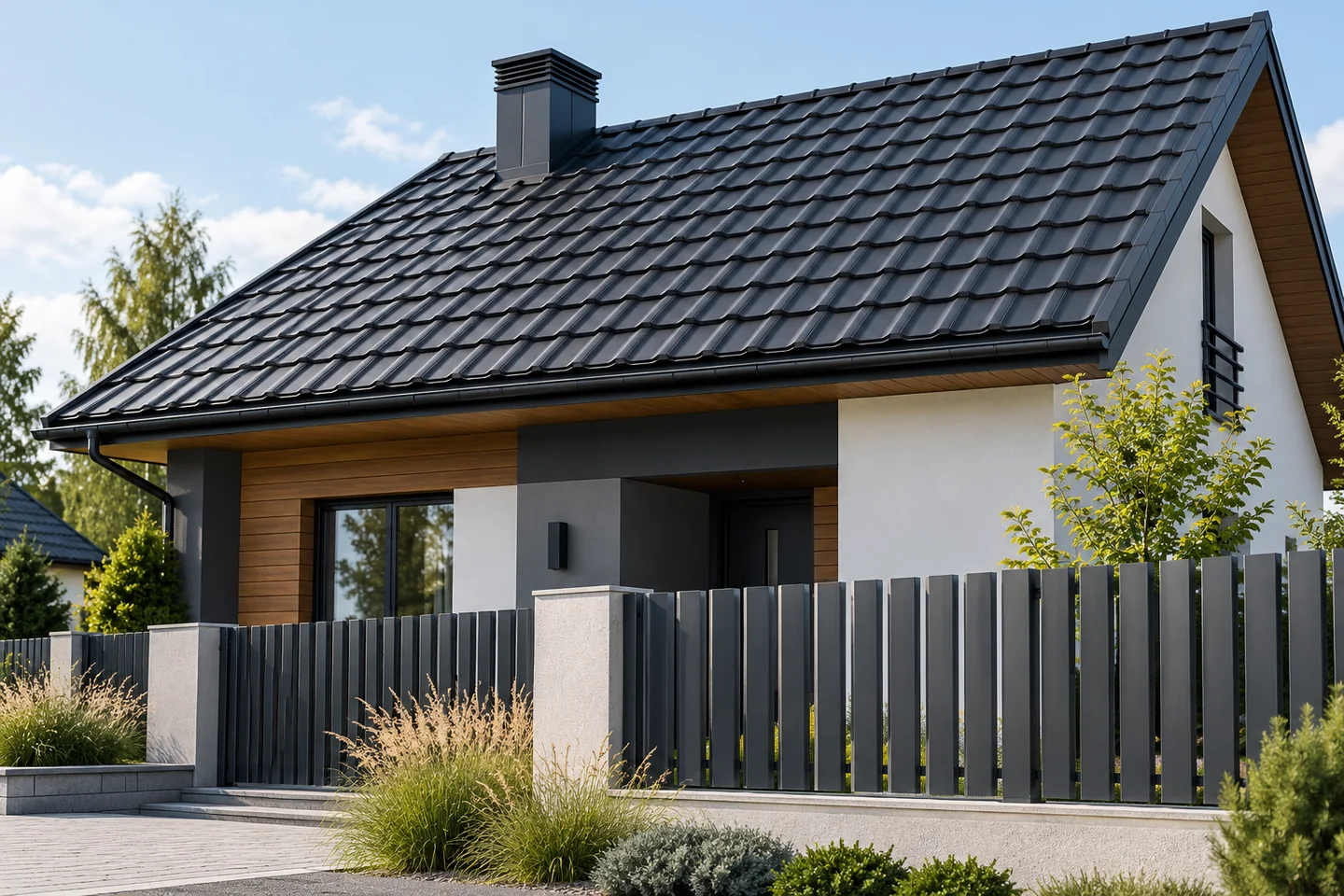
Tile-effect metal roofing is a good choice when low weight, efficient installation and a wide selection of forms matter. A ceramic covering may suit different architectural assumptions and methods of execution. Ultimately, choose a solution consistent with the design and the skills of the team. A well-executed detail at the roof valley or chimney is more important for tightness than the dispute over material itself.
7 branches. Materials closer to your project.

- SEROCK — Dzierżenin 34 E
- BŁONIE — ul. Sochaczewska 138A
- RADOM — ul. Grobickiego 8
- ŁÓDŹ — Natolin 8
- OLSZTYN — Barczewo, ul. Prosta 9
- WROCŁAW — ul. Jerzmanowska 10C
- GORZÓW WLKP. — ul. Zielona 33/34