Choosing a covering
Lightweight roof coverings and their effect on the supporting frame
In brief
The lightness of a roof covering depends on the whole assembly, not just the sheet. Metal roof tiles and trapezoidal sheets have low unit weight, but the load on the building is determined by the substrate, insulation, accessories and snow and wind actions. Before choosing, check the product data sheet to see whether the stated mass refers to a sheet or to a square metre of effective covering after laps. Compare specific models and variants, as different profiles use different amounts of steel. Remember that a light material does not exempt you from assessing the roof structure or from design-based fixing selection.
How to compare the mass of different coverings?
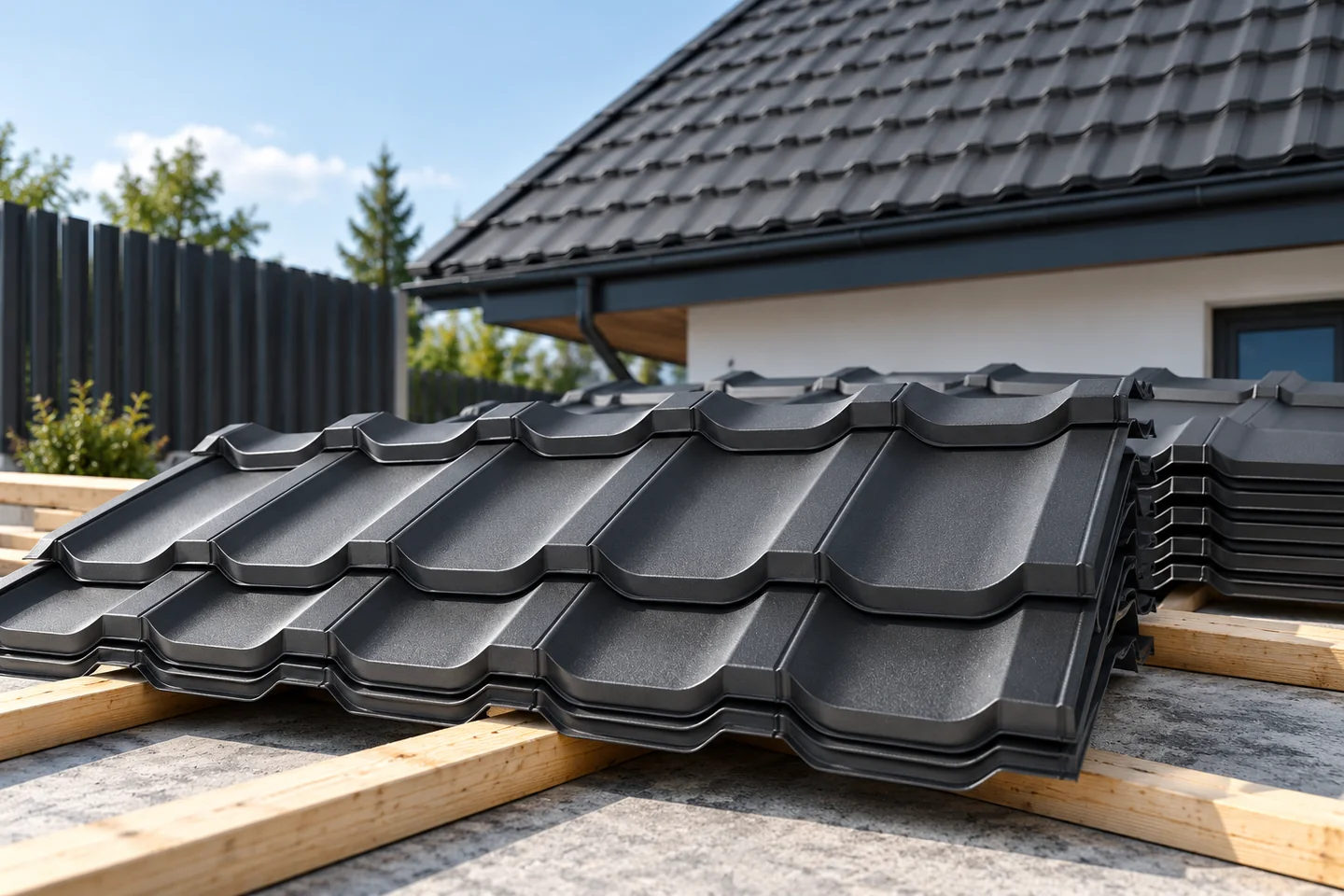
First check the unit in the product data sheet. The weight of a single sheet is not the weight per square metre of the finished roof. You need the effective covering area, i.e. the area remaining after laps are made. With modular tile-effect metal roofing, a small element may weigh several kilograms, but covering one square metre requires the appropriate number of such elements.
Different profiles use different amounts of steel for the same plan area. Therefore, even sheets of identical thickness need not have the same weight per square metre of covering. Compare specific models and variants. For a simple comparison, also enter the steel core thickness and the type of substrate required by the instructions.
Why does steel sheet work well for modernisation?
Cut and modular tile-effect metal roofing allow a covering of relatively low weight. This can be an advantage when replacing a heavier covering, particularly when the condition of the structure requires a cautious approach to additional loads. A lightweight material also makes delivery to the plot easier and the manual movement of smaller elements at the prepared site.
This does not mean that the old roof truss is automatically suitable for further use. Its moisture, biological damage, deflections and connections must be assessed. Sometimes the problem is the load-bearing capacity of a support or improper alteration carried out earlier. A lighter sheet does not strengthen weakened timber and does not straighten a sagging roof slope.
Is trapezoidal steel sheet T18 always lighter than T35?
Weight is determined by, among other things, the steel thickness and the developed section. A reliable conclusion cannot be drawn from the profile number alone. A T18 made from thicker sheet may have a different weight than expected after seeing a thin T35 sheet. The data must be read for the variant actually entered in the order.
Profile selection should take into account load-bearing capacity, support spacing and roof pitch. A very light sheet that requires closer support need not give the lightest complete system. Likewise, a higher profile may be structurally beneficial but is not always necessary on a small extension. The selection should be justified in the documentation.

What about a roof sandwich panel?
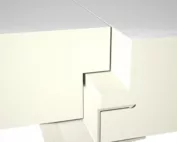
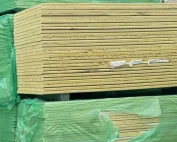
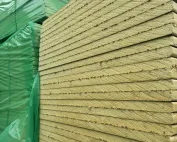
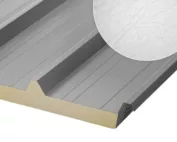
A sandwich panel contains two facings and an insulating core, so its weight should not be compared with bare sheet without insulation. It is part of a different system. In the appropriate application it replaces several separately installed layers. A fair comparison covers similar thermal performance and the same building function.
The PIR core helps to reduce the thickness and weight of the insulation at the required thermal resistance. Nevertheless, a long panel requires suitable equipment for transport and installation. Its size may be more important organisationally than the weight per metre. Access to the plot, the unloading point and the possibility of safe lifting must be checked.
Is a lightweight roof more susceptible to wind?
Wind resistance is not determined by weight alone. Forces must pass through the covering, fixings, battens or purlins all the way to the building structure and supports. If any section of this connection is inadequate, a heavy covering does not solve the problem. In corner and edge zones, special verification of the fixing is usually required.
The number of screws must not be reduced on the assumption that the sheet is light. Likewise, they must not be inadvertently concentrated in a location that the instructions do not provide for fixing. The correct arrangement results from the loads and the system. In an existing building, it is also worth checking the fixing of the battens to the rafters, not only the visible screw heads.
How should I prepare a comparison before buying?
Ask for a schedule of all layers with their mass per square metre of roof. Add accessories, planned photovoltaics and access elements. Pass the information on to the person checking the structure. Snow and wind are separate actions, so they should not be subtracted from the savings obtained through a lighter material in a simplified calculation.
For the investor, the number of deliveries, the size of the elements and the organisation of work are also important. Modular tile-effect metal roofing may be more convenient on a plot with difficult access, while long sheets on a simple roof slope may reduce the number of joints. The best decision combines suitable weight, verified load-bearing capacity and the realistic installation possibilities of the specific building.
7 branches. Materials closer to your project.

- SEROCK — Dzierżenin 34 E
- BŁONIE — ul. Sochaczewska 138A
- RADOM — ul. Grobickiego 8
- ŁÓDŹ — Natolin 8
- OLSZTYN — Barczewo, ul. Prosta 9
- WROCŁAW — ul. Jerzmanowska 10C
- GORZÓW WLKP. — ul. Zielona 33/34