Fences
Would a sheet metal or metal picket fence suit your property?
In brief
First work out which parts of the plot genuinely need screening. Solid trapezoidal sheet panels and see-through metal slats do different jobs, so before deciding, assess wind exposure, how much privacy you want, the shape of the ground and the style of the house. Full infill is handy beside a terrace or a busy street, while at a driveway good visibility matters most. You need not repeat one pattern across the entire property – some sections can have smaller openings, others an open view of planting and the entrance.
What kind of screening do you need every day?
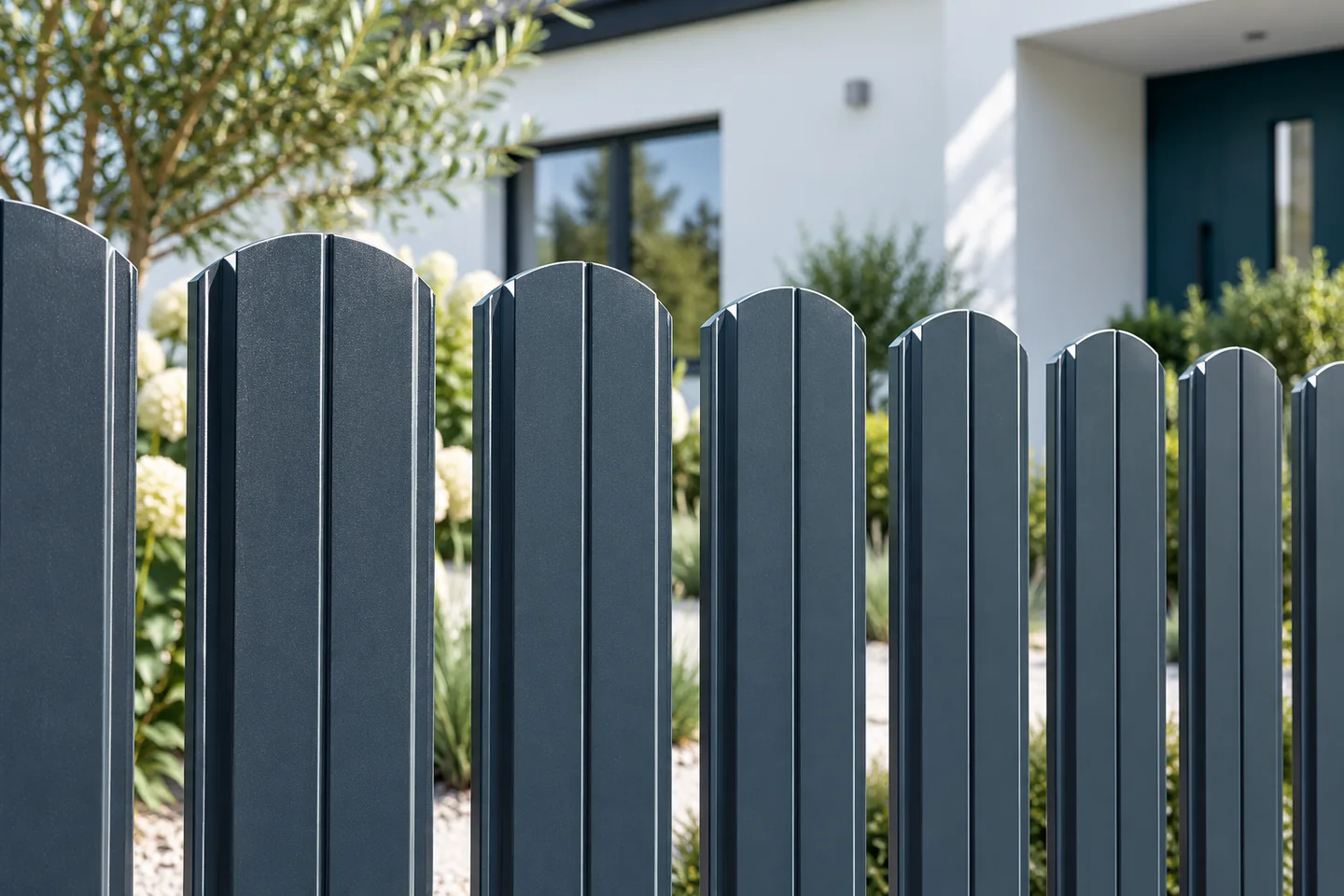
Start with the places you actually want to screen. By a terrace or a busy road, a full infill may be convenient. At a driveway, visibility becomes important. You do not have to choose one type of panel for the whole plot. Part of the fence can have smaller gaps, while another part leaves an open view of greenery and the driveway.
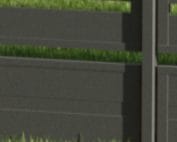
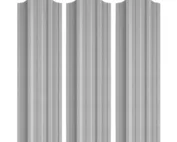
Trapez T18 creates an even, full surface. Metal slats allow the gap to be adjusted through their spacing. Two layers of slats can restrict visibility at an angle, but they do not mean complete tightness. Before ordering, look at a section of a bay from both sides. That is simpler than judging the degree of screening from a small catalogue photo.
Why is wind so important?
A full sheet offers greater resistance to wind than a similar panel with large gaps. The load is taken by the sheets, their fixings, the rails, the posts and the foundations. Choosing a rigid profile alone therefore does not solve the question of stability. A tall fence in open terrain must be treated as a whole structure, not a set of random parts.
Densely spaced slats, or slats on both sides of the rail, can also strongly restrict airflow. Do not assume that every slat fence is light for the posts. The spacing of the supports and the way they are set should follow from the site conditions and the structural design. Corners, the gate and places where the height changes require particular attention.
How do you match the fence to the house and the terrain?
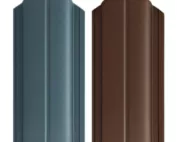
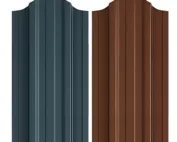
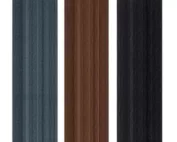
For a simple house, a calm rhythm of vertical slats or uniform trapezoidal fields looks good. The colour can be matched to the joinery, roof flashings or the gate. It does not have to match the entire covering. A large, dark surface looks different from a small sample. It is worth placing a sample in sun and shade, also from the neighbouring plot side.
On sloping terrain, plan how the panels will run. Stepping leaves offsets, while a layout parallel to the slope requires suitable connections and cutting. Draw out the clearance from the ground. The infill should not stand in the soil or collect wet leaves. Also check whether, after rainfall, water will be retained at the lower edge of the sheet.

Will both sides look the same?
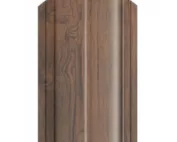
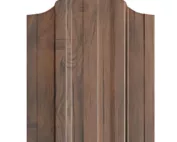
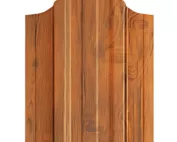
When choosing the coating, check how the back of the element is finished. A colour designation on the front does not guarantee the same appearance on the other side. This matters at a terrace, entrance and on the boundary between gardens. Slats with decorative finishing on both sides are available. However, this variant must be confirmed in the order.
Inspect the edges and ends of the profile. The folded edge, the way it is finished and the screw layout affect both appearance and performance. For trapezoidal steel sheet, plan flashings for the top and sides. Joints should not create water traps. Do not mix components just because they are a similar colour. They may differ in geometry, gloss and fixing rules.
How much upkeep does a fence require?
Coated steel does not need regular painting like bare wood. It still requires inspections, however. Remove swarf after installation, check cut edges and damage from mowing. Wash off dirt using a method approved for the given coating. Strong agents or harsh brushes can worsen the appearance instead of improving it.
Pay attention to areas that are constantly wet and contact with road salt. Do not lean soil, fertiliser or damp vegetation directly against the sheet. For a larger scratch, first determine the repair method for the coating used. A spot repair is not intended to mask major installation defects. It is worth correcting loose fixings before the wind starts moving the entire bay.
How can you compare quotes without overlooking costs?
Compare a complete run of the same height and degree of screening. The price of a single metal slat says little without its width and the planned gap. For sheet, add laps and flashings. Both variants require posts, rails, fixings, setting the supports and labour. The gate and the pedestrian gate should have their own line items in the quote.
A good choice answers three questions: how much view you want to keep, how strongly it blows on the plot and how both sides of the fence should look. Only then is it worth comparing coating variants and price. Ask for a sketch of the bays and a sample of the component. This allows you to check the rhythm, gaps and details before ordering material for the entire fence.
7 branches. Materials closer to your project.

- SEROCK — Dzierżenin 34 E
- BŁONIE — ul. Sochaczewska 138A
- RADOM — ul. Grobickiego 8
- ŁÓDŹ — Natolin 8
- OLSZTYN — Barczewo, ul. Prosta 9
- WROCŁAW — ul. Jerzmanowska 10C
- GORZÓW WLKP. — ul. Zielona 33/34