Fences
Six reasons to consider a metal fence
In brief
A metal fence is worth considering because pales and sheet infill can be matched to the house, budget and privacy needs. Before deciding, however, check the stiffness of the structure, the fixings and the wind load. These parameters determine whether the coating’s advantages and layout freedom translate into durability in practice. Factory-coated steel does not require the same renewal cycle as bare wood, but it is not resistant to every damage or every chemical agent. Regular inspection and coating-appropriate washing suffice under proper use.
1. Less work refreshing surfaces
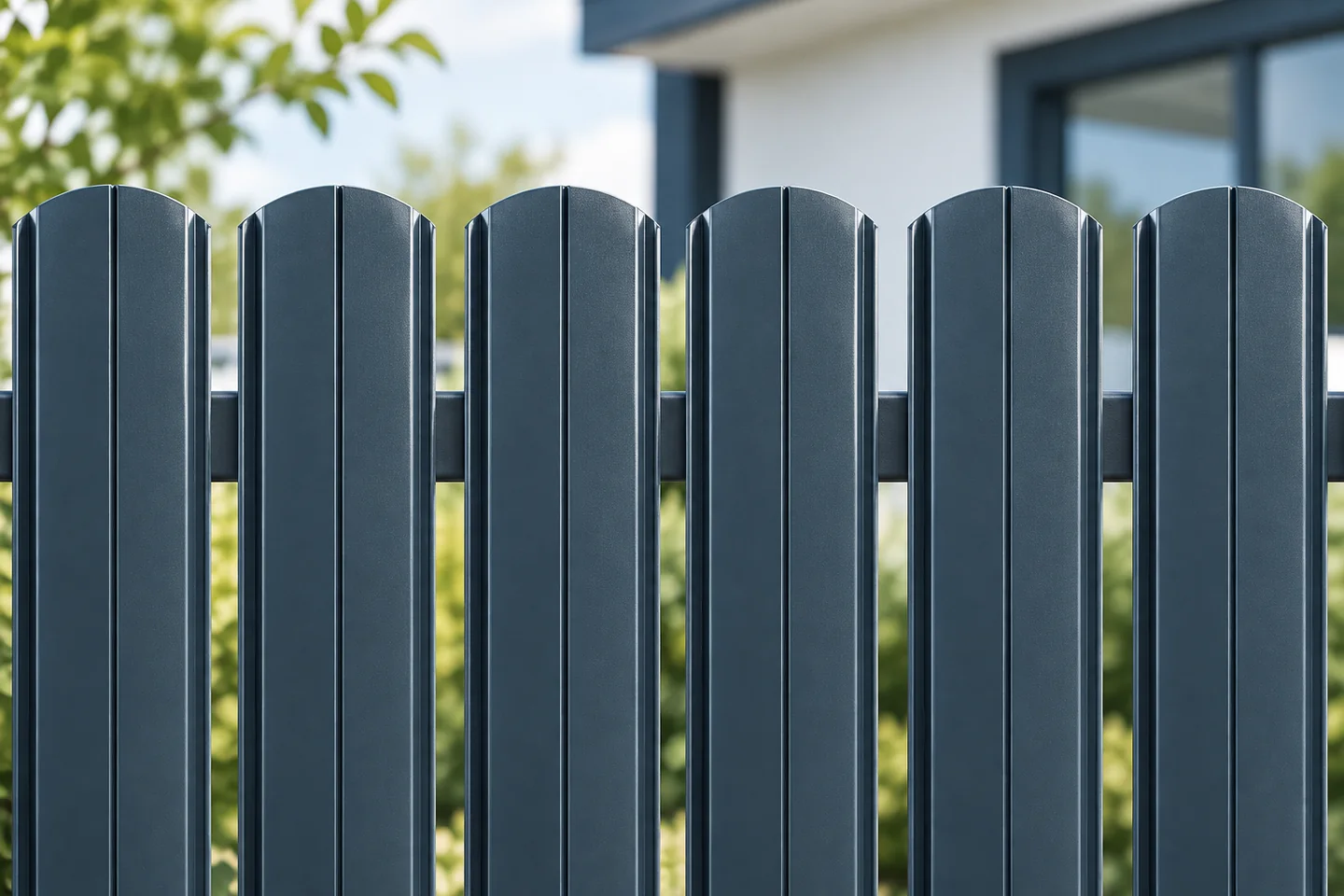
Pickets made of factory-coated steel do not require the same renewal cycle as bare wood. Protection is provided by appropriately selected metallic and organic layers. With correct use, regular inspection and cleaning suited to the coating are sufficient. However, this does not mean resistance to every chemical or every type of damage.
After installation, remove metal filings and check the cut areas. Scratches reaching the substrate require repair in accordance with the instructions. Avoid contact with wet soil, mortar and the salt used on the driveway in winter. If a dense hedge grows along the fence, make sure there is access for cleaning. Accumulated leaves and moisture make it difficult to keep the surface in good condition.
2. Adjustable privacy
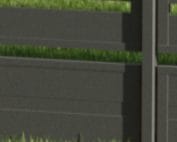
The gap between the pickets affects the view from the street, the amount of light and ventilation. A small gap provides greater screening but also changes the wind load on the structure. A double-sided arrangement can restrict see-through visibility at certain angles. However, it does not automatically provide full privacy from every position and at every gap width.
Before ordering, set up several samples at the planned spacing. View them from the street, from the terrace and from ground-floor windows. Full infill made of T18 trapezoidal sheet screens more strongly than a single row of pales. However, it may shade the garden more distinctly and act like a sail. Posts, rails and foundation must be matched to the actual degree of enclosure of the bay.
3. A wide choice of proportions and layouts
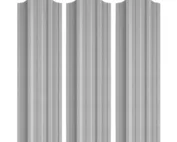
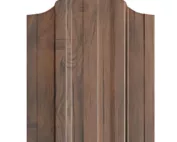
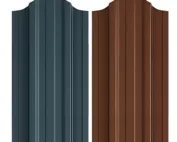
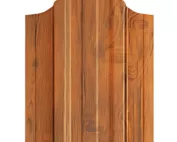
Metal pales can be used in a vertical or horizontal rhythm if the given system permits such installation. The width of the element, the shape of its end and the height of the bay are important. Narrow, regularly spaced pales produce a different effect from wide strips. It is worth repeating the proportions visible in the gate, balustrade or façade division.
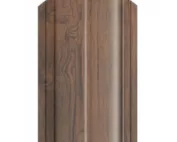
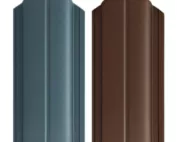
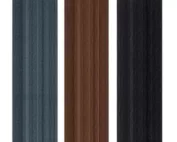
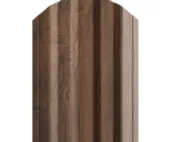
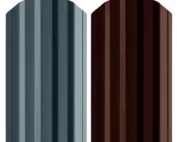
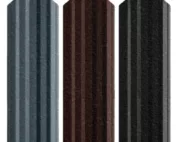
Choose the colour on a sample in the surroundings of the house. The same colour number in matt and gloss may look different. Also check the side facing the garden. A single-sided decoratively coated version does not have to have an identical finish on the back. If both sides are clearly visible, double-sided coating may be more important than an additional pattern on the front.

4. Convenient adaptation to the plot
Separate pales make it easier to design the infill for non-standard section widths. However, the number of elements must be calculated for each bay. Take its clear width, the width of the pale and the internal and edge gaps. It is not enough to multiply an approximate consumption per metre by the total length of the fence.
On a sloping plot, you can consider stepping the panels or another solution adapted to the terrain. Not every system allows the rails to be rotated and the fixing angle to be changed. Establish this before purchase. Also plan the clearance above the ground so that the components do not stand in water. At the gate, take into account its movement, the drive and the space needed for safe opening.
5. Simpler replacement of a single element
In a fence made of separate pales, a damaged part can often be unscrewed without dismantling the entire panel. This is useful at a driveway, where accidental impact is easy. Access to the fastener heads and the fixing method should be planned from the start. A component hidden behind cladding may require a much greater scope of work.
Keep the profile name, the coating parameters and the colour designation in your purchase documentation. You can also order a small number of spare pales. After a few years, a new batch may have a slightly different shade from the surface exposed to the sun. Mechanical repair is therefore often easy, but a perfect visual match is not always possible.
6. Budget control through the choice of infill
The cost of a fence can be shaped by the width of the pales, their number and the type of coating. When comparing quotes, count the entire section together with the posts, rails, fasteners and foundations. Also include the gate and the pedestrian gate. A low price for a single metre of pale says little about the cost of a finished panel of a given height.
Look for savings in a simple, repeatable layout, not in randomly reducing the number of fixings. Denser or full infill may require a stronger structure. It is worth ordering one quote for the chosen degree of privacy and another for a more open variant. Then you are comparing specific solutions that will actually meet your expectations.
7 branches. Materials closer to your project.

- SEROCK — Dzierżenin 34 E
- BŁONIE — ul. Sochaczewska 138A
- RADOM — ul. Grobickiego 8
- ŁÓDŹ — Natolin 8
- OLSZTYN — Barczewo, ul. Prosta 9
- WROCŁAW — ul. Jerzmanowska 10C
- GORZÓW WLKP. — ul. Zielona 33/34