Installation and details
A roofer’s work and responsibilities on site
In brief
In Poland, a roofer is responsible for the watertightness and durability of the roof, not merely for fixing the sheets. The work covers substrate preparation, batten installation, laying the covering and forming details such as flashings, ventilation and drainage. Before signing a contract, check that the scope of work is clearly defined, who coordinates with the carpenter and other trades, and which items the client supplies. This limits disputes and later corrections. Typical scope varies, so do not assume every team will carry out all tasks.
What work falls to the roofer?
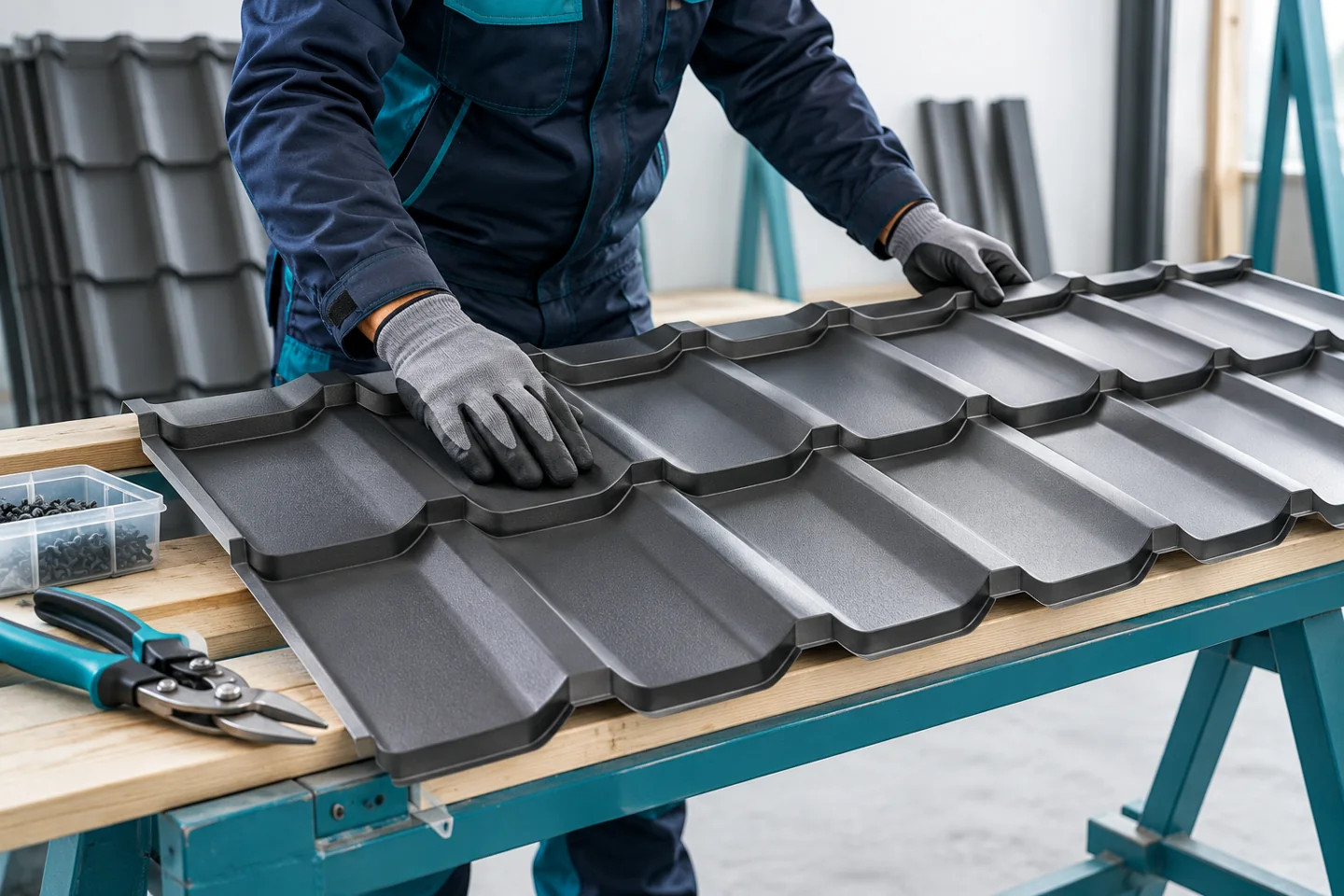
The typical scope includes preparation of the layers under the covering, installation of battens, laying of the steel sheet and execution of flashings. Depending on the contract, the roofer also installs gutters, roof windows and accessories. However, one should not assume that every crew will carry out all these tasks. The scope must be recorded, together with the elements supplied by the investor.
Execution of the roof structure is usually a carpentry task, although one company may combine both specialities. The roofer does not replace the designer when changing the structural layout. He should, however, notice uneven substrate, lack of support or collision with installations and report the problem before covering. Good agreements at the beginning save dismantling at the end.
Why are details so important?
Water does not leak only through major damage. A poorly finished chimney flashing, incorrect overlap or an incorrectly tightened screw can be the problem. Roof valleys, the eaves and the ridge are equally important. Each of these places must drain water in accordance with the roof layout. Sealant should not replace correctly formed steel sheet.
Ventilation requires maintaining the air flow path provided for in the design. Accidental filling of all gaps can close it. The roofer should be able to explain where air enters under the covering and where it exits. In an insulated attic, cooperation with the person carrying out the insulation and the airtight layer from the inside also matters.
What skills does working with steel sheet require?
Tile-effect metal roofing, modular panels and trapezoidal sheeting each have different rules for laying and fixing. The contractor should follow the instructions for the specific profile. The direction of installation, the geometry of the first sheet and the arrangement of fasteners are important. A mistake at the start of the roof slope can grow with each successive row and make it difficult to close the edge evenly.
Tools approved by the manufacturer, usually cold-cutting, are used for cutting coated steel sheets. Swarf must be removed before it starts to corrode on the surface. During handling, sheets must be protected against bending and scratching. Care in such operations has a direct effect on the later appearance and durability of the covering.

What to ask before choosing a crew?
Ask for examples of roofs with similar material and similar details. Ask who carries out the flashings, how the measurement is done and what the quote covers. A good conversation should also cover transport, storage and protection of the building against rain. A declaration of many years of experience alone does not describe how your roof will be executed.
Confirm the team’s availability for corrections and the conditions of liability for the work. Ask how covered layers will be documented. For larger projects, partial inspections are useful. They allow the membrane, substrate and flashings to be inspected before the covering conceals them. This is a better moment to clarify doubts than a final photograph from garden level.
What should cooperation on site look like?
Before work begins, confirm that the delivery matches the order. The profile, colour, quantity, lengths and visible damage must be checked. Establish the unloading and storage location for the sheets. The contractor should know the installation penetration plan and the position of equipment. Later cutting of random openings complicates maintaining tightness.
If a change of material or installation method becomes necessary, agree it before the work is carried out. Record the reason, the cost and the effect on the documentation. Not every decision can be made verbally on the scaffolding. This applies in particular to the support of sandwich panels, structural fixings and changes to the anticipated roof loads.
What should be accepted after completion of the works?
The acceptance inspection covers the geometry of the covering, the condition of the coating, the fixings, the flashings and the drainage. Swarf, foil remnants and waste must be removed from the gutters. Establish whether all specified accessories have been installed and whether access to the chimney is safe. Note any doubts in the report together with the deadline for their clarification or rectification.
Obtain the specification of the installed material, the warranty conditions and the maintenance rules. Keep photographs of the works and the agreed changes. A well-executed roof still requires inspections, especially after severe weather events. The roofer should indicate which activities the owner can observe from below and which require access by a prepared and secured team.
7 branches. Materials closer to your project.

- SEROCK — Dzierżenin 34 E
- BŁONIE — ul. Sochaczewska 138A
- RADOM — ul. Grobickiego 8
- ŁÓDŹ — Natolin 8
- OLSZTYN — Barczewo, ul. Prosta 9
- WROCŁAW — ul. Jerzmanowska 10C
- GORZÓW WLKP. — ul. Zielona 33/34