Building insulation
Where do EPS, XPS and PIR insulation belong in a building?
In brief
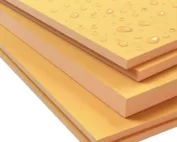
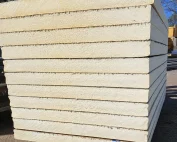
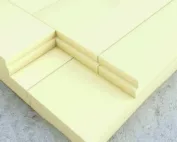
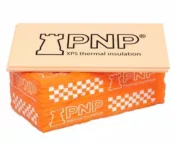
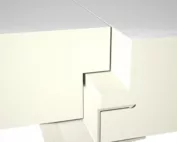
The choice of insulation should be determined by the conditions in which it works. A wall under render, a floor and an inverted roof need different properties. EPS, XPS and PIR are therefore not three names for the same solution. It is worth first describing the task, and only then comparing the thickness, price and method of installation of specific boards. EPS is expanded polystyrene. Its structure consists of bonded granules. XPS is produced by extruding polystyrene and has a compact structure of fine cells. PIR is a different type of rigid foam, often offered with facings selected for the application. Colour alone does not determine the parameters.
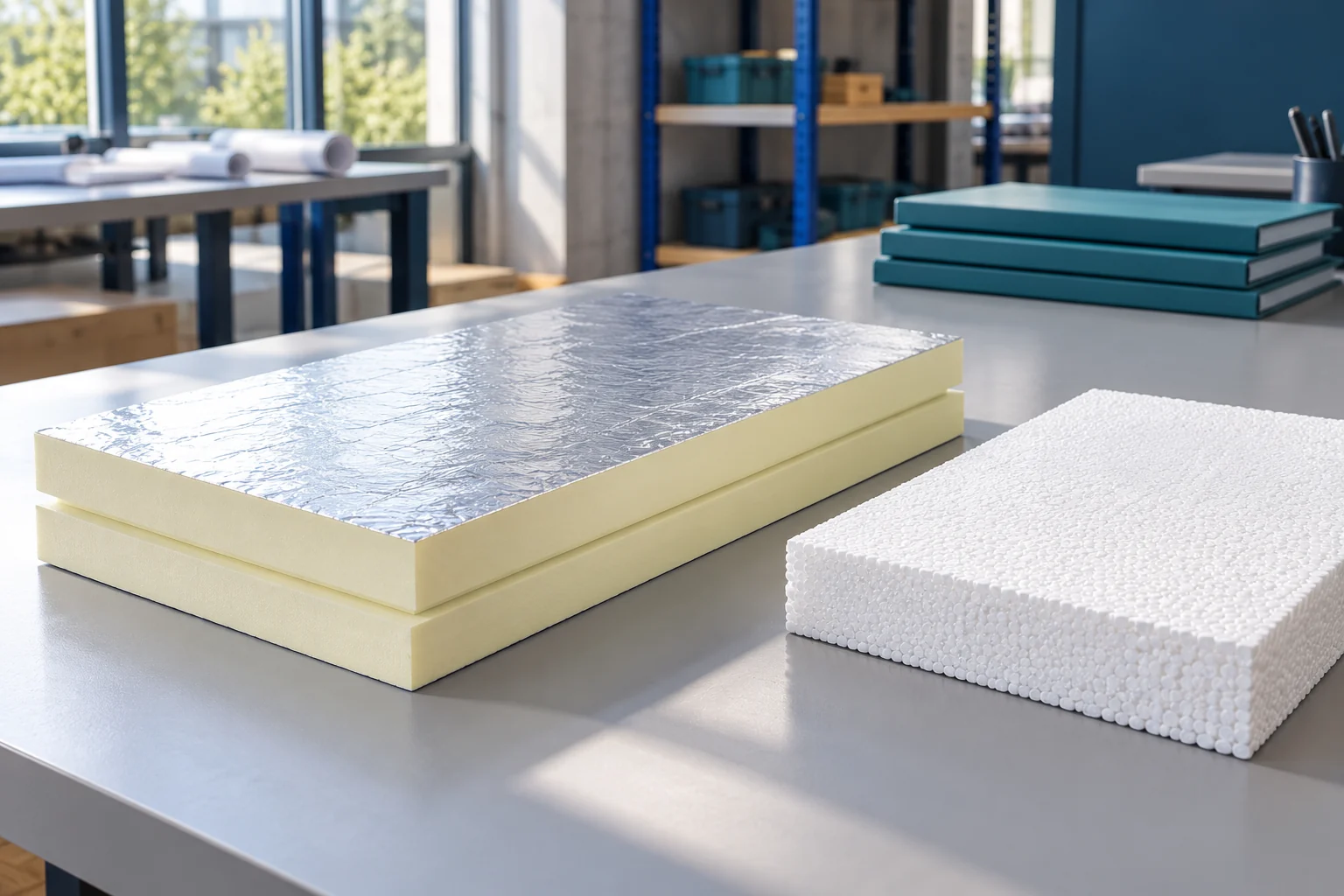
What distinguishes these materials?
Within each group there are variants with different properties. A façade board is not automatically intended for a heavily loaded floor. PIR insulation in foil and the variant for plaster also require separate selection. The full designation matters more than the mere word EPS or PIR.
Do not confuse insulation boards with sandwich panels with steel facings. In a panel the core works together with the sheets in the finished product. A loose thermal insulation board needs the remaining layers and proper support.
How to compare thickness on a common basis?
The simplest starting point is the resistance R = d/λ. Let us take a target for the layer alone of R = 4.00 m²·K/W. For an example EPS with a lambda of 0.038, 152 mm is required by calculation. For XPS with a lambda of 0.034 the result is 136 mm, and for PIR with a lambda of 0.022 around 88 mm.
These thicknesses serve the thermal comparison. The available dimensions must be chosen and the parameters of the specific variant used. A different PIR may have a lambda of 0.025 or 0.026, and a different polystyrene a lower one than assumed in the example. There is no single fixed relationship between all products.
The R of the layer is not the U of the whole wall or roof. The other materials and details affect the result. If changing the insulation requires a different substructure or connections, you cannot keep only the d/λ result and consider the task closed.
When does moisture govern the selection?
In places exposed to water, the intended use of the product and the properties relating to water absorption must be checked. Suitable XPS variants are used, among other things, in perimeter insulation and inverted roofs. This does not mean that every XPS suits any pressure or layer build-up.
PIR with low water absorption does not thereby become waterproofing. In a classic roof it works beneath the water-protection layer, in accordance with the system. It should not be moved above the waterproofing of an inverted roof without checking. The function of thermal insulation and protection against water must be kept separate.
For internal insulation, the diffusion resistance of the facings and the behaviour of the entire wall are significant. The aluminium surface of PIR requires analysis and airtight joints. The choice should not result solely from the need to preserve a few centimetres of room space.

How to check loads and finish?
Under the floor, properties are selected to match the loads and their duration. The stress at 10% deformation is not a ready-made permissible value for permanent pressure. The entire system is assessed, including load distribution through the layers above. The hardness felt underfoot says little on its own.
On the façade, compatibility with the render system is important. Adhesives, mesh, fixings and renders must correspond to the insulation used. A smooth film should not be treated as a surface intended for mortar. A product with a suitable facing and range of application is needed.
Fire requirements also apply to the specific product and system. They are not determined by lambda alone. When changing material, check the effect on the entire building element rather than transferring the class of one system to randomly assembled layers.
How do you link the choice to the construction schedule?
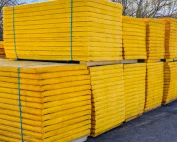
First determine the materials for the individual building elements, then the formats and deliveries. Floor panels may arrive at a different time than façade panels. Storing a large quantity of material on site does not always reduce cost. Packs require protection against damage and suitable conditions.
Compare the cost of the complete solution. Include thickness, fixings, finishing, waste and transport. Thinner insulation may simplify the detail at the threshold, but the more expensive variant is not always necessary on an open surface. It is worth calculating the task within its actual constraints.
On acceptance, check the designation of the variant and conformity with the place of use. Similar packaging is easily confused between crews. A clear plan for deliveries and issuing material reduces the risk of installing the wrong panel in a hard-to-reach layer.
Short answers from site
Can one type of insulation be ordered for the entire building?
Only if the appropriate variants have confirmed application in every location. Wall, roof and floor place different requirements, so a shared material name is not enough.
Does a more expensive board with a lower lambda always mean a cheaper renovation?
No. You have to calculate the whole system and the benefit of a smaller thickness. The cost of finishing, fixings and work on details can change the result.
7 branches. Materials closer to your project.

- SEROCK — Dzierżenin 34 E
- BŁONIE — ul. Sochaczewska 138A
- RADOM — ul. Grobickiego 8
- ŁÓDŹ — Natolin 8
- OLSZTYN — Barczewo, ul. Prosta 9
- WROCŁAW — ul. Jerzmanowska 10C
- GORZÓW WLKP. — ul. Zielona 33/34