Building insulation
When should you choose PIR 120 × 60 cm and when the larger 120 × 240 cm boards?
In brief
A large PIR board can speed up covering an open area. The smaller format is easier to carry into a tight room and to fit around many openings. The whole course of the works should determine the choice. It is worth calculating the cutting layout and checking the transport route before the material is ordered by the square metre. Among the available insulation boards, sizes of 600 × 1200 mm and 1200 × 2400 mm are found. Their geometric area is 0.72 and 2.88 m² respectively. The large format therefore has four times the area. This does not mean, however, that every PIR variant is offered in both dimensions.
How should you read the format given in the offer?
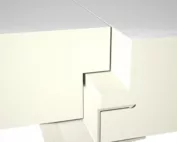
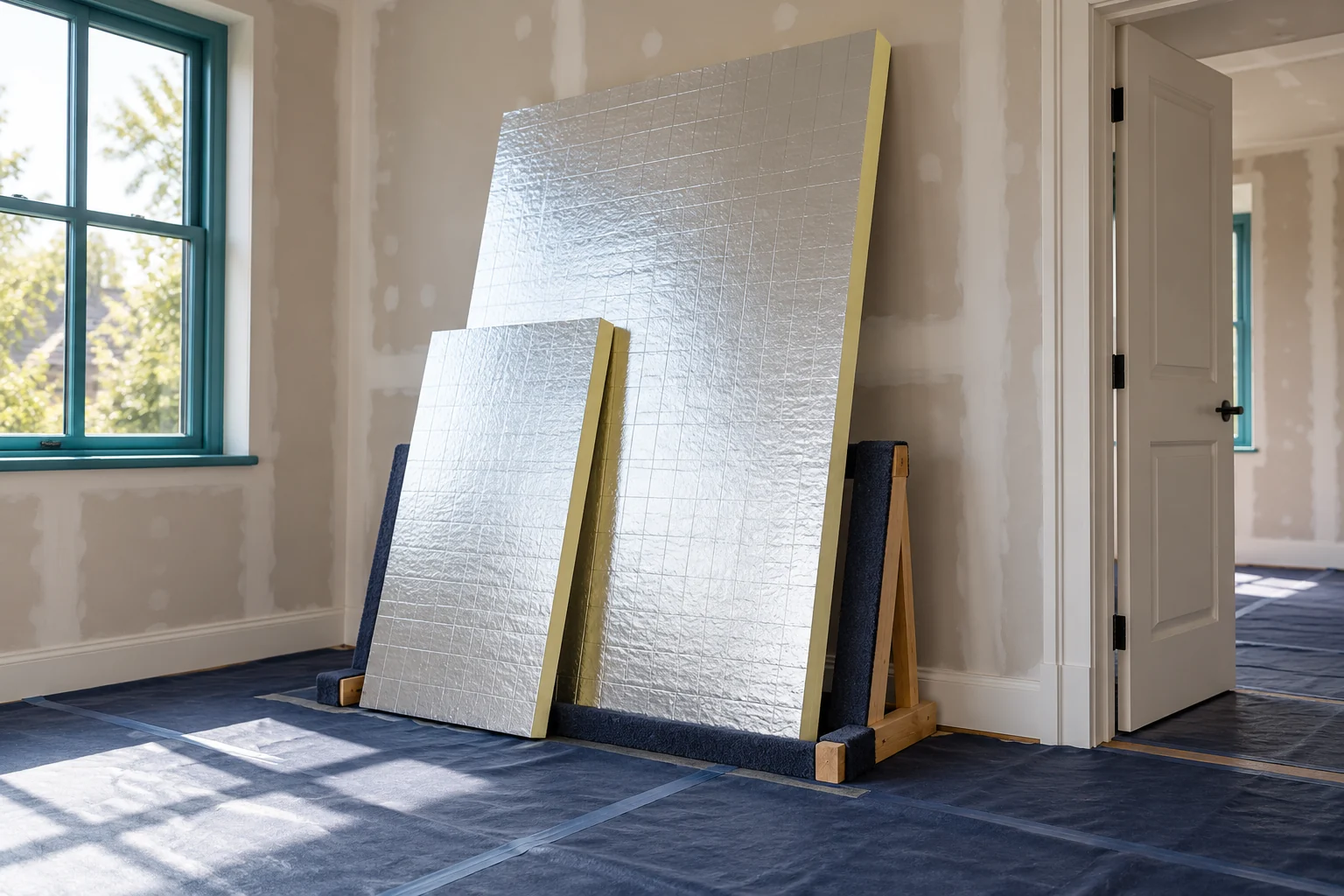
Check the edge type. With a rebate or overlap, the coverage area may differ from the product of the external dimensions. Order data and wall layout data should refer to the correct basis. It is also worth asking about tolerances and the number of pieces per pack.
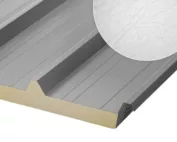
Do not mix foil-faced insulation board formats with sandwich panels with steel facings. The latter have a defined modular width and can be produced in much greater lengths. They require a different transport and installation plan.
Where does the large format really make work easier?
On a wide, regular surface, a larger board reduces the number of elements and joints. This makes it easier to keep the layout tidy if the team has the right space and way of carrying. The benefit decreases with many openings, corners or short sections.
An example of 14.40 m² corresponds geometrically to five boards of 1200 × 2400 mm or twenty boards of 600 × 1200 mm. This comparison does not include rebates or waste. It does, however, show the difference in the number of elements to be carried and fitted.
A large board requires care when carrying. It should not break or bend on random supports. Check the space for turning the element, the room height and access to the work position. The low weight of the foam does not remove the problem of the large size.
When do smaller boards limit the trouble?
In a renovation via a narrow stairwell, a smaller format can simplify logistics. It is easier to bring to the recess, the loft or behind existing services. It is also convenient for surfaces that require many short sections anyway.
A larger number of joints, however, requires careful execution. Where the facing is to serve as a sealed layer, the connections must be properly closed. Savings in transport should not lead to this work being omitted.
Check the cutting plan on the drawing. A small board does not always produce less waste. With an unfavourable module it may leave many narrow strips. Some of them cannot be reused in the planned layout. The comparison should cover both variants over the same area.

How should delivery and storage be planned?
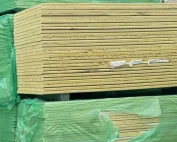
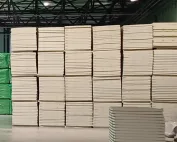
Measure the gate, the doors, the corridor bends and the space by the scaffolding. Check whether the pack can be unloaded without dragging it along the ground. A large format requires a suitable number of people or equipment in line with the rules for transporting the material. The plan should be ready before the lorry arrives.
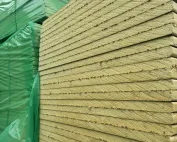
Store the boards under conditions that protect them from water and damage. Do not place heavy materials on the insulation. Watch out for sharp edges on supports and on adjacent elements. Damaged facing may require assessment before use.
For staged renovation, consider deliveries that match the sequence of works. Too large a batch will block passageways and increase the number of moves. Too small batches may raise the transport cost. It is worth comparing both costs instead of being guided solely by the price of the board itself.
How do I order the right number of pieces?
Make a board layout with the cut pieces marked. Add the reveals and the surfaces that are easily overlooked in a simple take-off. Then check the packaging method. If one board is missing, it may be necessary to buy a whole pack. This matters especially for a small renovation.
Record the format, thickness, edge type and facing in the order. For two delivery stages, keep the same variant. A different board of identical dimensions may have a different lambda or may not fit the adopted method of finishing.
On delivery, count the pieces and compare the dimensions. Check the corners and the outer surfaces of the packaging. Arrange the material in the order in which it will be used. This way the larger format brings benefit where it was planned, rather than becoming an obstacle at the next stage of the renovation.
Short answers from the site
Will four small boards always replace one large one with no difference in consumption?
They have the same geometric area for the stated formats. Actual consumption, however, depends on the overlap, the joints and the cutting plan on the given partition.
Does a large format have a better lambda than a small one?
The dimension alone does not determine lambda. You need to compare the parameters of the same variant, thickness and facing. The format mainly affects the layout and organisation of the work.
7 branches. Materials closer to your project.

- SEROCK — Dzierżenin 34 E
- BŁONIE — ul. Sochaczewska 138A
- RADOM — ul. Grobickiego 8
- ŁÓDŹ — Natolin 8
- OLSZTYN — Barczewo, ul. Prosta 9
- WROCŁAW — ul. Jerzmanowska 10C
- GORZÓW WLKP. — ul. Zielona 33/34