Walls with mineral wool
What does the fire class of an insulated wall panel with a mineral wool core mean?
In brief
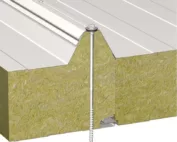
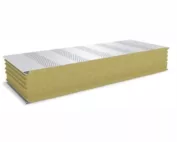
Mineral wool is associated with fire protection, but its description does not replace the classification of the finished panel. A distinction must be made between reaction to fire and the fire resistance of the wall. Connections and fixings also matter. When ordering, it is worth checking this data separately so as not to attribute properties to the product that have not been declared. A sandwich panel contains more than just mineral wool. It has steel facings, bonding layers and coatings. Reaction to fire is assessed for the product under specified conditions. The class of the mineral material alone therefore cannot be attributed to the entire panel. This is one of the more common mistakes in short offer descriptions.
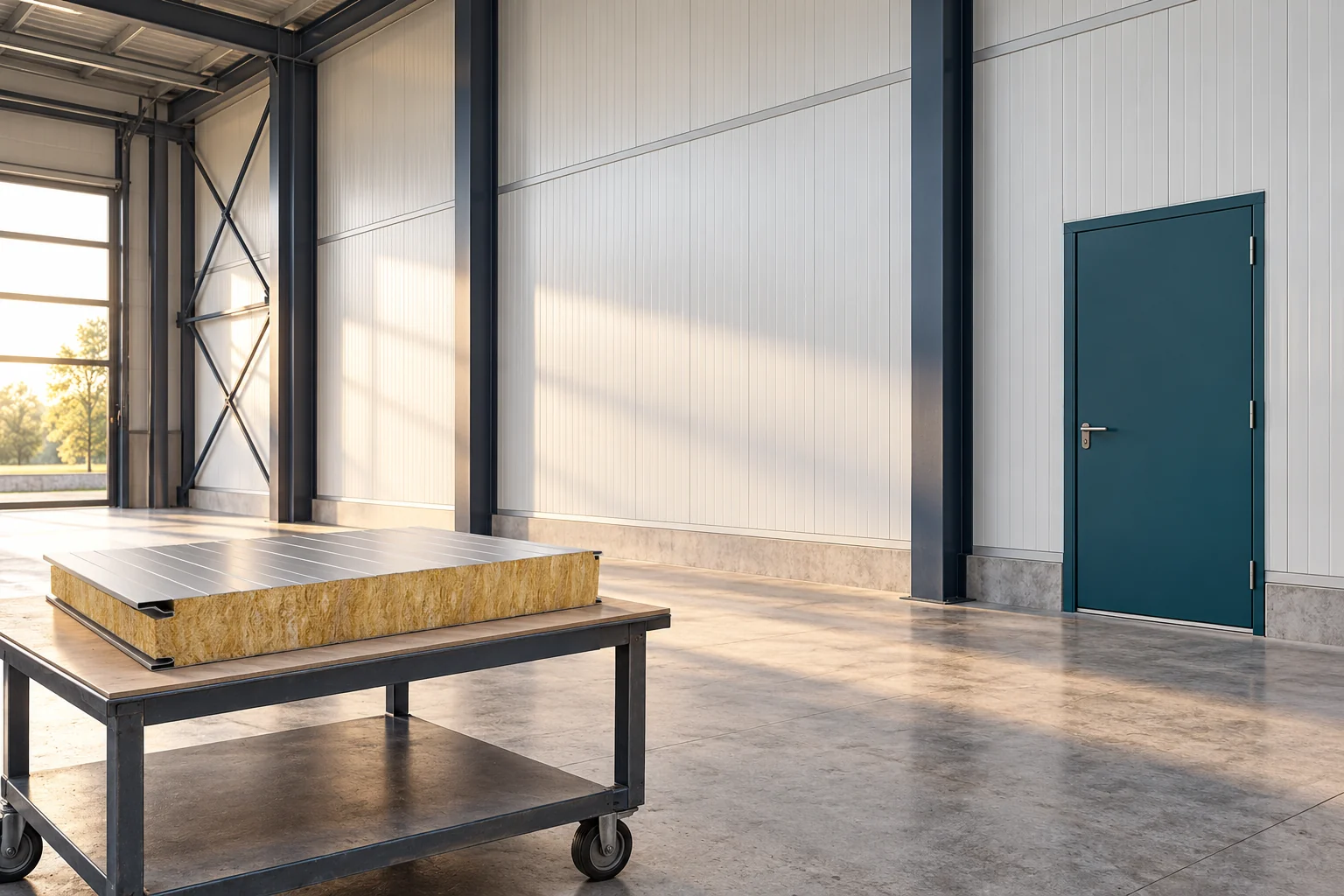
Why does the core class not describe the entire panel?
For specific boards with mineral wool, class A2-s1,d0 is encountered, for example. It should not be turned into a description of A1. These are separate classes. The information on smoke and burning droplets is part of the designation. It should be read together with the scope of the document, not picked out as a standalone slogan.
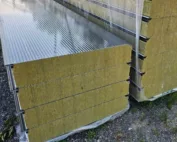
When comparing quotes, ask for the exact product and the declaration of performance. A photo of the yellow core or an assurance of ‘fire-resistant wool’ is not enough to confirm the class of the whole board.
What is the difference between reaction to fire and fire resistance?
Reaction to fire describes the contribution of the product to the development of a fire in a specific test and application. Fire resistance concerns the behaviour of a building element over a time expressed in minutes. The E and I designations refer to integrity and insulation respectively. R denotes loadbearing capacity in solutions where it is assessed.
Therefore, the designation A2-s1,d0 is not equivalent to EI60 or any other time. A wall with a given fire resistance requires the correct configuration. It is influenced by the boards, supports, fasteners and connections to the surroundings. A document covering this assembly is needed.
The word ‘fire-resistant’ should also not be used without explaining the scope. It may suggest resistance to any fire, which no short product description confirms. A precise designation is more useful than a general promise.
What installation conditions need to be checked?
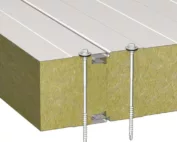
The classification may specify the thickness, wall orientation, span and width of supports. The type of fastening and the connection details are also important. A change to one element may require an assessment of whether it still falls within the permitted scope. It must not be assumed that a larger number of random screws will improve every result.
When extending a building, the junction with the existing part must be checked. The new wall does not act in isolation from the roof, floor and adjacent partitions. If the connection remains discontinuous, a good classification of the board field alone will not solve the problem.
It is worth approving these details before the frame is installed. Only then does the material order correspond to the right solution. A change after the wall is closed can be costly, because some of the fixings and seals are already covered.

What about openings and installations?
Doors, windows and service penetrations require their own assessment. An opening cannot be treated as an insignificant addition to the classified wall. Solutions are needed that are compatible with the function of the partition, the type of installation and the scope of the permitted application.
Sealing with ordinary mounting foam is not automatically a fire-protection solution. Even a product intended for fire protection must match the specific penetration. Its geometry, the substrate and the installation all count. The colour of the compound alone does not indicate compliance.
When planning the second stage of the investment, it is worth laying out future penetrations in advance. Later random drilling into the wall can undermine the assumptions made. Every change should be recorded and properly closed.
How can you read a quote safely?
Compare the full designations and the scope of the documents. If NPD appears against a given characteristic, this means no declared property. It is not confirmation that any requirement is met. Missing data should not be filled in with the result of another variant of similar thickness.
Record in the order the parameters required by the design and the approved configuration. If a substitute is proposed, the installation conditions must also be compared. Choosing a panel of the same thickness and mineral core may still mean a different fire solution.
After the work is completed, it is worth keeping the material and acceptance documentation. For a later repair of a damaged panel, it will make it easier to select a compatible element. Aesthetically restoring the surface is not in itself confirmation that the fire resistance of the entire wall is maintained.
Short answers from the site
Does the designation A2-s1,d0 say how many minutes the wall will withstand fire?
No. It is a reaction-to-fire class. The time and criteria of fire resistance result from a separate classification of the actual wall assembly.
Can a thicker panel class be used to describe a thinner one?
Only if the document explicitly covers such a range. The result must not be transferred to a similar variant on your own initiative.
7 branches. Materials closer to your project.

- SEROCK — Dzierżenin 34 E
- BŁONIE — ul. Sochaczewska 138A
- RADOM — ul. Grobickiego 8
- ŁÓDŹ — Natolin 8
- OLSZTYN — Barczewo, ul. Prosta 9
- WROCŁAW — ul. Jerzmanowska 10C
- GORZÓW WLKP. — ul. Zielona 33/34