Roof covering
Where should you start looking for a leak in a metal roof?
In brief
A wet patch under the roof does not pinpoint the exact location of the damage. Water can run down the sheet, the membrane or a structural element. It is therefore worth starting the repair by observing the weather and inspecting from inside. Only then should you check the screws, laps and flashings. This order limits unnecessary stripping of the roof. Note whether the problem occurs during rain, after snow melt or on a cold morning without precipitation. This is the first clue. A leak in strong wind may be associated with water being forced under a joint. Droplets spread over a larger area of the underside of the sheet more often suggest condensation. However, both phenomena can occur simultaneously.
When does moisture appear?
Photograph the stain and note its position relative to the chimney, window and roof slope edges. Do not judge the cause on the basis of a single dry day. With a small leak, the time from rainfall to the appearance of the mark is important. Damp timber or insulation can release water even after the rain has stopped.
In a seasonally used building, also record when the doors were opened and intensive wet works began. A rise in indoor humidity can explain the sudden appearance of a drip despite unchanged roofing. This is particularly useful after renovation or extension.
What can you check from inside?
Inspecting the loft allows you to trace the path of the water without going onto the roof. Look for water marks on the rafters, gaps in the underlay and damp places at service penetrations. Do not tear the membrane just to see the underside of the sheet. Such damage can create another leak path.
If dampness appears after the heating is switched on, ventilation and the airtightness of the inner layer must also be checked. Warm air can pass through leaky joints and meet a cold surface. In that case, replacing a few screws will not solve the problem. First, establish where the water vapour is coming from.
Which eight places does the installer check?
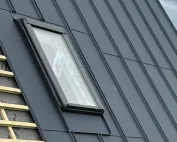
Typical check points include: fasteners with seals, side laps, end laps, chimney flashings, areas around roof windows, the ridge, roof valleys and pipe and cable penetrations. Each detail has a different function. A fault may result from incorrect installation, wear or damage during subsequent works.
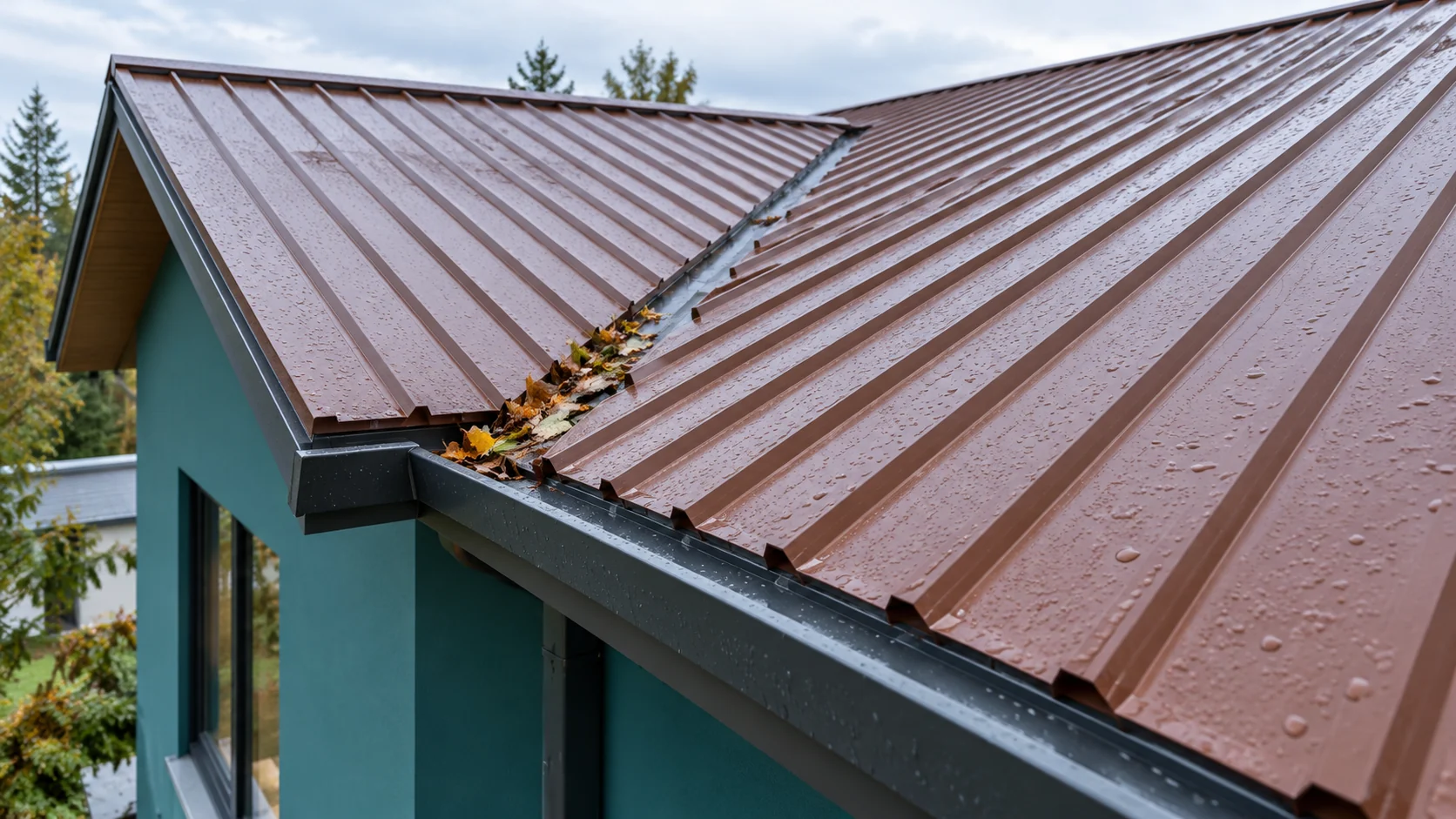
For screws, assess the condition of the seal and the compression. Over-tightening can deform it. For laps, the direction of drainage and the solution intended for the profile are important. In the roof valley, look for accumulated leaves and signs of water ponding. The repair should restore the correct detail, not merely cover the damp place.
Why does the chimney require a separate inspection?
Behind the chimney, water flows in from the higher part of the roof slope. The top flashing must intercept it and direct it to the sides. If there is no clear drainage path, water may find a gap at the wall or under the covering. The condition of the chimney itself must also be checked. Leaky joints and the cap can produce symptoms similar to a flashing fault.
A layer of silicone alone at the junction of the steel sheet and plaster does not replace a proper connection. Different materials move under the influence of temperature. Rigidly bonding them with an arbitrary compound may crack over time. The contractor should identify the flashing system and select a repair suited to its construction.

How should you plan the repair to avoid further damage?
First establish the scope and method of protecting the interior. If part of the roof needs to be exposed, the weather and the possibility of temporary covering are of great importance. Repair materials should match the coating, profile and seals. It must not be assumed that any roofing compound will be compatible with every covering.
Avoid washing the suspect area with a strong jet directed under the lap. Such a test may force water in where ordinary rain does not introduce it. Controlled leak testing should be carried out by the contractor. During the repair, it is worth assessing service access so that future inspections do not require risky walking on the covering.
How can you tell that the problem has been solved?
Acceptance of the repair involves more than the absence of dripping during a short rain. The area must be rechecked after rainfall of a similar character to that which caused the leak. Materials previously soaked should dry out. If the insulation has remained wet or has been damaged, it may require separate action.
Keep a description of the repaired detail, photographs and the date of the works. This makes it possible to distinguish the return of the same fault from a new problem. Inspections after strong gales and removal of leaves from drainage points help detect trouble earlier. This does not mean, however, that every roof repair requires annual re-sealing.
Short answers from the site
Is the leak always above the wet patch?
No. Water can travel along the membrane or the structure. The place visible from inside is the starting point for the search, not a certain indication of the fault.
Does the felt under the steel sheet eliminate the problem of condensation?
It may temporarily retain some moisture, but it must be able to dry out. It does not replace ventilation or a correct roof build-up.
7 branches. Materials closer to your project.

- SEROCK — Dzierżenin 34 E
- BŁONIE — ul. Sochaczewska 138A
- RADOM — ul. Grobickiego 8
- ŁÓDŹ — Natolin 8
- OLSZTYN — Barczewo, ul. Prosta 9
- WROCŁAW — ul. Jerzmanowska 10C
- GORZÓW WLKP. — ul. Zielona 33/34