Roofs and roofing
Replacing roofing with metal sheets: how do layout and delivery fit together?
At a glance
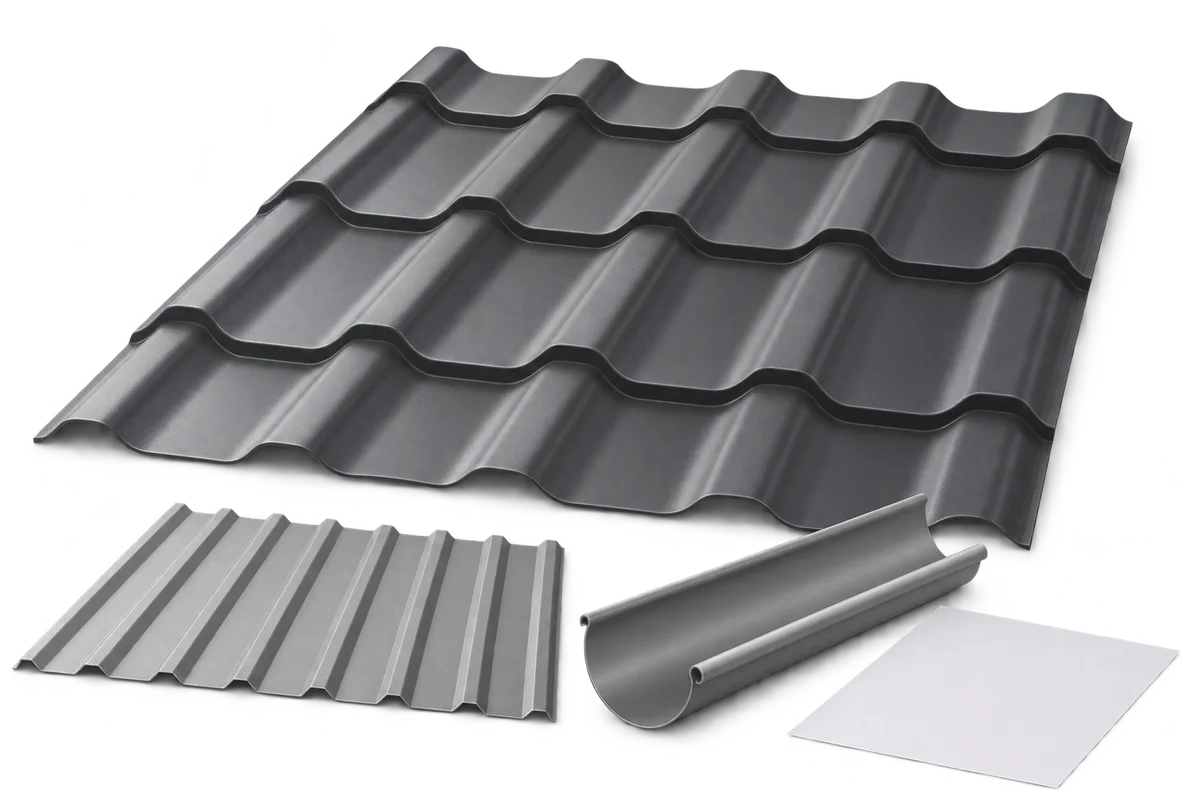
When reroofing with metal sheets, the cutting layout and delivery arrangements should be developed together. A convenient element on a drawing may be difficult to transport, unload or bring to a particular roof slope. Conversely, shortening sheets solely for transport convenience changes the joint layout, which must be checked for the selected system. This guide identifies information needed by the supplier and contractor: geometry, laying direction, bundle labels, site access and the sequence in which materials will be used. It does not specify allowable lengths or lifting methods. It helps align the roof plan with actual delivery-handling constraints while leaving joint decisions subject to the chosen roofing documentation.
Describe each roof slope’s geometry
Mark ridges, eaves, valleys and openings on the sketch. Overall dimensions alone do not show where cutting is required. The contractor should know which edges have confirmed measurements and which still depend on structural repairs.
Check sheet orientation and subdivision
Do not assume that visually similar slopes are identical. Separate identifiers connect each one with its own lengths and details. On a previously altered roof, give particular attention to junctions between different building sections.
The sheet schedule should state orientation where it matters to the profile and joints. Avoid “left” and “right” without defining the viewpoint. One agreed drawing is clearer than conflicting labels on different bundles.
Agree site-access constraints
Splitting a long sheet into shorter pieces requires its joint arrangement to be reconsidered. It is not merely a transport-list change. Permissible layouts depend on the particular covering, so lap dimensions from another system’s instructions should not be transferred.
Compare layouts using effective cover width, not just overall sheet width. Offcuts depend on the actual roof arrangement. Do not substitute an arbitrary allowance for checking the plan: surplus pieces of the wrong length do not supply a missing component.
Link bundles to the installation sequence
Before confirming delivery, describe gates, access turns, obstructions and unloading space to both carrier and contractor. An address alone does not establish that any vehicle or load can be accommodated on site.
A suitably equipped team should agree unloading and handling arrangements. The owner provides site constraints and the agreed access rather than improvising handling when the truck arrives. Changes to sheet length may require those arrangements to be reviewed.
Check revisions before made-to-measure cutting
For phased work, link bundles clearly to roof sections. The first materials needed should be identifiable without rearranging the entire delivery. Bundle labels must remain consistent with the component schedule and delivery documentation.
Plan bundle storage around product requirements and site conditions, not simply an unused corner. If materials will wait for a later phase, agree storage conditions and duration with the supplier using the applicable instructions.
When geometry changes, circulate the revised cutting schedule to everyone involved in the order. Confirm whether manufacture has started and how completed pieces are affected. A new table on the roofer’s phone does not automatically update the supplier’s production order.
Receive materials against the delivery plan
At receipt, compare identifiers, bundle counts and visible labels with the agreed records. Report uncertainties before using the disputed batch. A record with photographs and the exact item reference is more useful than a general statement that the delivery is wrong.
Keep the final cutting plan with the installed component references. It may help when ordering replacements later, but availability and product compatibility still need checking. Records should show the completed roof rather than an obsolete first-delivery proposal.
7 branches. Materials closer to your project.

- SEROCK — Dzierżenin 34 E
- BŁONIE — ul. Sochaczewska 138A
- RADOM — ul. Grobickiego 8
- ŁÓDŹ — Natolin 8
- OLSZTYN — Barczewo, ul. Prosta 9
- WROCŁAW — ul. Jerzmanowska 10C
- GORZÓW WLKP. — ul. Zielona 33/34