Sandwich panels
Sandwich panel documents: checking performance before purchase
At a glance
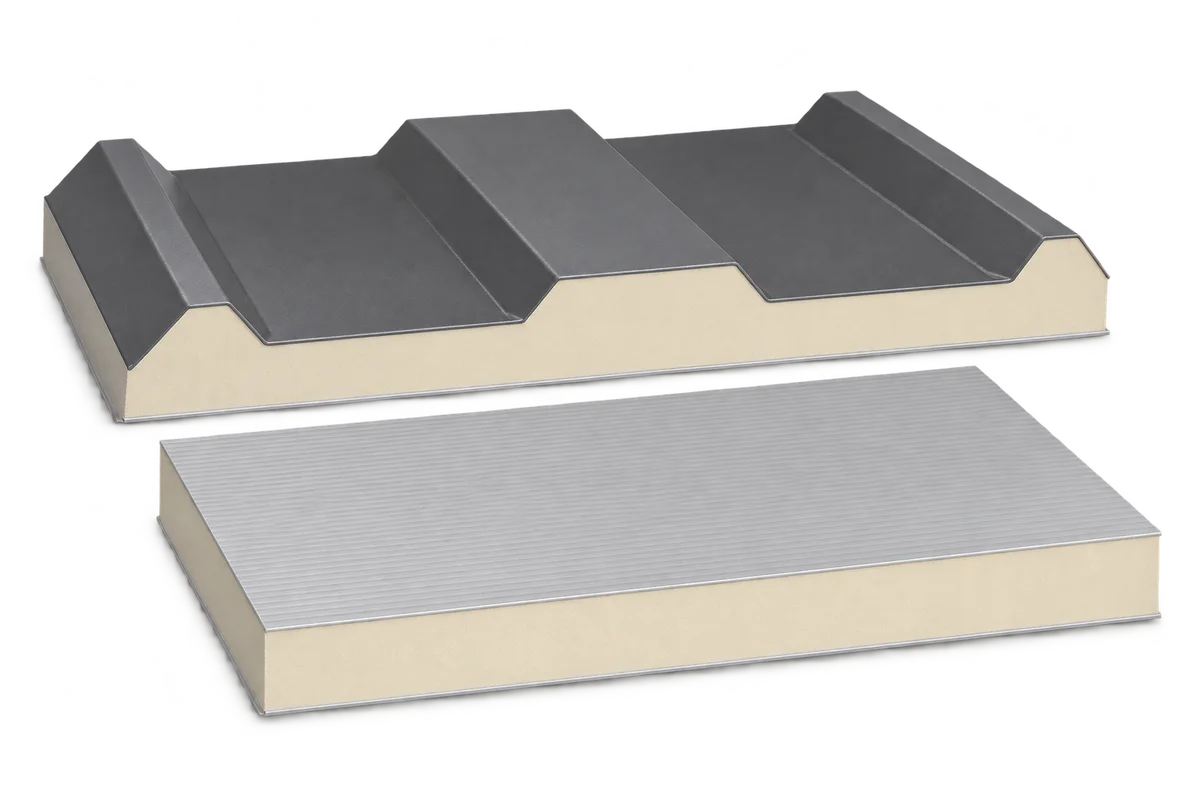
Sandwich panel documentation is useful when it can be linked to the exact product being supplied. A family name, section illustration or table for a similar thickness cannot confirm every required characteristic. Before purchase, work from panel identification to the relevant data sheet, stated performance and conditions of use. This guide explains how to review that information without copying unrelated numbers into an order. It distinguishes product information from whole-assembly performance, examines units and checks the scope of tables. It also explains how to handle discrepancies. The result is a set of questions and confirmations for a specific item, rather than an attempt to replace the design with a catalogue.
Start with the exact product identifier
Rather than collecting unrelated files, maintain a short evidence list. For each required characteristic, record the document name, product identifier and location of the relevant information.
Compare the full offer designation with the identifier on the product sheet. Check wall or roof application, core and suffixes distinguishing variants. If the names differ, request an explanation of their relationship. Similar abbreviations should not be assumed to identify the same product, particularly when files come from different catalogues.
Identify what each document establishes
Record each file’s issue date or revision where supplied. Its download date is not the same as its publication date. Keep the version received so the basis of the decision remains identifiable. When a supplier sends a newer file, ask whether the revision affects the ordered variant or characteristics already agreed.
A family catalogue helps identify available solutions, a specific product sheet organises product data, and instructions address installation and use. These documents serve different purposes. When an order requires confirmation of a particular characteristic, locate the relevant evidence for that characteristic rather than relying on a general description of benefits.
Read figures together with their units
Never copy a number without its column heading. Retain the symbol, unit, thickness and variant associated with the result. Core thermal conductivity and panel thermal transmittance describe different quantities. Overall width may also differ from cover width. Similar-looking numbers do not establish that the values are directly comparable.
In a load table, first identify the applicable support arrangement and panel variant. Read headings, notes and the conditions attached to the values. One isolated cell does not establish suitability for a particular structure. Determining loads and assessing selection remain design tasks; the purchasing record should refer to their outcome.
Check the scope of tables and classifications
Distinguish reaction to fire from fire resistance in the documentation. Where an assembly classification is required, also check the configuration covered by the document. A core name cannot be converted into a fire-resistance duration. Unclear links between the ordered panel, connection arrangement and required performance need resolution before material approval.
For acoustic requirements, record the exact parameter symbol and test scope. Sound absorption and sound insulation address different functions. The general description “acoustic panel” is insufficient for product selection. Give the designer the relevant result together with the tested arrangement, rather than reducing it to an advertising label.
Resolve gaps and conflicting information
A dash or absent result in a table should not be interpreted as zero or as confirmation that a requirement is met. Raise a question tied to the specific item. The reply should explain the information’s status and identify the relevant evidence if available. Missing data remain an explicit gap until resolved.
When an offer conflicts with documentation, place the two statements side by side. Include file names, page references and the item identifier so the other party can reproduce the issue. Do not select the more favourable number without clarification. The agreed reply should identify the product and value forming the final order basis.
Keep confirmations for the supplied item
Before purchase, review the evidence list with the person responsible for the design requirements. Mark resolved questions and those still preventing selection. Receiving many attachments does not make the documentation complete. What matters is being able to identify an answer to each requirement for the particular element being ordered.
After delivery, retain the information linking the goods’ identifiers to the approved document set. If the delivered item differs from the agreed one, revisit the relevant confirmations before using it. The same file can support later inspections and cladding alterations without searching a current catalogue for a merely similar product sheet.
7 branches. Materials closer to your project.

- SEROCK — Dzierżenin 34 E
- BŁONIE — ul. Sochaczewska 138A
- RADOM — ul. Grobickiego 8
- ŁÓDŹ — Natolin 8
- OLSZTYN — Barczewo, ul. Prosta 9
- WROCŁAW — ul. Jerzmanowska 10C
- GORZÓW WLKP. — ul. Zielona 33/34