Choice of covering
Tile-effect or trapezoidal steel sheets for a roof?
In brief
The choice between a tile-effect metal sheet and trapezoidal sheeting depends on the roof geometry and support arrangement, not on the category name alone. Tile-effect sheet has longitudinal and transverse pressings forming repeated modules, which affects batten spacing and sheet fitting; trapezoidal sheeting has a simpler pattern of ribs running along the slope, and profile height shapes structural properties. Check the minimum pitch in the specific product’s instructions, the batten spacing set by the module or profile parameters, and the condition of existing substructure during renovation. Compare both variants drawn on the same roof, including laps, flashings and offcuts.
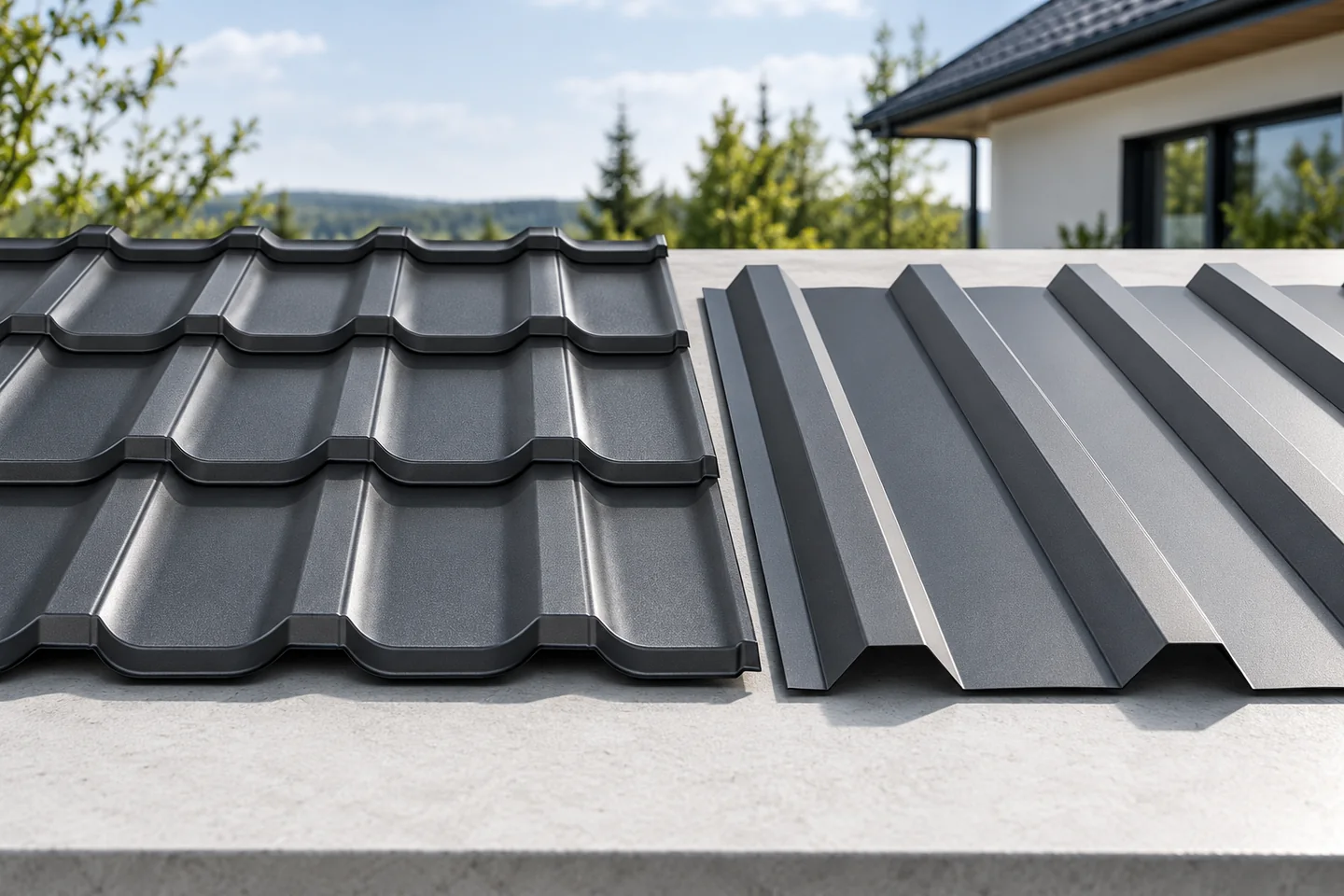
How do the cross-sections of the two coverings differ?
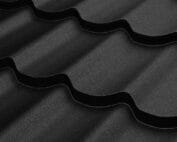
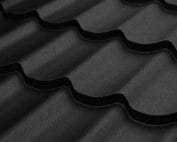
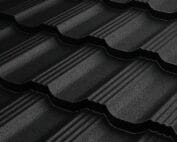
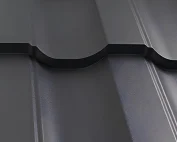
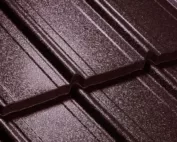
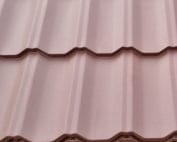
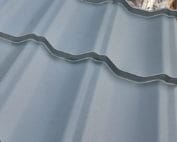
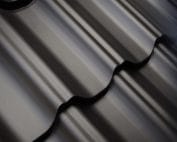
Tile-effect metal roofing has longitudinal and transverse pressings that form repeating modules. This rhythm affects the batten layout and the way sheets are aligned. Trapezoidal steel sheet has ribs running along the roof slope. Its character is simpler, and the profile height affects its structural properties. T18 and T35 are common starting points for comparison.
However, one category should not be considered inherently better. Tile-effect metal roofing can suit a residential building form well, while trapezoidal steel sheet can suit a modern house or a simple garage. Aesthetics are the investor’s choice. Technically, both materials must meet the requirements for roof pitch, support and operating conditions.
How do roof pitch and construction limit the choice?
The minimum pitch is specified in the instructions for the specific product. General information that the covering is made of steel sheet is not enough. At a low pitch, the overlaps, seals and sheet length matter. Some tile-effect metal roofing models may not be suitable where a properly selected trapezoidal steel sheet is intended. Each case requires verification.
The batten spacing for tile-effect metal roofing results from its module. Trapezoidal steel sheet is matched to the supports based on the profile parameters and loads. In a renovation, it is worth assessing the cost of adapting the existing substructure. A cheap sheet will not be cheap in the complete system if it requires extensive modification of the battens or reinforcement of the connections. Holes from previous fixings and the condition of the timber also require assessment. A new screw set in damaged substrate will not provide the intended performance of the connection.
Which material makes covering a complex roof easier?
On a simple roof slope, both solutions can be laid out economically. With cut-to-length tile-effect metal roofing, long sheets are matched to the roof length. Modules facilitate transport and work at roof valleys and dormers. However, the profile direction must be taken into account so that the offcuts can actually be used elsewhere.
Trapezoidal steel sheet allows a simple division, but it also requires flashings and support for short sections. A large number of diagonal cuts means waste regardless of the material. The best comparison is to draw both variants on the same roof. This shows the number of sheets, the overlap area and the scope of work at the details.

How to compare coating durability and appearance?
Both coverings can use similar types of steel and coatings. Their durability is determined by their parameters, the environment and the workmanship. There is no basis for considering the trapezoidal shape alone to be always more durable or less durable than tile-effect metal roofing. What matters is the coating’s resistance, the cutting method and protection from moisture during storage.
View samples under the same lighting. Shadows fall differently on pronounced profiles, and gloss can accentuate unevenness. Dark colours heat up more strongly. The rules for element lengths and their thermal movement should therefore be checked. For a sandwich panel, colour is also an important parameter for structural selection.
What about noise and insulation?
Neither a single trapezoidal steel sheet nor tile-effect metal roofing on its own provides thermal insulation for a house. Comfort depends on the entire building envelope. Insulation, airtightness and interior finishing also affect the sound of rain. It is not worth promising a quiet loft simply because a more decorative sheet profile has been chosen.
In a heated outbuilding, a roof sandwich panel can additionally be compared. Its cost is set against sheet metal together with separate insulation and finishing. With PIR insulation boards, it is worth utilising the low lambda value, but not neglecting acoustics and fire protection. These are separate requirements that a single material parameter does not resolve.
How do you choose the variant with the best cost balance?
Include the cost of the covering, substructure, membranes, flashings, screws and labour. Establish whether both quotes relate to the same steel thickness and a similar coating class. Compare prices per square metre of effective coverage. The price per square metre of the whole sheet must be recalculated taking the overlap into account. Include transport and the possibility of unloading long sheets.
On a simple garage, trapezoidal steel sheet often proves practical. In a house, where a rhythm close to that of roof tiles matters, tile-effect metal roofing may better suit the architectural concept. A good choice should, however, remain consistent with the design and the instructions. A reliable quote for the complete roof offers more than a general ranking of two product categories.
7 branches. Materials closer to your project.

- SEROCK — Dzierżenin 34 E
- BŁONIE — ul. Sochaczewska 138A
- RADOM — ul. Grobickiego 8
- ŁÓDŹ — Natolin 8
- OLSZTYN — Barczewo, ul. Prosta 9
- WROCŁAW — ul. Jerzmanowska 10C
- GORZÓW WLKP. — ul. Zielona 33/34