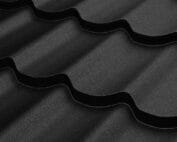
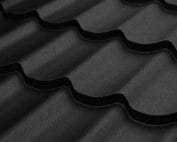
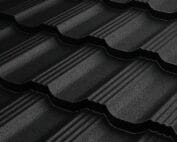
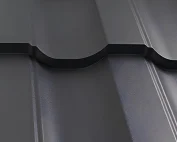
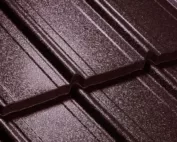
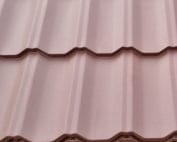
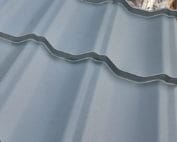
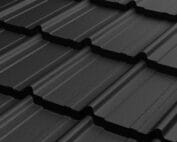
Tile-effect metal roofing
Modular metal roof tiles or sheets made to length? Comparing layout and offcuts
In brief
The choice between modular and cut-to-size metal roof tiles depends primarily on the roof geometry and delivery arrangements, not on the price per square metre of sheet alone. Before measuring, ordering or accepting delivery, check whether a regular slope allows long sheets to be used without excessive cutting, and whether the site and equipment permit their safe unloading and lifting. For a complex slope, valleys and dormers, compare the number of joints, flashings and offcuts for both variants. Ask for a comparison using the same steel and coating specification to avoid a misleading advantage for one format.
How do the sheet formats differ?
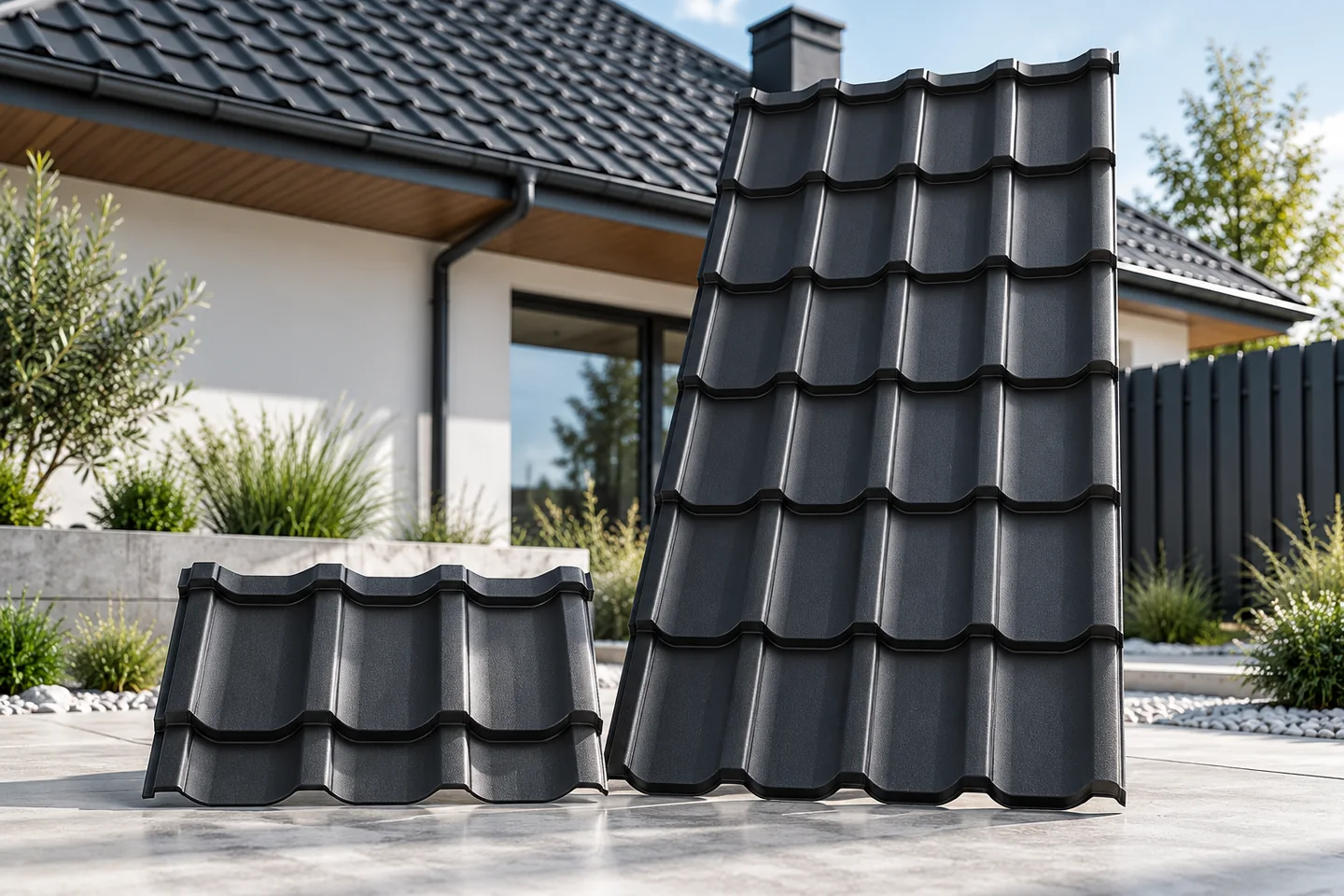
Tile-effect metal roofing cut to size is produced in lengths matched to the layout of a specific roof, within the manufacturer’s range. A sheet may span multiple rows of profiles. This solution requires accurate dimensions and a proper order plan. An error in length can mean unnecessary cutting or the need to purchase material again.
Modular tile-effect metal roofing has a repeating, smaller format. Sheets are joined according to the rules of the given system. A smaller element is usually easier to transport and carry onto the roof, but a greater number of joints requires precise alignment. The terms modular and cut-to-size describe the format, not the steel grade or coating quality.
Which solution suits a simple roof slope?
On a gable roof with a regular footprint, sheets cut to size can reduce the number of transverse laps. This makes it easier to plan the covering from eaves to ridge. However, the length must be reconciled with delivery, unloading and safe handling of the material. A very long sheet requires proper support so that it does not buckle.
Modules also work well on a simple roof. They can be convenient where storage space is limited or access to the building is difficult. The choice should not be based on the principle that one format is inherently intended only for a specific shape. What matters is the full roof layout and the organisation of work of the given team.
What to choose for roof valleys, corners and dormers?
On extensive roof slopes, small sheets make it easier to work on successive sections of the roof. Material can be prepared more conveniently near a roof valley or dormer. Cutting and waste still occur. Their extent depends on the geometry of the profiles, the installation direction and the possibility of using the remaining parts in accordance with the instructions.
Large sheets can also be used on a complex roof, but they require careful cutting. It is not worth assigning a fixed percentage of waste to every system in advance. Ask for a breakdown for the same project. Only the number of required elements, flashings and fasteners will show which format has a practical advantage.

How to compare material quality?
In both variants, check the parameters of the steel core, the metallic coating and the organic protection. Compare the environmental intended use, warranty conditions and maintenance requirements. A matt surface or a high profile does not by itself indicate greater durability. Two visually similar coverings may differ in material specification.
The geometry of the overlaps and the availability of matching accessories are also important. The height of the profiles affects the appearance of the roof, but it does not allow the overall load-bearing capacity to be assessed without calculations. The support and fixing must correspond to the specific product. Do not transfer the batten spacing or screw pattern from another model with a similar name.
How do you calculate the true cost of a roof covering?
First establish whether the price refers to a total square metre, an effective covering square metre or a single sheet. Do not add overlaps that are already included in the effective area a second time. Calculate additional longitudinal joints and cuts according to the specific roof layout. A comparison also requires the same coating and steel specification. Comparing a cheaper paint variant with a more expensive one can create a false advantage for one format.
Include flashings, screws, ventilation accessories, roof access and transport in the cost estimate. Ask the contractor about labour for both versions and the unloading requirements. Also check the rules for ordering additional material. The colour from a subsequent batch may look different, so the size of the reserve should result from the installation plan, not from a random allowance.
How do you make a decision before ordering?
Provide the seller with the current roof dimensions and all details that affect the cutting layout. Confirm the chosen system and the delivery date with the roofer. The material should arrive on site when it can be properly unloaded and stored. This is especially important with long sheets and limited space around the house.
If the roof is simple and access and installation do not present difficulties, it is worth obtaining a precise quote for cut sheets. With many details or difficult logistics, modules are a good starting point. Ultimately, choose the variant with a clear specification and a calculated cost for the entire covering. A well-chosen format makes the work easier, but it does not replace professional workmanship.
7 branches. Materials closer to your project.

- SEROCK — Dzierżenin 34 E
- BŁONIE — ul. Sochaczewska 138A
- RADOM — ul. Grobickiego 8
- ŁÓDŹ — Natolin 8
- OLSZTYN — Barczewo, ul. Prosta 9
- WROCŁAW — ul. Jerzmanowska 10C
- GORZÓW WLKP. — ul. Zielona 33/34