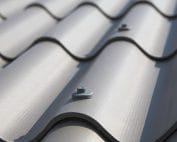
Fibre cement roofing
Lifting fibre cement sheets onto a roof without damage
In brief
Lifting the roofing onto the roof should be planned before installation begins. Fibre cement sheets are fragile under impact and do not tolerate accidental bending. Asbestos-free fibre cement requires the correct method of gripping, transporting and setting down. How this work is organised affects both the safety of the people and the condition of the sheets. Two sheets of similar material can differ considerably in size. Before choosing a lifting method, you need to know their actual weights and lengths. Do not rely on the general assumption that fibre cement is light. The place where the sheet is to be handed over to the team at height is also important. A large format reduces the number of joints on the roof slope but increases the transport requirements.
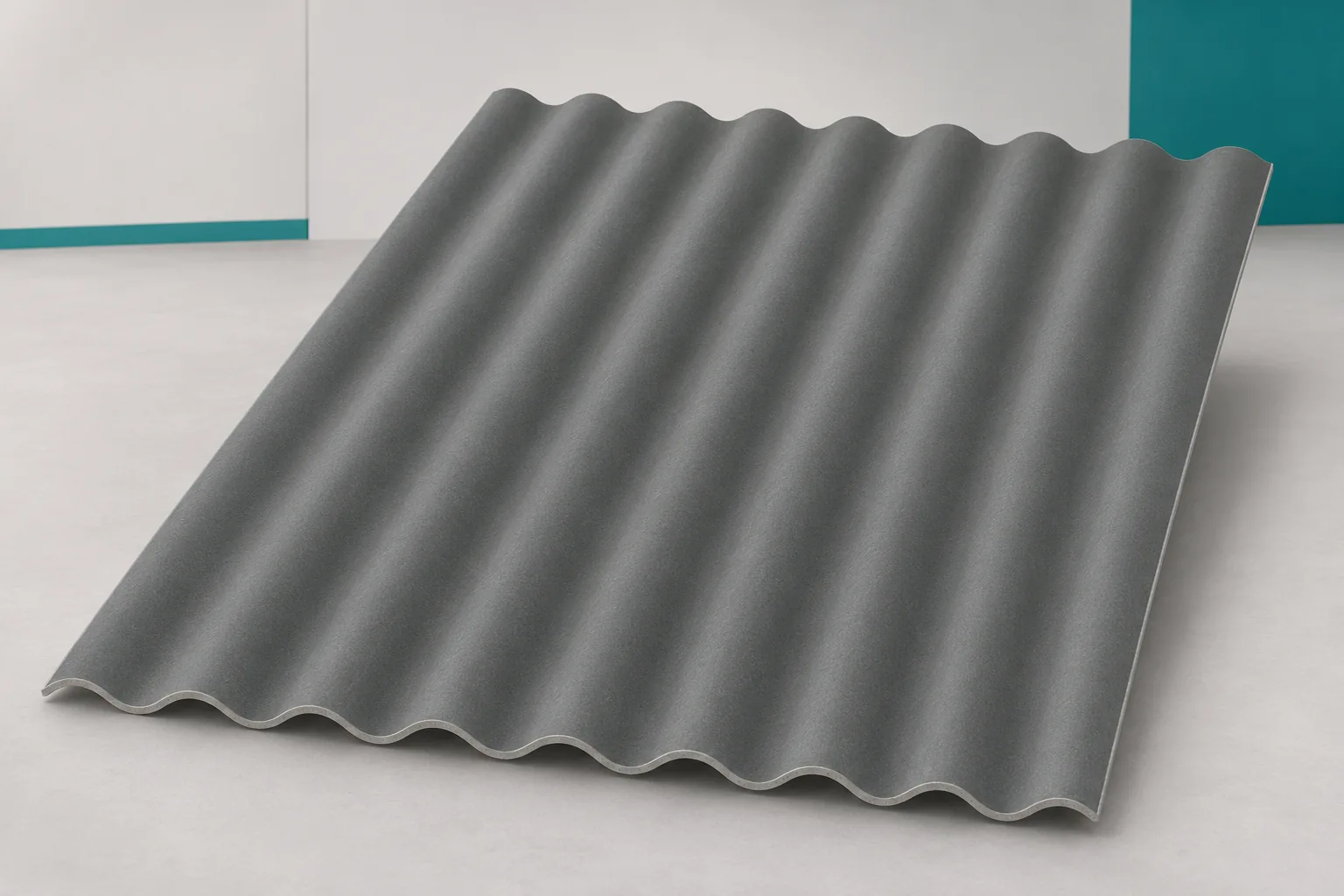
Start with the format and weight of a single sheet
It may be more susceptible to unfavourable deflection during handling. The choice of length should therefore take into account the possibilities of the site and the contractor. The smallest number of sheets does not always mean the easiest installation.
The transport route must be clear and easy to follow
Fibre cement sheets should travel from the storage area to the lifting point by as simple a route as possible. Obstacles, sharp turns and narrow passages increase the risk of edge impact. Before work begins, unnecessary materials are removed and zones for other people are established.
A sheet should not be carried through an active traffic route without agreed organisation. On a working farm or during renovation of a building, machine movements are also important. A well-marked lifting zone reduces situations in which someone accidentally ends up beneath a transported element.
The gripping method follows from the documentation and equipment
The sheet must be lifted without dragging it across the neighbouring sheet. The grip should protect the corners and not cause local bending. The number of people and the equipment are chosen according to the format and the assessment of the work. A random mounting hole must not be used as a lifting point.
Asbestos-free fibre cement should not be gripped in a way that concentrates the entire load on a short section of the corrugation. Mechanical transport requires equipment intended for the given material. The load capacity of the device is checked for the actual reach and conditions, not only on the basis of the value stated in its name.
Wind can make it difficult to control the sheet
The large surface area of the sheet is exposed to gusts during movement. Working conditions should remain within the limits of the equipment and the agreed organisation. Lifting should not be completed at all costs when control over the element cannot be maintained. The safe point at which to stop work is determined by the contractor.
Fibre cement sheets can be damaged on impact with scaffolding or the edge of the structure. It is worth checking the passage space for the entire sheet in advance, not just its centre. This applies particularly to long formats and narrow clearances. A properly prepared route reduces the need for abrupt manoeuvres.
There must be a safe place on the roof to receive the sheets
The person receiving the material needs a proper position, not an incidental rest on an already laid sheet. Before lifting, the method of handing over and setting down the sheet is agreed. It should not be set down on an unsupported edge or on a skylight. The finished covering is not a storage area.
Fibre cement sheets must not be loaded with arbitrary stacks of material. If temporary storage is planned on the structure, it requires a separately designated location and permissible load. The weight of several sheets concentrated at one point acts differently from an evenly laid covering.
Coordinate deliveries with the laying sequence
Sheets should reach installation in the formats and variants needed for the given row. A sheet with prepared corners may have a specific direction of use. Mixing elements increases the number of transfers and work at height. It is worth labelling the packs in accordance with the roof slope plan.
Fibre cement sheets delivered in small, planned batches are easier to control. It is not about a universal number of pieces, but about matching the pace to the team’s capacity. Excess material in the workplace hinders movement and may obscure supports. Good logistics help to limit such situations.
Damage noticed after lifting requires action
If a sheet has a crack or chip affecting its use, it should not be installed to save one transport cycle. The damage must be assessed and the element safely withdrawn. An overlap is not a way of hiding defects. Repair after the roof is completed will be more difficult.
Asbestos-free fibre cement can suffer micro-damage even under excessive deflection. It is therefore worth observing the way it is carried, not just its final appearance. Repeated damage to corners indicates an organisational problem. The working method should be improved rather than treating further losses as inevitable.
Access routes are also useful after installation
The covering must not serve as a walkway for the team. Do not walk directly on the corrugations, over a support or along the screw line. Suitable walkways and safeguards are needed. Reinforcement strips in selected sheets do not change this rule.
Even during installation, it is worth planning future access to the ridge and equipment. If servicing will require similar work to be repeated, it is a good idea to keep records of the agreed access routes and equipment positioning. The roof will then remain serviceable without improvised walking over fragile elements.
Agree the lifting route, the receiving point and the sequence of formats with the contractor. Material should go directly to the prepared work zone.
7 branches. Materials closer to your project.

- SEROCK — Dzierżenin 34 E
- BŁONIE — ul. Sochaczewska 138A
- RADOM — ul. Grobickiego 8
- ŁÓDŹ — Natolin 8
- OLSZTYN — Barczewo, ul. Prosta 9
- WROCŁAW — ul. Jerzmanowska 10C
- GORZÓW WLKP. — ul. Zielona 33/34