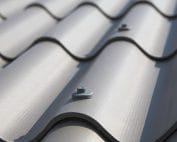
Fibre cement coverings
Leaks around roof fixings: find the cause before repairing
At a glance
A drop visible at a screw does not mean that replacing the seal is enough. Fibre cement sheets can be tight in one place while water reaches that point from a higher part of the roof. Asbestos-free fibre cement requires identifying the path of the moisture. Only then can it be established whether the fastener, the hole, the sheet or a neighbouring detail needs repair. It is worth checking how the symptom relates to rainfall, wind direction and night-time cooling. A leak during rain may have a different cause from drops after a cold night. Photographs of the same place under different conditions are helpful. There is no need to go directly onto the covering for this purpose. The use of the interior also matters.
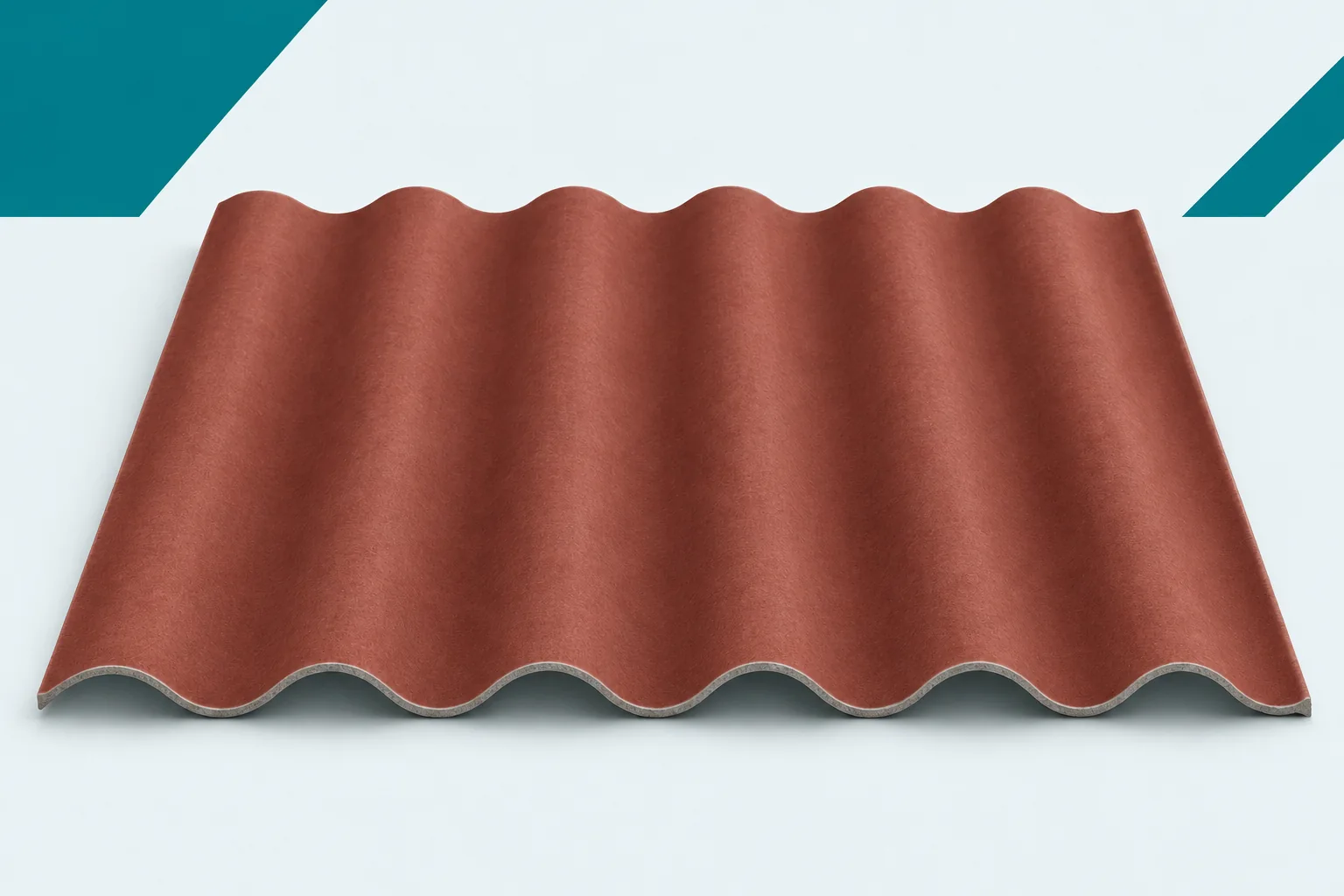
Note when water appears
Washing, higher humidity or a change in ventilation can affect condensation. Water at the fastener does not always come from the hole. Before sealing begins, it is worth giving the contractor a full description of the situation, not just a single photo of a drop.
Inspect the area above the mark
Fibre cement sheets, supports and flashings can conduct water along surfaces. The trace in the room is sometimes far from the source. It is therefore necessary to check the lap, the service penetration and the finish located higher up. Repairing the lowest visible point may not stop the inflow.
It is also worth assessing contamination in the troughs of the corrugations. Leaves or sediment can change the direction of runoff and hold back water. Such a phenomenon requires a different action than replacing a screw. Precise diagnosis makes it possible to avoid further ineffective layers of sealant.
The seal has its own durability conditions
During the inspection, its position, condition and conformity with the set are checked. Distortion, damage or incorrect contact pressure can impair tightness. Not every material is suitable as a replacement. What matters is the geometry, resistance to the conditions, and interaction with the washer and the hole.
Asbestos-free fibre cement should not be repaired by randomly adding further seals. Such an arrangement can change the contact pressure and the ability of the connection to move. Fibre cement sheets need a solution compatible with the system. If the original set is unknown, its parameters and intended purpose must first be established.
The hole and the material around it are equally important
A leak may accompany a crack or spalling. In that case, replacing the seal alone does not restore the condition of the sheet. Both sides of the location must be inspected if this can be done safely. Damage hidden under the washer also requires assessment.
Fibre cement sheets have a designed installation clearance. It must not be removed by rigidly filling the hole. The connection must retain its proper movement. A hole that is too tight or has been inadvertently enlarged requires diagnosis, not merely more sealing material.
Do not tighten without checking the support
If the sheet does not sit correctly on the support, increasing the clamping force may damage it. It is worth checking the evenness of the structure and the location where the fastener is seated. In timber, the condition of the substrate matters; in steel, so does the correct choice of fixing. The mere turning of the screw does not tell you whether the connection has regained its load-bearing capacity.
Asbestos-free fibre cement requires the clamping pressure to be checked according to the instructions. An over-compressed seal is not proof of better tightness. Fibre cement sheets are brittle and can crack under excessive stress. The adjustment of the fixing should therefore result from a diagnosis, not from an automatic reaction to water.
Check whether it is not condensation
Fibre cement can buffer some of the moisture, but condensate can still form on a cooled surface. Moistened material will not accept every further portion of water. If droplets occur in many places, the temperature and humidity as well as the operation of the ventilation must be assessed.
However, condensation should not be assumed merely because the material has a mineral structure. A real leak is also possible. The diagnosis should combine observation with an inspection of the connections. Sometimes there is more than one cause, and eliminating only one does not give a complete result.
Match the repair to the identified problem
Replacing a worn component, correcting the joint or replacing the sheet are different actions. Each should comply with the documentation and the condition of the roof. It is not worth promising that a universal sealant will solve every leak. It may only cover the symptom and make later inspection more difficult.
Fibre cement sheets require safe access during repair. They are not walked on, nor along the screw line. If a sheet has to be removed, the working method should take the adjacent joints into account. Accidental prising can damage a component that had been sound until then.
Assess the result under real conditions
After the repair, it is worth documenting the parts used and the appearance of the location. It is then observed under the conditions in which the symptom previously appeared. The absence of drops immediately after the work does not always confirm that the cause has been eliminated. Water may have occurred only with a specific wind or temperature.
Asbestos-free fibre cement is easier to maintain when every intervention has a clear record. Information about the profile, the fastening and previous symptoms will be useful to the next team. A good repair does not end with covering the screw. It should restore the proper functioning of the joint and leave the possibility of assessing it later.
Record the conditions under which the drops appear and show the contractor the section of roof above as well. This will make it possible to choose a repair that matches the actual path of the water.
7 branches. Materials closer to your project.

- SEROCK — Dzierżenin 34 E
- BŁONIE — ul. Sochaczewska 138A
- RADOM — ul. Grobickiego 8
- ŁÓDŹ — Natolin 8
- OLSZTYN — Barczewo, ul. Prosta 9
- WROCŁAW — ul. Jerzmanowska 10C
- GORZÓW WLKP. — ul. Zielona 33/34