Roof structure and design
How to address unauthorised building work in Poland
In brief
In Poland, an unauthorised construction does not always mean the same type of infringement, so the facts must first be established and the building secured. Check whether it concerns construction without the required consent or a significant departure from the design – the procedure, documents and possible consequences depend on this. Gather permits, notifications, designs, the construction log and documents concerning completion of works, then compare them with the actual state. The dates when the works were carried out and their scope are important. Remember that not all non-compliances are subject to the same procedure.
What must be established before taking action?
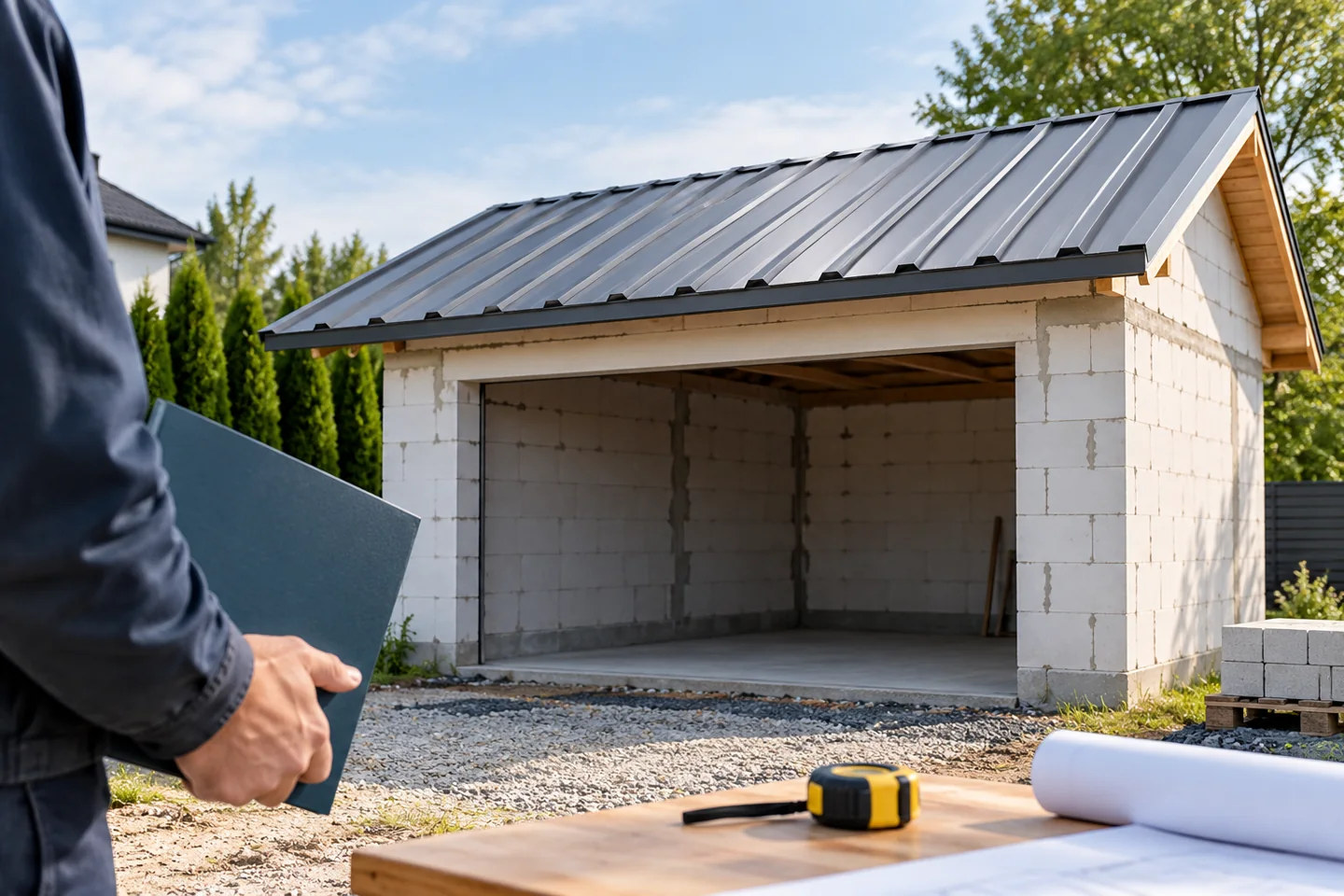
Collect permits, notifications, designs, the construction log and documents concerning completion of the works. Then compare them with the actual state. The dates on which the works were carried out and their scope are important. An added garage, a raised roof and a change of use may require separate assessment. Not all non-compliances are subject to the same procedure.
The absence of a document in the home file does not yet prove that it was never issued. It is worth checking the archive of the competent authority. On the other hand, entry of the building in the register or payment of tax do not replace legalisation. When purchasing an older property, the legal status of the construction must be assessed separately from entries concerning ownership and floor area.
What does the standard legalisation path look like?
Where construction is carried out without the required permit or notification, the supervisory authority applies the provisions on suspension and the possibility of legalisation. In its decision it indicates the obligations and further steps. The investor should observe the deadlines in the delivered letters. Continuing works despite suspension may have separate, adverse consequences and make it more difficult to regularise the case.
Legalisation requires fulfilment of the statutory conditions, submission of documents and, in the appropriate procedure, payment of a fee. It is not an automatic possibility of retaining every structure. Among other things, compliance in the scope required for the given procedure is examined. If the conditions cannot be met or the obligations are not fulfilled, a demolition order is possible.
When does the age of the structure matter?
For construction without the required consent, the Act provides for a simplified procedure where at least 20 years have elapsed since completion of construction and the other conditions are met. A reliable determination of the date is necessary. The mere statement that the roof looks old is not a sufficient basis for assuming a specific period.
In the simplified procedure, geodetic documentation, a declaration of the right to the property and a technical expert opinion play an important role. It must demonstrate the possibility of safe use. The simplified procedure does not mean the absence of safety requirements. A revealed hazard requires a response, regardless of how many years the building has stood on the plot.

What has changed with departures from the design?
From 2026, provisions separately regulate selected works carried out at least 10 years earlier. For certain significant departures from the permit or design, they refer to the simplified procedure. However, not every twenty-year period has thus been shortened to ten years. The type of infringement must first be correctly determined.
If the non-compliance concerns an ongoing construction, the authority may, in a given case, use an instruction and verify restoration of compliance later. This is not the investor’s right to change the roof arbitrarily. Moving the ridge, adding a dormer or changing the building’s form should be assessed before execution. Subsequent regularisation is often much more difficult.
Will renovation help legalise the problem?
New covering does not remove the legal non-compliance of an existing structure. Replacing old sheet metal with T35 or sandwich panels will not substitute for the required decision. Renovation may, however, reveal the condition of the structure and provide data for a technical assessment. The sequence of works must be agreed so as not to breach obligations imposed by the authority.
If there is a danger to people, the priority is to secure the area and carry out the necessary actions in the appropriate mode. One should not wait for planned modernisation when roof elements are unstable. At the same time, the scope of securing works should be documented. This will allow distinguishing the removal of danger from further pursuit of unauthorised construction.
How should the case be prepared for clarification?
Establish a chronology of the construction and a list of documents in your possession. Commission an inventory or technical assessment to the extent needed for the specific proceedings. Record questions regarding the classification of works and the possible path. In a more complex situation, parallel assistance from a designer and a lawyer may be needed, as the problem concerns both the structure and the procedure.
Read every letter from the authority together with the instruction and deadlines. Keep confirmations of document submission and evidence of fulfilment of obligations. Do not base decisions on a promise that paying a single fixed amount will suffice. The cost and outcome depend on the type of case. A reliable determination of the building’s condition provides the basis for choosing a realistic course of action.
7 branches. Materials closer to your project.

- SEROCK — Dzierżenin 34 E
- BŁONIE — ul. Sochaczewska 138A
- RADOM — ul. Grobickiego 8
- ŁÓDŹ — Natolin 8
- OLSZTYN — Barczewo, ul. Prosta 9
- WROCŁAW — ul. Jerzmanowska 10C
- GORZÓW WLKP. — ul. Zielona 33/34