Trapezoidal steel sheets
How does T35 trapezoidal steel sheet differ from shallower profiles?
In brief
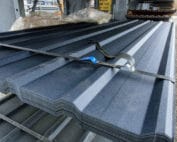
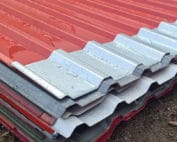
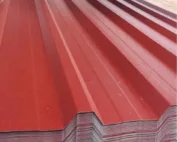
T35 trapezoidal sheet stands out with a higher profile than T18, which may increase sheet stiffness and broaden its possible applications. However, not every T35 has the same load capacity, width and coating, so it is worth checking the drawing of the specific section, the steel grade, the sheet thickness, and the support spacing and span pattern. A comparison with a lower trapezoidal profile should rely on the same conditions and consider both load capacity and deflection. The choice of profile depends on the full specification and roof requirements, not on rib height alone.
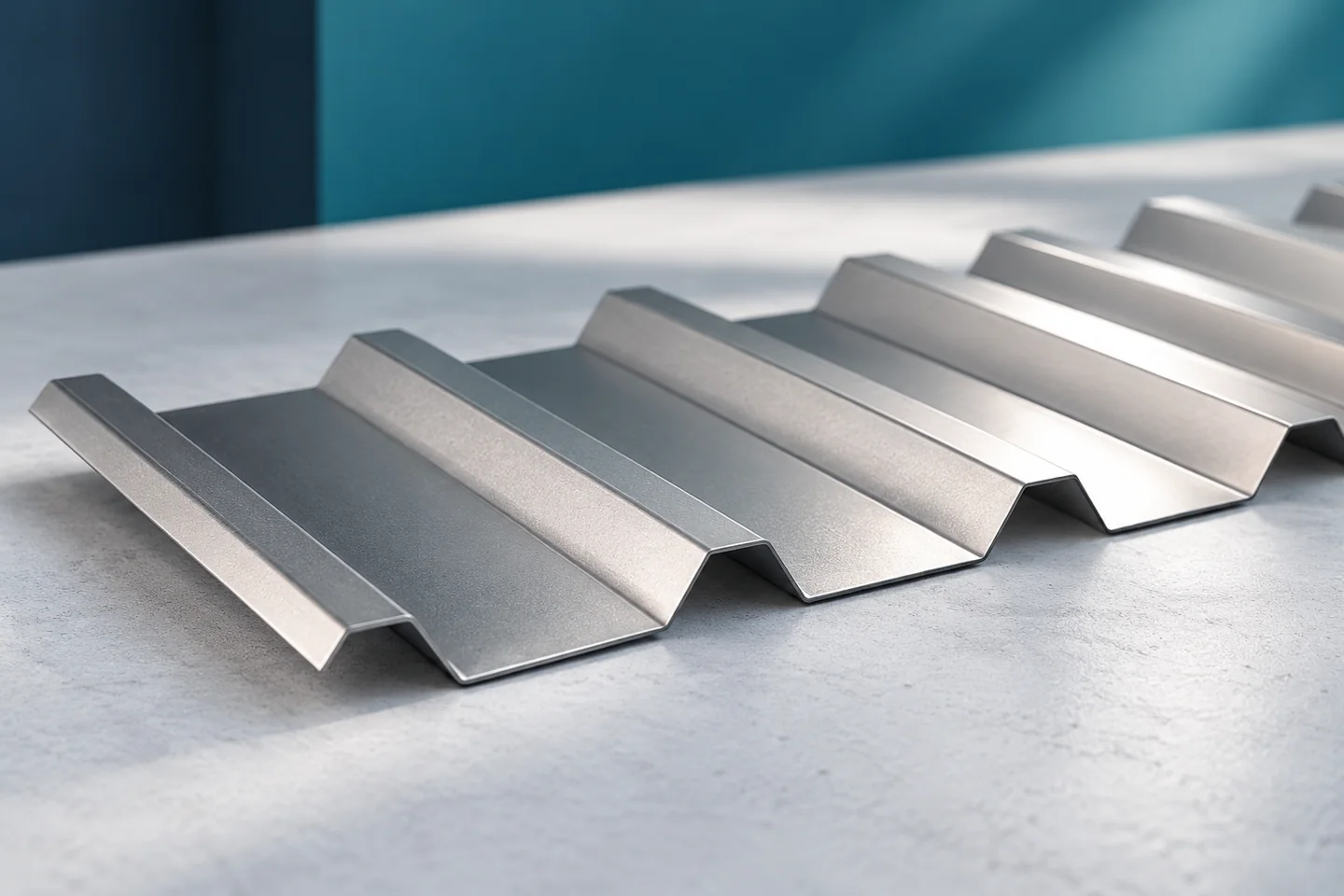
What does the 35 mm profile height mean?
A higher rib changes the cross-section geometry and its behaviour in bending. Under otherwise comparable conditions, it may increase the stiffness of the sheet. The actual result, however, depends on the shape of the flanges, the rib spacing and the sheet thickness. T35 is not one identical product across all manufacturers. A drawing of the specific variant is required.
Profile height must not be equated with steel thickness. A sheet with a height of 35 mm is still made from thin sheet of a specified nominal thickness. Changing this thickness affects weight and load-bearing capacity. Both parameters should be stated in the offer so that a comparison with T18 or another T35 refers to actual products.
Where is T35 worth considering?
The profile is sometimes used on garages, carports, agricultural buildings and service buildings. It may meet the requirements of simple roofs where a regular form and appropriate stiffness matter. The condition is that the product is approved for the given application. The roof and façade variants may differ in laying and in the lap detail.
For larger spans, T35 should not automatically be regarded as a structural sheet replacing every high profile. These are different ranges of behaviour. The designer selects the cross-section for the loads and the support scheme. If the plan includes thick insulation layers, equipment or large openings, these must be taken into account in the calculations for the entire system.
How to compare load-bearing capacity with a lower profile?
The comparison should cover the same steel grade, thickness, span and span scheme. Both load-bearing capacity and deflection must be taken into account. In the tables, the orientation of the profile and the information on self-weight are important. Without these data, a statement that T35 is a given number of times stronger would be unjustified.
If a higher profile allows a different support spacing to be adopted, the benefit must be confirmed by design. The purlins must not be removed after purchasing the sheet on the basis of a general description. The fastenings and their load-bearing capacity are equally important. The sheet may meet the requirements while the entire roof still has a weak connection to the structure, particularly in zones of strong wind suction.

What does the height change in appearance and details?
Higher ribs create a more pronounced rhythm and a deeper shadow on the roof slope. On simple buildings this may be a desirable effect. However, the flashings, seals and terminations must be matched to the actual profile. A component intended for a lower sheet does not necessarily close the edge of T35 correctly. A similar colour does not resolve the difference in geometry.
At the eaves and ridge, water drainage and the ventilation specified in the design are important. A higher rib does not automatically mean the sheet can be laid at any arbitrarily small pitch. The minimum slope and the conditions for overlaps must be checked in the installation instructions. This applies in particular to roof slopes with a transverse joint or skylights.
What parameters affect the price?
The price depends on steel thickness, coating, length and usable area. The cover width of T35 may differ from that of T18, so the number of sheets must be calculated separately. Comparing the price per total metre with the price per effective metre can reverse the apparent result. Ask for the same basis of calculation and a full specification.
Include flashings, fasteners, transport and installation. A higher profile does not have to be the cheapest option on a small roof with dense support. It may, however, meet different requirements and give a favourable cost for the whole system. It is worth comparing two correct variants instead of assuming that the price difference of the sheet alone decides profitability.
How to prepare a good order?
State the intended use, the dimensions of the roof slope, the support spacing and the loads assumed in the design. Approve the specific T35 section, thickness, coating and colour. Determine the lengths after measurement and the laying direction. Keep the documentation, as it will be needed by the installer and for later selection of parts. A general name written on a piece of paper is not enough.
T35 is worth choosing when its parameters match the task and give a justified benefit. A higher trapezoidal profile alone is not a promise of a better roof for every house. Durability and tightness still depend on surface protection, support and details. A well-chosen profile should work with the rest of the structure, not compensate for design errors.
7 branches. Materials closer to your project.

- SEROCK — Dzierżenin 34 E
- BŁONIE — ul. Sochaczewska 138A
- RADOM — ul. Grobickiego 8
- ŁÓDŹ — Natolin 8
- OLSZTYN — Barczewo, ul. Prosta 9
- WROCŁAW — ul. Jerzmanowska 10C
- GORZÓW WLKP. — ul. Zielona 33/34