Renovation and maintenance
Finding the source of a roof leak and planning repairs
In brief
In Poland, the cause of a leaking roof is established by observing when and where water appears before deciding on a repair. It is worth checking whether damp occurs only during rainfall, in wind, or also without rain — this distinction can matter more than a generic recommendation to call a specialist. Note the time of the event, wind direction and rainfall intensity, and if safe, document traces in the attic. The position of a ceiling stain need not indicate the point of damage. Only a diagnosis allows the right scope of work to be chosen.
What to do immediately after noticing water?
Move equipment away from the flooded area and secure access to the affected part of the room. If water may come into contact with the electrical installation, do not touch wet appliances or cables. A safe assessment of the situation is needed. Do not go onto a wet roof during rainfall to look for a small gap yourself.
Record the time of the event, the wind direction and the rainfall intensity. Take photographs of the stains and of any visible traces in the loft if it can be entered without risk. Water can travel through layers and structural elements. The point where it drips onto the ceiling may therefore be far from the point where the rainfall got under the metal sheet.
Is it definitely a leak from outside?
If dampness appears mainly when the temperature changes and without rainfall, condensation must be checked. The cold underside of the metal sheet can cause vapour from humid air to condense. In a heated building, airtightness from the inside, insulation and ventilation all matter. Adding sealant on top will not solve a problem that arises beneath the covering.
A leak during wind-driven rain may indicate a different water path from a leak during thaw. Blocked outlets and ponding at the roof valley are also important. Do not draw conclusions from a single photograph alone. The contractor should relate the traces to the layer build-up and to the conditions under which the dampness occurs.
Which places require close inspection?
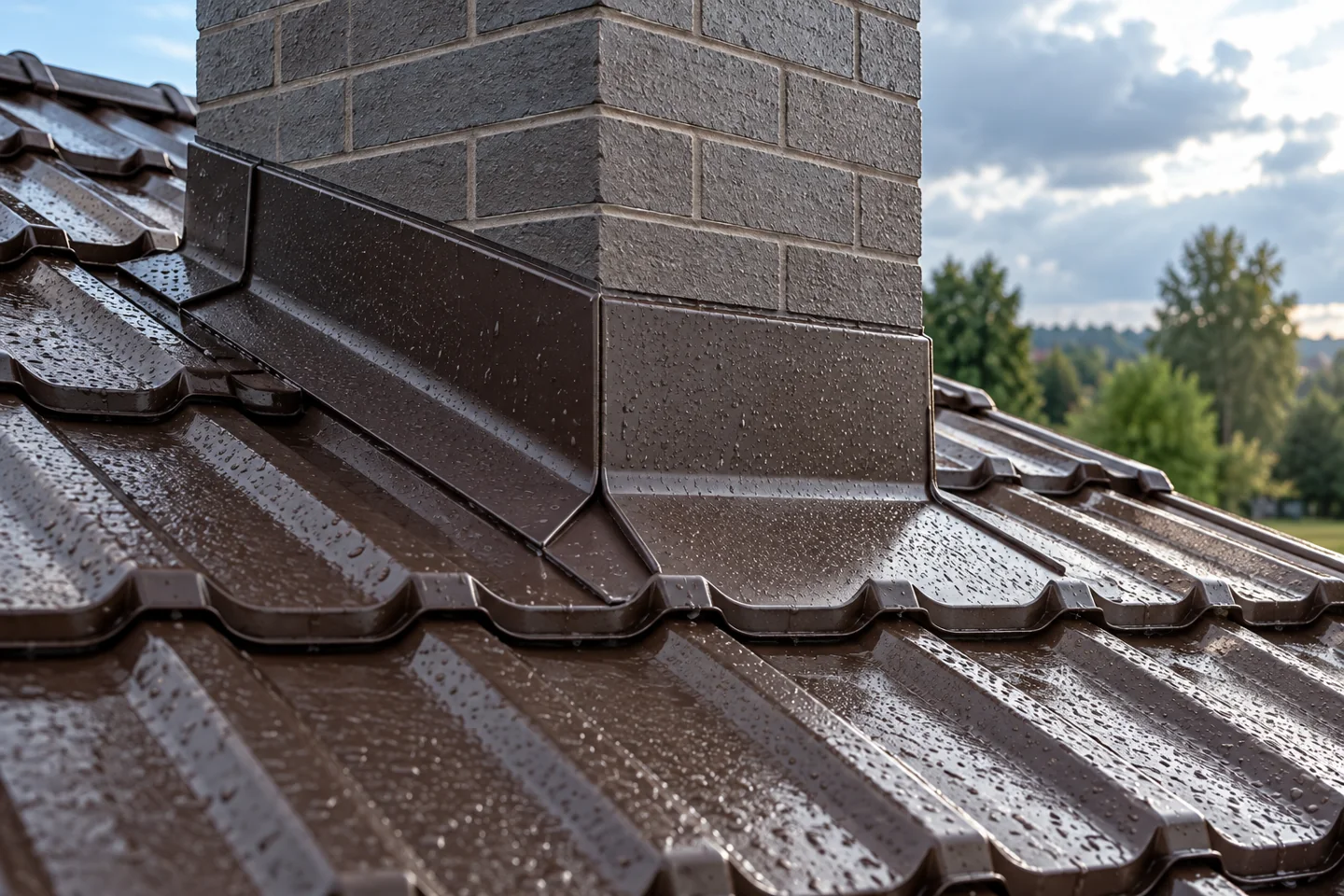
Flashing details at chimneys, windows and service penetrations are most often checked, as are roof valleys, the ridge and the edges of the roof slope. The laps, fixings and condition of the seals must be assessed. A loose or over-tightened screw may not provide a tight connection. It is also worth checking whether the sheet has deformed as a result of inadequate support.
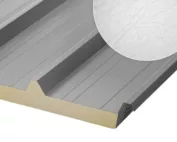
In sandwich panels, the assessment additionally covers the locks, cut-backs and longitudinal joints. An opening cut without the correct substructure can alter the panel’s behaviour. With every technology, the condition of the layer beneath the covering must be taken into account. Damage to it can mean that a small amount of water reaches the interior immediately instead of being drained away.

How to distinguish a temporary repair from a permanent one?
Temporary protection is intended to limit the ingress of water until the proper work is carried out. It should be done by a team with suitable access and protection. Not every tape or compound is suitable for a particular coating. An unsuitable product may impair the adhesion of the later repair or hinder the drainage of water in the correct direction.
The permanent solution removes the cause. It may mean improving the flashing, replacing a fastener, restoring the lap or replacing a damaged sheet. If the source is condensation, work is needed on the thermal and moisture performance of the build-up. Sealing all gaps can be harmful when it closes the ventilation path provided for in the roof structure.
What should be done with wet insulation and timber?
After stopping the leak, the extent of moisture must be assessed. A dry sheet surface does not mean that the layers beneath it have already dried. Insulation, timber and the lining may require drying, local exposure or replacement. The scope depends on the material and the duration of contact with water. A wet system should not be closed up merely to restore the ceiling quickly.
Also check whether the moisture is returning for another reason. With a long-standing problem, an assessment of the structure’s condition may be necessary. Photos before the repair and after exposing the layers make it easier to establish responsibility and plan further work. Keep a description of the actions taken so that the next specialist does not have to start the diagnosis from scratch.
How can the risk of a further leak be reduced?
After the repair, plan an inspection of the detail under suitable conditions. Observe the loft during the next rainfall, but do not carry out random watering tests that may force water where it does not normally reach. Keep the gutters and roof valleys clear. Leaves and deposits increase the risk of backwater, especially during the thaw period.
If the problem returns, commission a broader assessment instead of adding further layers of sealant. Check that the covering matches the pitch and the installation documentation. A well-chosen tile-effect metal roofing sheet, T18, T35 or roof panel needs correct details. Tightness is the result of their interaction, not of the mere presence of a new material on the roof slope.
7 branches. Materials closer to your project.

- SEROCK — Dzierżenin 34 E
- BŁONIE — ul. Sochaczewska 138A
- RADOM — ul. Grobickiego 8
- ŁÓDŹ — Natolin 8
- OLSZTYN — Barczewo, ul. Prosta 9
- WROCŁAW — ul. Jerzmanowska 10C
- GORZÓW WLKP. — ul. Zielona 33/34