XPS insulation
Gaps between XPS boards: planning the insulation layout
At a glance
Careful XPS installation begins before the first cut. The boards must be laid out, the direction of the rebated edges established and the locations of cut pieces anticipated. Extruded polystyrene provides good insulation performance in a continuous layer, but wide gaps can weaken the effect. The colloquial term styrodur does not indicate what edge profile the supplied material has. It is precisely the geometry that helps in choosing the correct laying method. Starting the laying from a random wall can leave a very narrow strip at the end. It is worth checking the dimensions of the surface and the covering size of the XPS boards in advance. This is not always equal to the external dimension, particularly with a rebated edge. A good plan reduces the number of small fragments and makes it easier to form the edges.
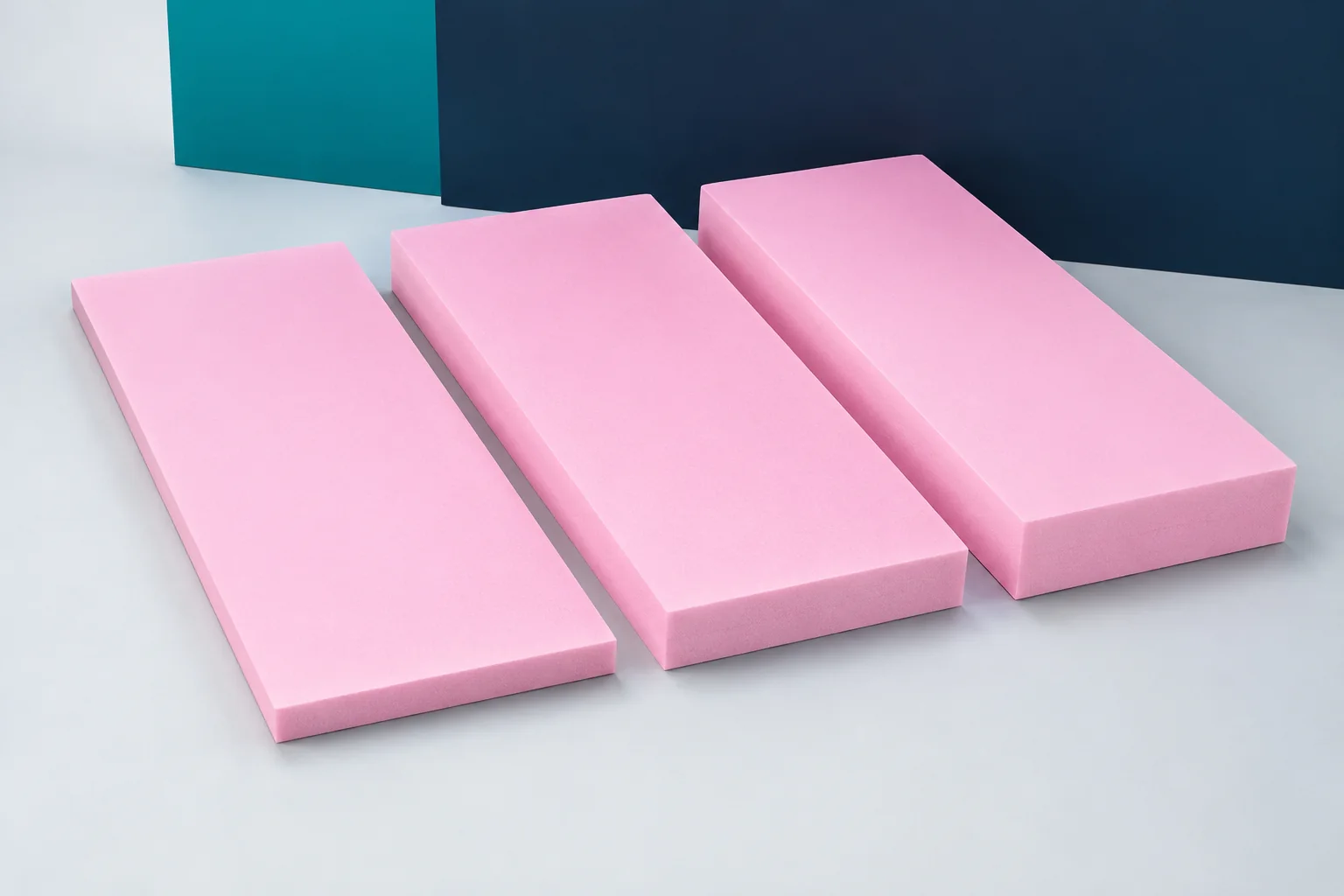
Plan the first and last row
Extruded polystyrene should form a layout that can be stably supported. Around openings and installations, drawing out the cut pieces is useful. This helps avoid a situation in which all the difficult connections are only created from offcuts at the end of the work.
A square edge and a rebated edge behave differently
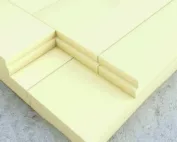
With a square-edged XPS board, the sides meet at full thickness. A rebated edge creates overlapping sections and changes the course of the joint. This makes it easier to maintain continuity, but it does not replace precise fitting. A damaged rebate does not perform like an intact one.
The rebate should not be called a watertight waterproofing joint. Extruded polystyrene still requires separate protection against water wherever the design provides for it. After cutting the edges, the resulting joint must be assessed. Filling it with an arbitrary compound may be worse than correctly fitting a new cut piece.
Offsetting the joints requires consistency
A staggered layout helps to reduce the continuity of vertical joint lines. However, it should be carried out in accordance with the solution adopted for the given building element. XPS laid without a plan can form long gaps despite offsetting some of the boards. This is most likely near corners and transitions.
The principle of offsetting joints does not resolve the question of the substrate or the permissible number of layers. The manufacturers of XPS are FIBRAN, PNP and Finnfoam. Their recommendations may relate to different applications. Before installation, it is worth checking the instructions specific to the floor, wall or roof instead of applying one scheme everywhere.
Several layers are not always an arbitrary alternative
In a floor and in an inverted roof, the service conditions of XPS differ. In the latter case, water may appear between the boards, and the number of layers affects the thermal and moisture conditions. For this reason, replacing one thick board with several thin ones requires verification.
Extruded polystyrene should be used in a layout permitted for the specific solution. Offsetting the joints alone does not constitute such confirmation. Deformations and the way pressure is transferred must also be taken into account. Stock shortages are not a sufficient reason to change the cross-section without agreement.
Not every gap is filled in the same way
A small installation gap, a large lack of material and a designed expansion joint are different situations. The filler must be selected to suit the function of the location and compatibility with XPS. Not every free space should be filled with mortar simply because the material is to hand.
Large voids usually require a suitably matched cut piece or replacement of the element in accordance with the adopted solution. Foam does not automatically repair a lack of support under load. Attention must also be paid to locations intended for drainage. Closing them may improve the appearance of the system while at the same time impairing the roof’s performance.
The substrate affects the tightness of the joints
If the XPS boards rest on unevenness, their edges may spread apart or lift. Pressing down from above does not always remove the cause. The surface under the insulation must be checked and hard contaminants removed. This also applies to small offcuts from cutting other materials.
Even support makes it easier to create a tight layer. XPS should not rock on points or form random bridges over depressions. Checking the substrate before laying is faster than subsequently taking rows apart. It also allows an assessment of whether the problem stems from the board or from the surface beneath it.
Temperature and the way the boards are stored also matter
The boards must be protected against overheating and prolonged exposure to sunlight. Deformed XPS is harder to fit, even if its nominal dimensions match the order. The installation conditions specified for the materials used must be observed.
It is not worth defining a single universal joint width on site for all applications. The design and the instructions may specify particular edge details. It is particularly important to distinguish between board joints and expansion joints of the entire building element. The latter must not be accidentally blocked by the thermal insulation or subsequent layers.
Carry out the inspection before covering the boards
During inspection, it is worth looking at the whole system first and then at the details. The continuity of the XPS, the connections at the edges, damaged overlaps and cut areas are checked. A photograph of one neat section is not enough. The zones hidden under the subsequent surface are also important.
Well-documented agreements reduce disputes about what the layer was supposed to look like. If the geometry or the number of boards was changed during the works, this must be noted. Properly planned XPS allows the material’s parameters to be used without losses resulting from accidental gaps and inadequate support.
7 branches. Materials closer to your project.

- SEROCK — Dzierżenin 34 E
- BŁONIE — ul. Sochaczewska 138A
- RADOM — ul. Grobickiego 8
- ŁÓDŹ — Natolin 8
- OLSZTYN — Barczewo, ul. Prosta 9
- WROCŁAW — ul. Jerzmanowska 10C
- GORZÓW WLKP. — ul. Zielona 33/34