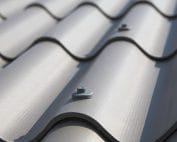
Fibre cement coverings
Planning safe maintenance access to a corrugated fibre cement roof
In brief
The roof should remain safely inspectable even several years after installation. Corrugated fibre cement sheets are not a walking surface, even when they have reinforcing strips. Asbestos-free fibre cement requires planned access to equipment, gutters and details. It is best to establish this before additional installations appear on the roof slope. On the roof plan, mark equipment, skylights, the ridge and other places requiring maintenance. Not every element has to be checked from the roof slope itself. Some inspections can be carried out from the ground, a platform or from inside. It is worth starting with methods that do not require loading the fragile covering. The frequency and type of work influence the access solution.
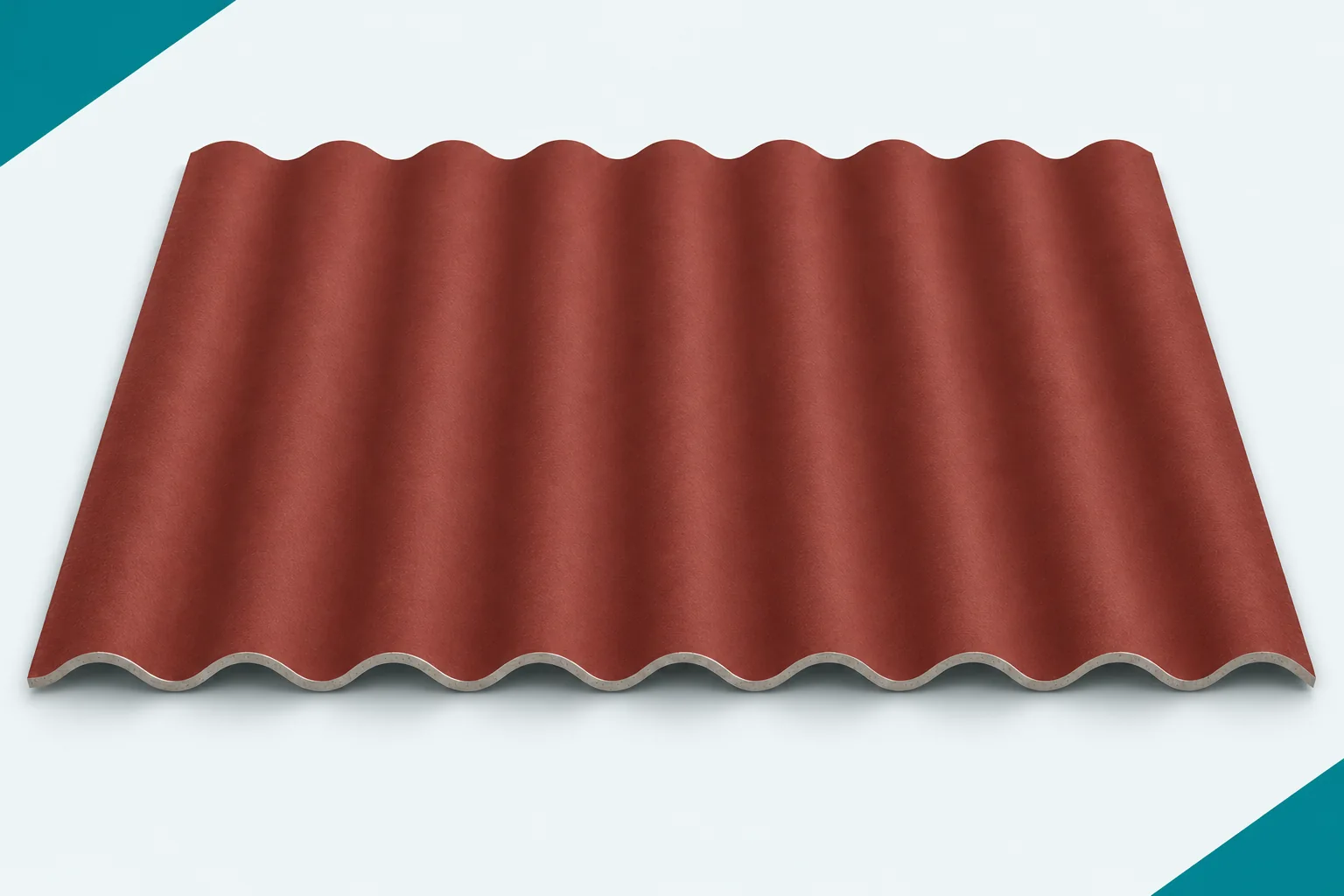
First determine what needs to be reached
An occasional gutter inspection is planned differently from regular fan maintenance. Information is needed from the equipment suppliers. If their maintenance requires space for tools and dismantling parts, this must be taken into account in the design.
Do not treat the corrugations or screws as walkways
Corrugated fibre cement sheets can be damaged under point loads. Direct stepping on them is not permissible, even near supports. The line of fasteners does not mark a safe walkway. Even a seemingly strong sheet should not be tested by trial stepping.
Reinforcing strips in some products have a specific function, but they do not replace a walkway or safeguards. Asbestos-free fibre cement is not a category of covering intended for pedestrian traffic. This information should reach every crew that appears on the roof, not only its original installer.
The access solution must transfer loads correctly
A walkway, gangway or other equipment needs proper support and a method of securing. It cannot be assumed that any board laid on the sheets solves the problem. The arrangement should correspond to the structure, the scope of work and the safety requirements. It is selected by a person competent to organise such work.
Corrugated fibre cement sheets remain the roof covering, and the loads of the equipment must be transferred in the intended manner. This also applies to permanent fixing points for devices. Merely screwing an element to the crest of the corrugation does not prove that it has obtained adequate support. The entire load path must be checked.
Skylights require separate marking
A transparent element may have a profile similar to the sheet, but it is made of a different material. Its properties and fixing method may differ. It should not form part of the access route. Over time, dirt or changes in lighting may make it harder to distinguish from its surroundings.
It is worth marking all rooflights and access routes in the documentation. On a large roof, a plan handed to the team before work helps. Corrugated fibre cement sheets next to a rooflight are also not a place to step. A warning about a single element should not suggest that the rest of the roof slope is a safe walkway.
Photovoltaics increase the scope of future maintenance
The panels and their installation may require inspection, repair or cleaning. The layout should leave a safe way to reach the necessary places. It is not enough to fit the maximum number of modules. Drainage of water and the ability to remove dirt from beneath the installation must also be ensured.
Asbestos-free fibre cement must not take incidental loads from the frame. The loads of the photovoltaic system are transferred to the structure by suitable elements. The design also covers access routes and seals. If the installation is added to an existing roof, the condition of the sheets and supports must be assessed before mounting.
Ground-level access also requires space
Space should be left at the building to allow the necessary equipment to be set up. A later fence, storage area or extension may block the side that was originally accessible. A simple gutter inspection then becomes more difficult. The maintenance plan should be taken into account in the site layout.
Corrugated fibre cement sheets on a small canopy are no exception to these rules. A low height does not change the brittleness of the covering. A ladder or equipment should not be rested on the gutter without a proper solution. The working position must suit the structure, not a randomly available spot.
Weather and roof condition change the working conditions
Before every intervention, the conditions, extent of damage and possibility of safe access must be assessed. A roof after a storm may have loose elements and cracks invisible from the ground. It should not be entered merely to check a suspicion. The first assessment should be made from a safe position.
Wet, icy or dirty surfaces make the work even more difficult. Access arrangements are set for the actual day and task. Even a well-designed service route requires inspection before use. The presence of equipment does not replace assessment of its condition and the surrounding conditions.
Pass the rules on to the maintenance personnel
After completion of construction, it is worth keeping the access plan, a description of the structure and the documents for the elements used. The next team should know where equipment may be rested and what restrictions apply. Verbal information may disappear when the contractor changes. Clear documentation remains with the building.
Asbestos-free fibre cement can be maintained without placing accidental loads on the sheets. This requires planning service access together with the roof, not only after the first failure. A well-designed access solution makes it easier to inspect the details and reduces unnecessary preparation. Above all, it allows work to be carried out without treating the covering as a walkway.
Mark all locations for future servicing and agree safe access routes. Also check whether the surroundings of the building will allow the necessary equipment to be set up.
7 branches. Materials closer to your project.

- SEROCK — Dzierżenin 34 E
- BŁONIE — ul. Sochaczewska 138A
- RADOM — ul. Grobickiego 8
- ŁÓDŹ — Natolin 8
- OLSZTYN — Barczewo, ul. Prosta 9
- WROCŁAW — ul. Jerzmanowska 10C
- GORZÓW WLKP. — ul. Zielona 33/34