Fences
Choosing a fence for a residential plot
In brief
First, divide the plot into zones, as the front, the garden boundary and the relaxation spot each have different requirements. By the road, looks, the gate and clear visibility when driving out are what count, while in the rest area protection from view can be key. Mark these areas on the plan before choosing a material, and consider whether the entire perimeter really needs the same infill. Bear in mind children, animals and day-to-day use, and match the gap to actual needs. Remember that a tall, dense picket restricts visibility but is more exposed to wind – so the layout affects the structure, not just privacy.
What function should the fence fulfil?
The front of the plot needs a different layout from the boundary by the garden. On the street side, appearance, the gate and visibility when driving out matter. In the leisure area, screening from view may be more important. Before choosing a material, mark these zones on the plan. Not the entire perimeter has to have identical infill.
Take into account children, animals and the everyday upkeep of the property. The gap between elements should correspond to actual needs. A high, closed fence restricts visibility but has a stronger effect on wind. The choice of layout therefore affects the structure, not only privacy. The requirements for the given plot must also be checked.
What speaks in favour of metal fence pickets?
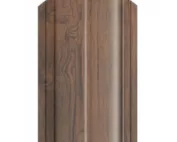
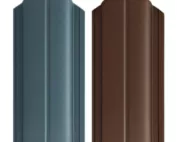
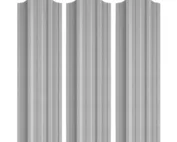
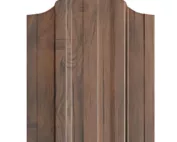
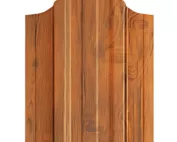
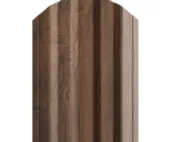
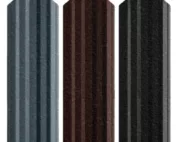
Pickets made of coated steel can be colour-matched to metal tile-effect roofing, gutters and flashings. They are available in various widths, profiles and end finishes. Pressings give them rigidity, while folded edges affect both appearance and ease of use. Quality should not be judged from a photograph of the front alone.
Compared with wood, steel elements do not require the same kind of periodic surface renewal. The coating, fixings and dirt still have to be checked. A damaged edge or swarf left after installation can become the start of a problem. The term maintenance-free is therefore too far-reaching a simplification.
How should you choose the clearance and the number of pickets?
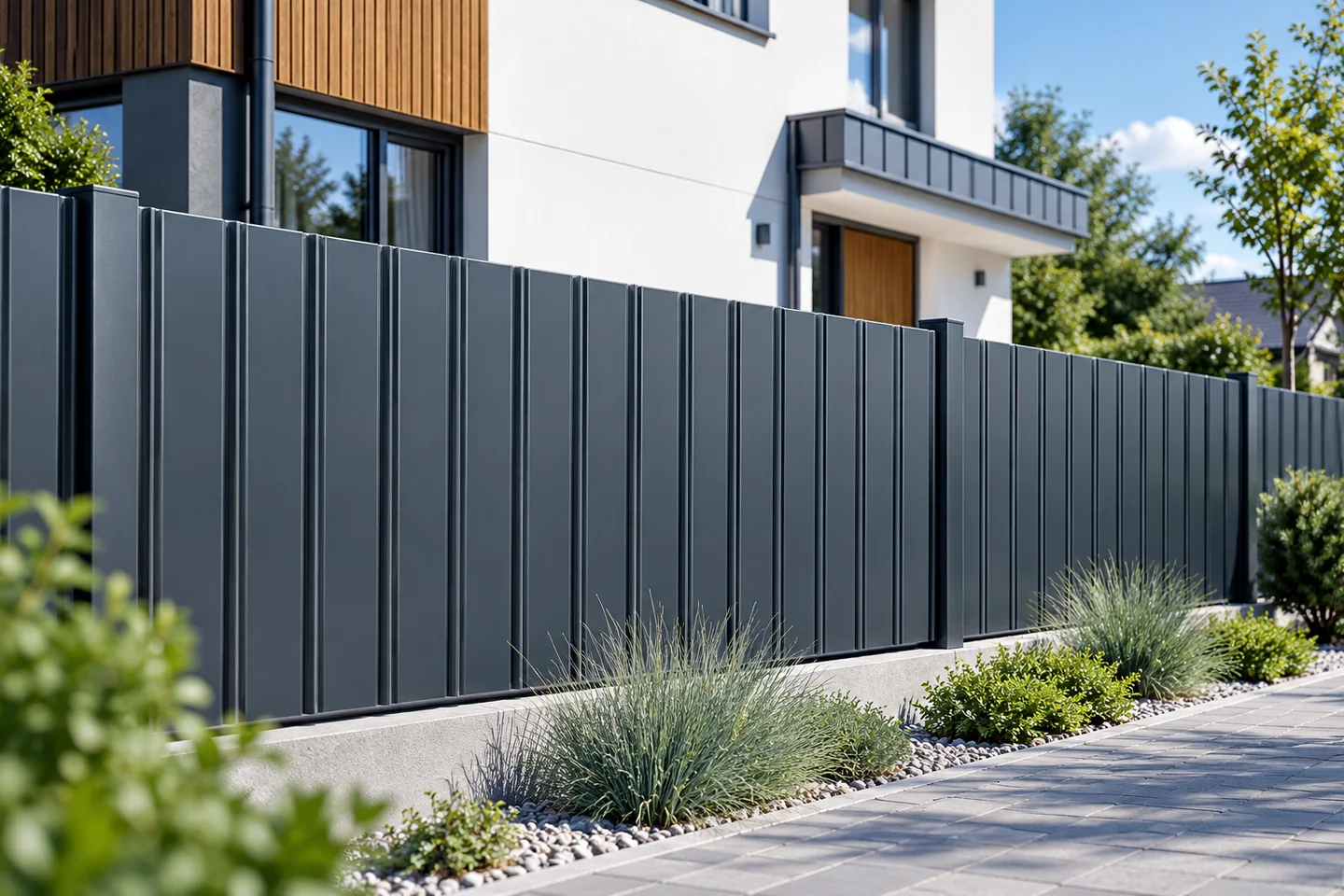
The number of elements is determined on the basis of the actual width of the bay, the coverage width of the picket and the planned gap. It is worth drawing the division so that the edge gaps are orderly. Too great a difference at the posts is visible even when all elements are the same colour. A sample section helps assess the effect up close and from the street.
A double-sided layout can restrict the view through the fence at certain angles. However, it uses more material and increases the surface exposed to wind. It does not guarantee complete opacity from every observer position. When comparing offers, note whether the number of pickets refers to one side or both. This is a frequent source of apparent price differences.

Why are the posts and rails equally important?
The infill must transfer loads to the rails, posts and foundations. The cross-sections and the method of setting depend on the height, the span and the degree of infill. There is no single post spacing suitable for every metal fence. Especially a long, closed bay requires a justified structural design.
Fixings should be suitable for the material and external conditions. Care must be taken at cut and drilled areas. The plinth and ground must not constantly retain moisture at the lower ends of the pickets. The solution should allow water to drain away and leaves to be removed. It is also worth allowing for easy replacement of a single damaged element.
How to match a fence to the house?
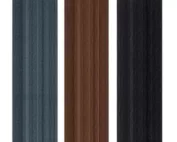
The simplest approach is to choose a limited colour palette. A colour close to the roof or joinery usually tidies up the front. However, there is no need to repeat every texture from the building. With a modern form, calm, even divisions look good, while with a traditional house a gentler finish to the pickets can be considered. The final effect is worth viewing on a sample.
A colour code does not guarantee an identical perception of different surfaces. Gloss, texture and the angle of light incidence change the appearance of graphite or bronze. Compare the picket sample with the roof in daylight. Also determine the appearance of the inner side. In the garden, this will be visible more often than the façade front of the fence.
How to compare the full cost of installation?
The cost estimate should include the pickets, crossbars, posts, foundations, plinth and fixings. Calculate the gate, pedestrian gate, automation and site preparation separately. On uneven plots, the method of stepping the bays affects the labour intensity. The price per metre of the infill alone does not represent the cost of a finished fence.
Before ordering, check the heights, bay widths and the opening direction of the gate. Establish the rules for coating repairs and the scope of the warranty. Metal pickets are a sensible choice when you expect flexible division and a consistent appearance of the property. However, the best effect is achieved with a complete solution in which the aesthetics of the infill go hand in hand with a well-chosen structure.
7 branches. Materials closer to your project.

- SEROCK — Dzierżenin 34 E
- BŁONIE — ul. Sochaczewska 138A
- RADOM — ul. Grobickiego 8
- ŁÓDŹ — Natolin 8
- OLSZTYN — Barczewo, ul. Prosta 9
- WROCŁAW — ul. Jerzmanowska 10C
- GORZÓW WLKP. — ul. Zielona 33/34