Insulation and ventilation
PIR boards compared with EPS, XPS and mineral wool
In brief
PIR boards stand out for achieving high thermal resistance at a relatively small thickness, which matters in attics, at thresholds and in renovated roofs. This does not mean they are superior in every application, so the comparison should begin with the declared thermal conductivity, lambda. Check whether the value applies to the specific board variant rather than the whole material group. Where space is limited, calculate the full scope of works, not just the insulation cost, and compare materials with similar thermal resistance that are suitable for the same location.
Why does PIR allow a reduction in insulation thickness?
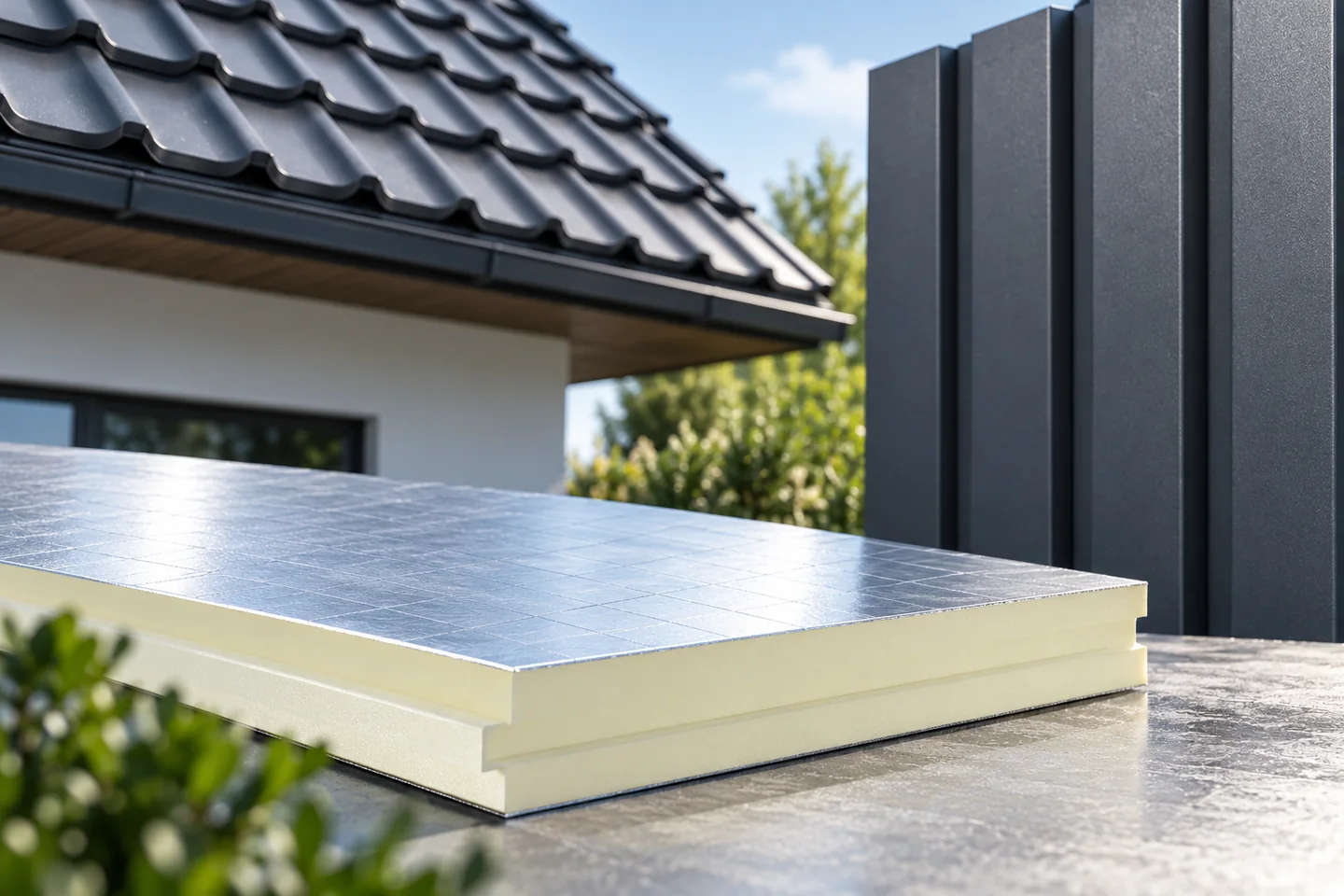
A comparison starts with the declared thermal conductivity, denoted by lambda. The lower the value, the greater the thermal resistance of a layer of the same thickness. For many PIR boards with a suitable facing, a value of 0.022 W/(m·K) is encountered. This does not apply to every variant. Other facings and formulations may give different parameters.
For an example resistance of 5 m²K/W, a material with a lambda of 0.022 theoretically requires 110 mm. At a lambda of 0.031 the figure is 155 mm, and at 0.035 it is already 175 mm. This compares the insulating layer alone. It does not account for thermal bridges, fixings or the other layers. A finished design requires calculation of the entire assembly.
When does a smaller thickness deliver a noticeable benefit?
In a loft, insulation from the inside takes up part of the space. On a flat roof, its height affects thresholds, parapets and flashings. During renovation, every additional centimetre may require rebuilding such details. In that case, a more expensive material with a lower lambda may reduce other work. It is worth calculating the whole scope, not just the cost of a pack.
The boards are rigid and usually easy to plan precisely on a level substrate. With a curved truss, the same rigidity demands careful cutting. Flexible mineral wool may more easily fill certain irregularities. PIR should not be forced between elements if this leads to bulging or leaves empty gaps.
Is PIR non-combustible and does it provide good sound insulation?
PIR should not be presented as a non-combustible material. The reaction to fire of a single board must be distinguished from the fire resistance of the complete roof or wall. The classification of the system depends on all layers, the thickness and the method of fixing. A good result for a sandwich panel with steel facings does not describe an unfixed insulation board.
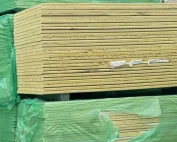
Mineral wool has significant advantages here. Products with reaction-to-fire class A1 are available, and its fibrous structure is useful in many acoustic solutions. Sound insulation, however, depends on the entire building envelope. Rain noise cannot be compared on the basis of lambda or foam thickness alone.

What about moisture and high pressure?
The closed-cell PIR core limits water absorption, but the board does not replace waterproofing. Joints, cut edges and connections to other elements require protection. Not every variant is intended for contact with the ground. In such applications it is worth comparing it with a suitable XPS board, its water absorption and the range of permitted use.
Floors, trafficked roofs and equipment supports require a check of the compressive load. The value given at ten per cent deformation is not a permissible long-term load. Creep and load-distributing layers also matter. Hardness assessed by pressing with a finger does not allow insulation to be selected for a warehouse shelving unit or a garage floor.
Do the facing and edges matter?
Yes, because different facings serve different assemblies. A panel with aluminium laminate is not automatically a suitable substrate for every render or adhesive. For a wall insulation system, the variant specified in its documentation must be used. On the roof, compatibility with the waterproofing and the fixing technology must be checked.
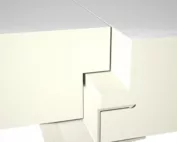
Straight, stepped and tongue-and-groove edges facilitate different methods of jointing. The rebate helps to limit a continuous gap, but it will not remedy an uneven substrate or inaccurate butting of the panels. With two layers, the joints are offset in accordance with the design. A distinction must also be made between the overall panel dimension and its effective coverage area.
How can you compare cost without misleading shortcuts?
Compare materials that provide a similar thermal resistance and are suitable for the same location. Add fixings, adhesives, tapes and any change in the height of flashings to the price of the insulation. Note the pack sizes and the delivery cost. For a small renovation, the minimum logistics quantity can significantly change the cost of one metre actually used.
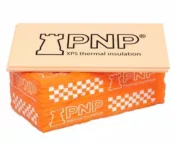
PIR is particularly interesting where there is insufficient space for thicker insulation. EPS remains a sensible solution for many typical building elements if the design permits the required thickness. XPS is worth considering where there are requirements relating to moisture and pressure, and mineral wool where there are fire protection and acoustic requirements. The best choice results from the conditions of a specific roof or wall, not from a single advantage in a table.
7 branches. Materials closer to your project.

- SEROCK — Dzierżenin 34 E
- BŁONIE — ul. Sochaczewska 138A
- RADOM — ul. Grobickiego 8
- ŁÓDŹ — Natolin 8
- OLSZTYN — Barczewo, ul. Prosta 9
- WROCŁAW — ul. Jerzmanowska 10C
- GORZÓW WLKP. — ul. Zielona 33/34