The appearance of the house
Reasons to use metal cladding on a building façade
In brief
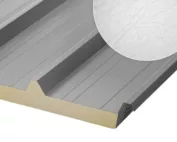
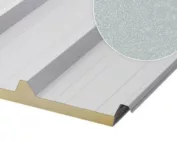
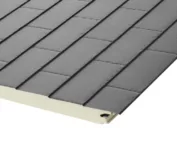
Metal cladding works well when you want clear geometry and a regular division of the surface. It is worth assessing the proportions of the profile, the layout of the sheets and the care taken with details, as well as the substructure and protection of the wall against water and moisture. Choosing between T18 and T35 is not just a matter of colour – the effect is shaped by the rhythm of light and shadow, which depends on the width of the flat fields. Before deciding, view a larger sample in the planned orientation, because a small catalogue cut-out does not fully convey the character of the façade.
How does metal cladding change the appearance of a building?
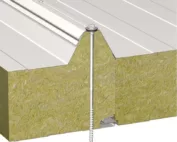
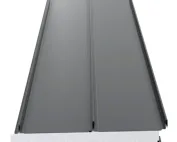
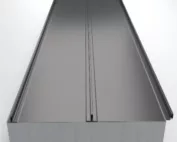
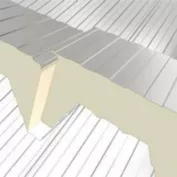
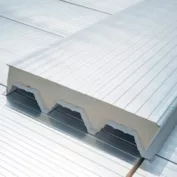
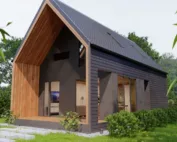
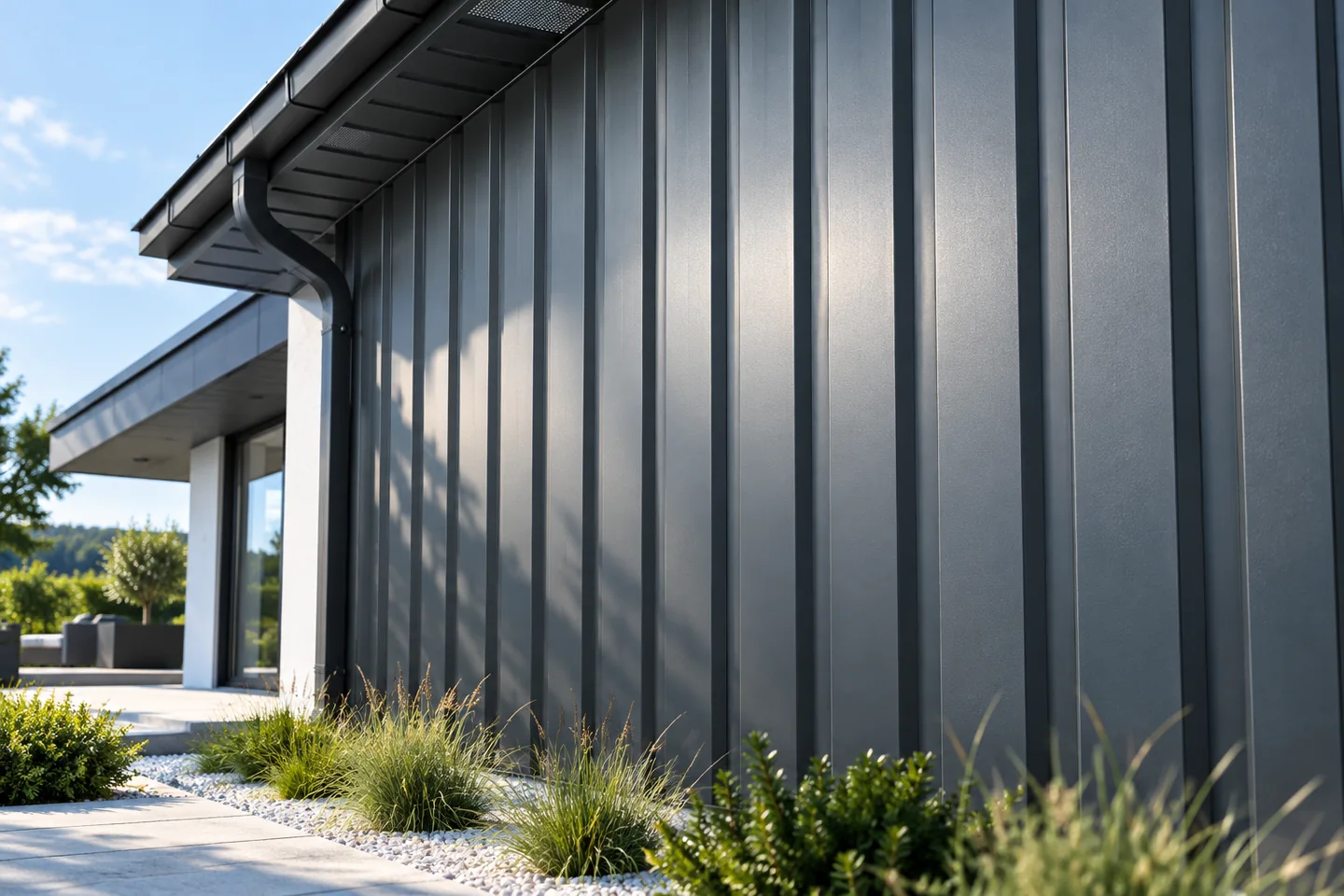
Profiled metal introduces a rhythm of light and shadow. Over a large area this effect can be stronger than the colour itself. T18 has a lower profile than T35, but the appearance also depends on the width of the flat fields. It is worth viewing a larger sample in the planned orientation. A small catalogue offcut does not fully convey the character of the façade.
Steel cladding can cover the entire façade or only a selected section, such as the garage volume. It combines well with render, timber or glass if the junctions are thought through. Establish the termination line of the materials and the method of water drainage. An accidental meeting of several claddings often looks worse than a simple, consistent division with a limited number of details.
What does the low weight of the cladding provide?
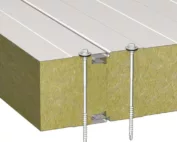
A lightweight sheet can facilitate transport and installation on an existing building. However, it does not mean there are no loads on the wall. The substructure and anchors transfer the weight of the cladding and the action of the wind. On a tall façade, suction in the edge zones can be significant. For this reason, the mass of the material alone is not sufficient to design the fixing.
During thermal modernisation, the condition of the substrate must be assessed. Fixing to old masonry, concrete and steel structure requires different solutions. If the brackets pass through the insulation, their thermal effect is taken into account. A good façade is visually light and correctly supported structurally. These two qualities do not arise automatically after choosing thin steel sheet.
Is installing a façade quick?
Large sheets allow regular wall fields to be closed efficiently. Some work can be carried out without wet trades, which can be advantageous organisationally. However, the speed depends on the preparation of the substructure, the availability of material and the number of openings. A façade with many windows, setbacks and corners requires careful detailing regardless of the type of cladding.
Accurate measurement limits improvisation on site. Determine the sheet lengths, the installation direction and the joint locations. Do not plan random narrow strips at the window if the layout can be changed beforehand. It is worth producing a trial section showing the corner and the reveal. The appearance and the method of execution can then be assessed more easily than after completing the entire wall.

How does metal cladding interact with insulation?
In a ventilated façade, the steel cladding is located in front of the cavity and the further wall layers. The cavity must have a planned airflow and protected inlets and outlets. Its task is not to replace the ventilation of rooms. It helps in the functioning of the building envelope itself, and the choice of system requires consideration of moisture and fire conditions.
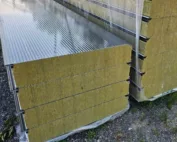
The insulation is selected independently of the decorative profile. PIR can be useful when high thermal performance is needed at a limited thickness. Mineral wool has other advantages, including those related to fire reaction. No single solution should be assumed for every wall. Transitions at windows, the plinth and the roof are important, where continuity of layers is easily broken.
Does steel cladding require maintenance?
Yes, although the factory coating can reduce the frequency of refurbishment compared with some materials. The surface must be protected from aggressive substances and deposits removed. At the plinth, the absence of permanent contact with wet soil is particularly important. Driveway salt and mortar residues can deteriorate the condition of the coating.
The inspection also covers fixings and flashings. If the sheet begins to vibrate, the cause must be determined, not just an arbitrary screw added. Local damage is repaired in accordance with the material instructions. It is worth keeping the profile and finish data. They will facilitate replacement of the element, although after years the difference in shade between the new and old part may remain visible.
When is such a façade a good choice?
Steel sheet works well when you expect clear geometry, predictable division and the possibility of relatively quick installation. It can be rational on a garage, workshop and larger utility building. On a house, it is worth refining the scale of the profiling and the connection with the surroundings. It is a material with a strong character, so even a simple detail has a major influence on the perception of the whole.
When comparing offers, calculate the entire system. The sheets are only part of the cost alongside the substructure, insulation, flashings and labour. Check the covering area and the waste resulting from openings. The most favourable solution should meet the technical requirements and look good up close. A low sheet price alone will not ensure either a tight or an aesthetic façade.
7 branches. Materials closer to your project.

- SEROCK — Dzierżenin 34 E
- BŁONIE — ul. Sochaczewska 138A
- RADOM — ul. Grobickiego 8
- ŁÓDŹ — Natolin 8
- OLSZTYN — Barczewo, ul. Prosta 9
- WROCŁAW — ul. Jerzmanowska 10C
- GORZÓW WLKP. — ul. Zielona 33/34