Trapezoidal steel sheets
Understanding T18 and T35 markings and trapezoidal sheet specifications
In brief
In Poland, the designation T18 or T35 indicates only the profile of a trapezoidal sheet, not its full specification. When buying, you should also read the core thickness, cover width, steel grade and coating, then check the intended use of the sheet and its laying orientation. The name alone does not replace a technical drawing, so it is worth comparing the product documentation and confirming whether two similarly named sheets are technically identical. A full description also makes delivery acceptance and later selection of repair material easier.
What does the letter and profile number mean?
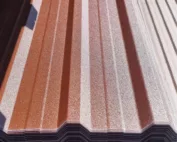
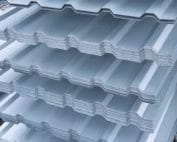
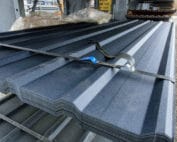
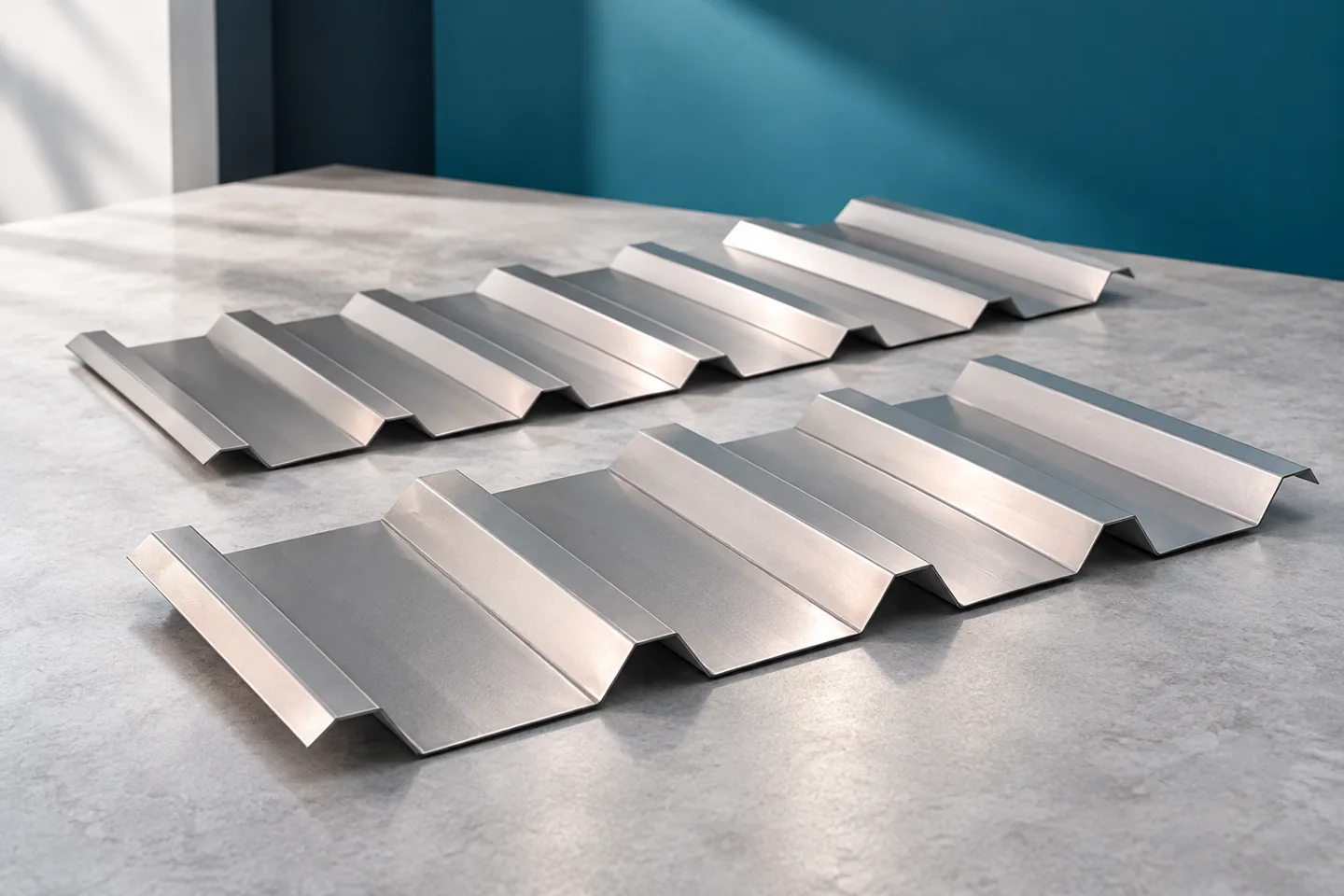
The letter T is commonly used for trapezoidal steel sheets, and the number refers to the profile height in millimetres. T18 and T35 therefore differ in their fundamental geometry. However, the full cross-sectional shape depends on the system. Flange widths, rib spacing and additional stiffening ribs may vary. The name alone does not replace a technical drawing.
Additional letters are sometimes designations for a roof variant, a façade variant or a specific version. Their meaning must be read from the documentation for the given product. There is no single rule for interpreting every letter from all manufacturers. When ordering, it is best to provide the full designation and attach the approved specification to avoid confusing similar profiles.
How to distinguish overall width and coverage width?
The overall width covers the sheet from edge to edge. The coverage width is smaller because part of the material forms an overlap with the adjacent strip. For an example T18 profile, these may be 1173 and 1128 mm respectively. These are data for one geometry, not universal dimensions for all sheets designated T18.
The effective width is used to calculate the number of runs on a roof slope. However, the price may be given per overall or effective area, so the unit must be checked. A difference of a few centimetres repeated across many sheets matters. The order plan should also account for cuts and any longitudinal joints.
What does the thickness and steel grade indicate?
The nominal thickness of the steel core affects the weight and mechanical properties. It should not be equated with the sum of all coating layers. The steel grade describes further material parameters. Two sheets with the same profile height may therefore perform differently. In the documentation and quotation, both pieces of information should be recorded separately.
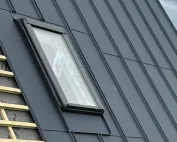
Do not choose the thickness solely by pressing a sample with your hand. The perceived stiffness also depends on the shape and the type of support. Suitability for a roof is determined by calculation for the span and loads. If the seller proposes a switch to another variant, confirmation is needed that it will meet the requirements adopted in the design.

How to read the coating description?
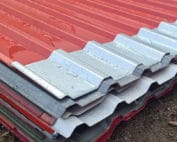
The specification may indicate metallic and organic protection. These have different tasks and should not be reduced to colour alone. The type and thickness of the coating affect the scope of application, resistance and warranty conditions. The term polyester or polyurethane without further data does not describe all the properties of a specific product.
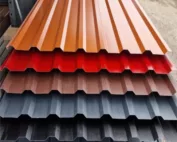
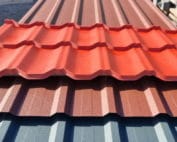
Check the purpose of the underside surface separately. In a damp or aggressive interior, it may require different protection from the standard internal side. The colour according to the swatch makes it easier to identify the shade, but does not mean identical gloss and texture. It is worth comparing the sample with the planned flashings, especially when they come from different orders.
What to look for in load tables?
Pay attention to the structural scheme, span, number of bays and profile orientation. The table may give separate values for load-bearing capacity and deflection. All required criteria must be checked. Information on whether self-weight is included is also important. No single figure from the table may be treated as a universal permissible roof load.
For fixing, the type of substrate, the bearing width and the roof zone matter. Holes, perforation and unusual loads can change the result. The table is therefore a selection tool, not a substitute for assessing the entire system. In case of doubt, clarify the assumptions with the designer instead of choosing the most favourable value.
How to place an unambiguous order?
List the full profile, application variant, thickness, steel, coating and colour. Give the lengths, number of sheets and direction if it matters for the system. Attach the layout plan and a list of accessories. Ask for confirmation of the effective width and the price unit. This ensures the delivery refers to a specific solution.
On receipt, compare the markings and quantities with the documents. Keep the labels and instructions for later installation and maintenance. If a repair is needed, the full specification will allow a matching material to be selected. Merely mentioning that the roof has T18 trapezoidal steel sheet may prove too imprecise to order a matching sheet.
7 branches. Materials closer to your project.

- SEROCK — Dzierżenin 34 E
- BŁONIE — ul. Sochaczewska 138A
- RADOM — ul. Grobickiego 8
- ŁÓDŹ — Natolin 8
- OLSZTYN — Barczewo, ul. Prosta 9
- WROCŁAW — ul. Jerzmanowska 10C
- GORZÓW WLKP. — ul. Zielona 33/34