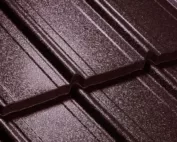
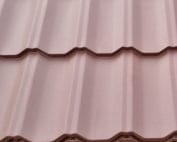
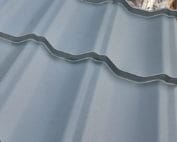
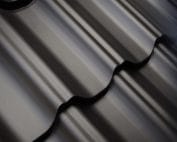
Tile-effect metal roofing
When does it make sense to buy tile-effect metal roofing?
In brief
In Poland, buying a metal roof tile is reasonable when you need a lightweight covering with a regular appearance and your roof meets the requirements of the chosen profile. Rather than being guided by the year of purchase or a temporary promotion, check the roof geometry, pitch and substrate, and compare cut-to-size and modular variants for the same dimensions. Account for cutting losses, transport, accessories and labour, as well as coating quality and the full installation cost. Remember that metal roof tiles do not share identical parameters and application possibilities.
On which roof does tile-effect metal roofing make sense?
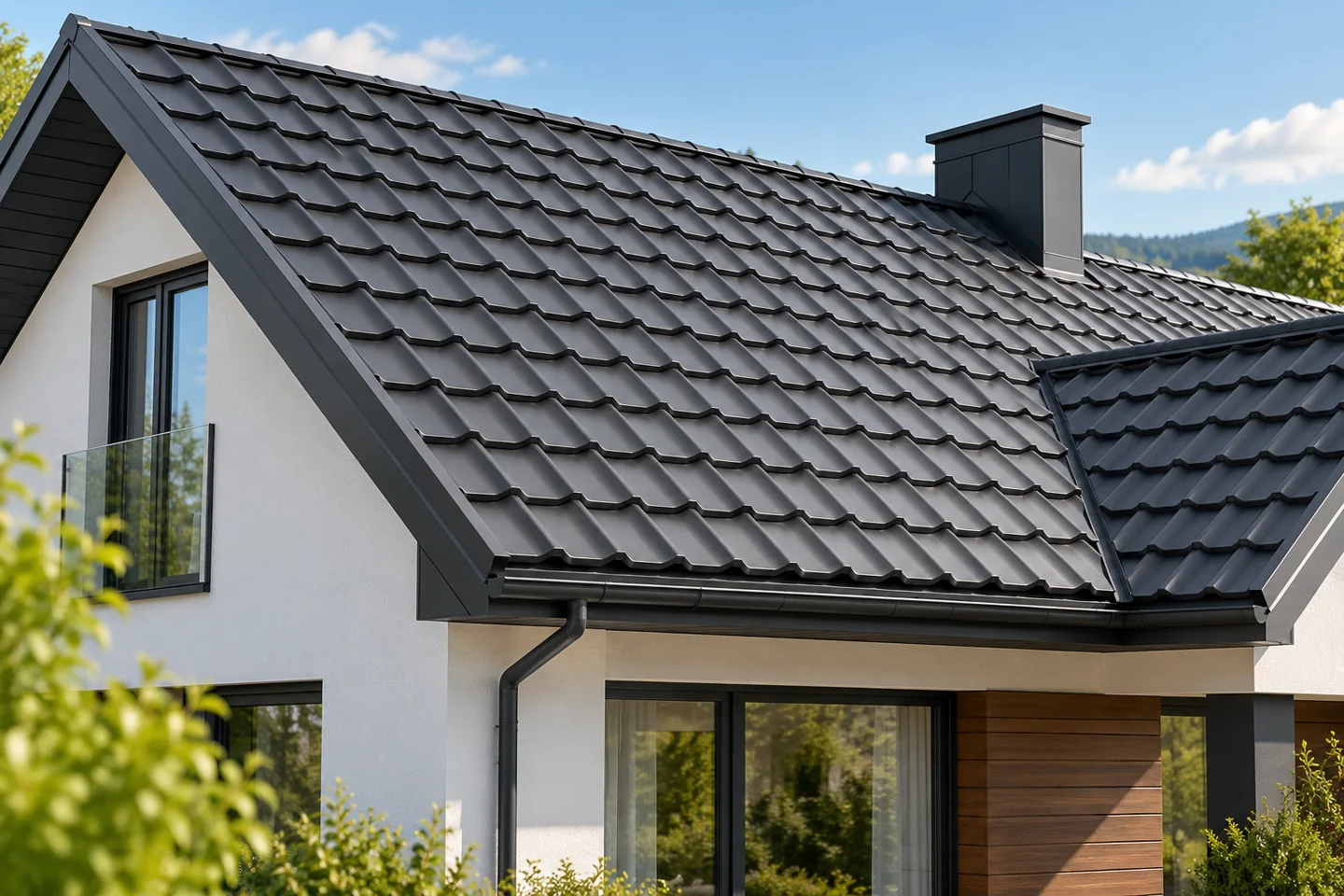
The material fits well into many single-family houses, both traditional and contemporary. The condition is a suitable pitch and substrate. The requirements are checked for the specific profile and method of installation. Not all tile-effect metal roofing should be treated as a single solution with identical parameters and application possibilities.
During renovation, the low weight of the covering itself can be an advantage. This does not exempt you from assessing the old structure. Damaged rafters and battens require repair regardless of the chosen material. It is also worth checking insulation, ventilation and drainage. A favourable price for new sheets should not push back necessary work on the layers beneath them.
Cut-to-length or modular: what to compare?
On a simple roof slope, sheets cut to size can provide a convenient layout and reduce transverse joints. However, transport, unloading and carrying long elements must be taken into account. On a roof with many folds, handy modules can make work easier. This does not automatically mean a lower cost in every project.
Ask for a comparison of both variants for the same dimensions. Compare the number of elements, the purchased area, offcuts and accessories. Also establish the difference in labour. The right choice results from the total calculation. The price of a single module or a linear metre of a large sheet alone does not provide a common basis for assessment.
What is worth paying for in the specification?
The steel, nominal thickness and coating selected for the environment are important. Both corrosion resistance and appearance stability must be checked. A more expensive variant should be justified by its parameters and conditions of use. It is not worth paying solely for a promise without documentation, but neither should the required quality be lowered for a small discount.
The set includes matching flashings, fasteners and accessories. Omitting them can negate the advantage of good sheet metal. Ask about the availability of elements and the possibility of ordering them later. For a roof built in stages, colour and batch consistency are important. It is worth defining the full scope in advance instead of looking for similar substitutes at the end of installation.

How to calculate the cost-effectiveness of the entire purchase?
Include material, cutting losses, transport, equipment and execution. Take into account the required layers under the covering and drainage. For renovation, add dismantling and waste. Such a cost estimate allows tile-effect metal roofing to be compared with another complete roof. Comparing covering prices alone may overlook different substrate requirements.
Check the price list date and the offer’s validity period. A catalogue price is not a guarantee of terms several months later. A promotion makes sense when you know the final specification and can store the material correctly. Buying long sheets too early, before the structure has been measured, can cost more than the discount gained.
What limitations must be accepted?
The covering requires protection of the coating during cutting and installation. The edges must not be overheated, and swarf must not be left behind. In use, inspections and cleaning of places where deposits accumulate are needed. Steel sheet is not a maintenance-free material. Thermal movement and the method of draining condensate in the adopted roof system must also be taken into account.
Acoustic comfort depends on the entire building envelope, not just the outer sheet. For a demanding attic, it is worth assessing the insulation and the internal lining. A later repair may reveal a difference in shade between the new and old section. Retained specifications and documents make material selection easier, but they will not stop natural changes to the surface over the years.
When will the decision be well justified?
A purchase is sensible when the material suits the project, you have comparable quotes and a contractor who knows the given system. Look at a sample in daylight and read the warranty terms. Agree the full set of accessories and the acceptance of concealed layers. This way you assess the real value of the covering, not just the favourable appearance of the advertisement.
If the roof has an unusually low pitch or a configuration that does not comply with the instructions, consider another solution instead of forcing the use of tile-effect metal roofing. A well-chosen T35 trapezoidal sheet or sandwich panel may suit different needs. The best purchase is the material that is right for the building and can be correctly installed and maintained under the intended conditions.
7 branches. Materials closer to your project.

- SEROCK — Dzierżenin 34 E
- BŁONIE — ul. Sochaczewska 138A
- RADOM — ul. Grobickiego 8
- ŁÓDŹ — Natolin 8
- OLSZTYN — Barczewo, ul. Prosta 9
- WROCŁAW — ul. Jerzmanowska 10C
- GORZÓW WLKP. — ul. Zielona 33/34